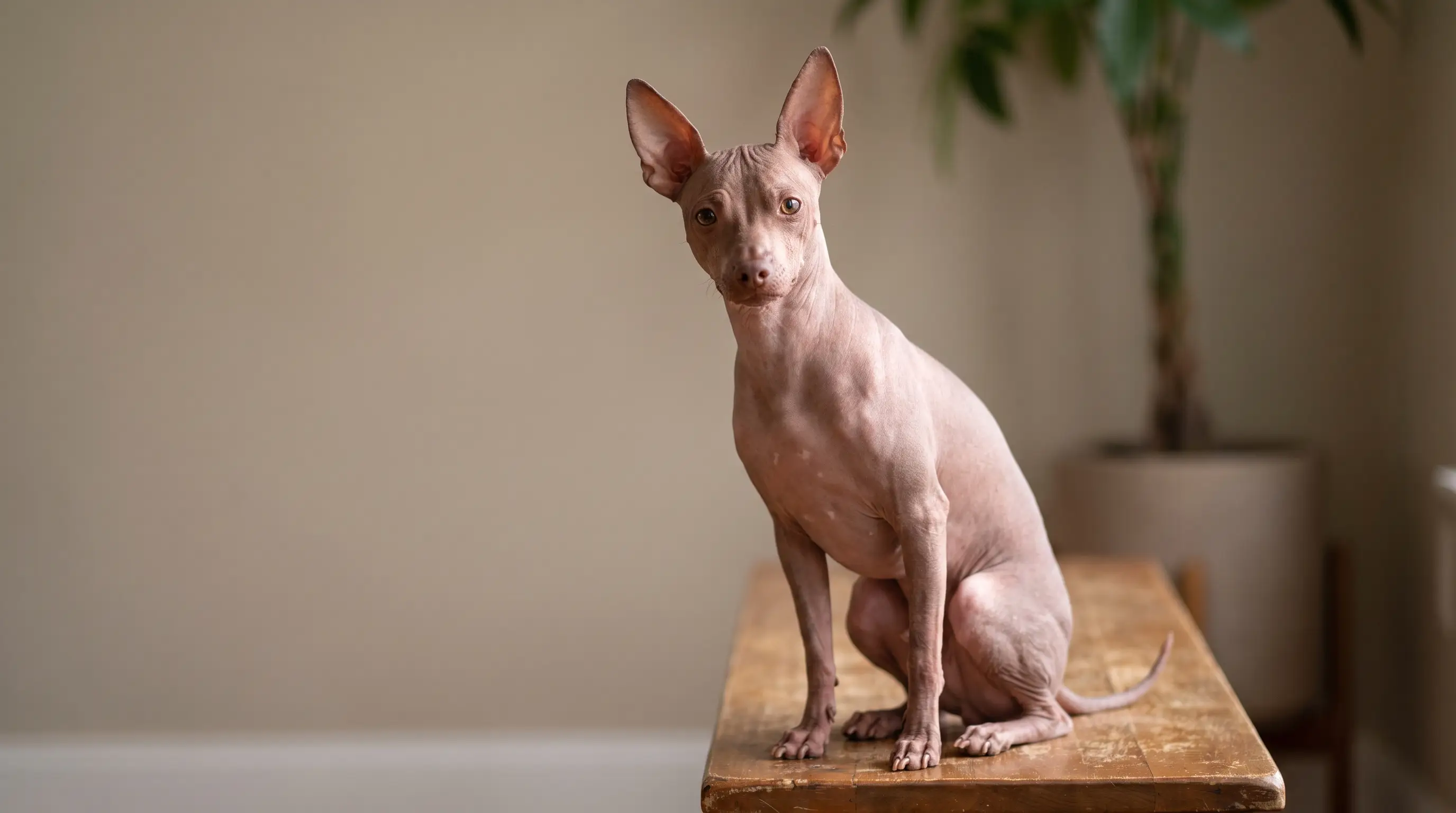
American Hairless Terrier
The terrier with nothing to hide — Louisiana's bare-skinned original.
On these lists: Dogs for allergies
Vital stats
| Size | Small · 30–41 cm |
| Weight | 5–11 kg |
| Life expectancy | 14–16 years |
| Energy | Moderate-high — 45–60 min/day |
| Shedding | None (hairless variety) |
| Coat | Hairless, smooth skin · pink with spots; coated variety exists |
| Group | Terrier · AKC |
| Origin | Louisiana, USA |
Breed traits
Friendliness
Care
Mind
The American Hairless Terrier by the numbers
The American Hairless Terrier facts owners search for most — price, lifespan, weight, shedding and colours, in one place.
Less common, so expect a waitlist and some travel to a reputable breeder — which pushes the price up. Ongoing costs stay modest — it eats little and routine vet care sits at the lower end.
We don't quote a single figure: the real price swings with breeder, region, bloodline and health testing — and a rescue costs a fraction of a breeder's litter. Adopting is almost always the cheapest route.
Temperament
Underneath the bare skin sits an ordinary, excellent Rat Terrier: quick reflexes, a keen eye for rustling leaves, a fondness for digging and a genuine wish to work with you. It is one of the friendliest and most trainable terriers — playful with children, alert without paranoia, and lap-seeking by bedtime.
Habits & quirks
Heat-seeking missile
Finds every sunbeam, radiator and warm lap in the house, in that order.
Blanket burrowing
No coat means covers aren't optional — expect a lump under the duvet.
Ratting reflexes
Rustling leaves and garden rodents flip an ancient switch, fast.
The full-body wag
Joy is expressed from nose to tail tip, skin and all.
Health
The American Hairless Terrier is a healthy, long-lived little dog, and most of its care comes down to one thing the coat would normally handle: the skin. With no fur for protection, bare skin burns in strong sun and needs dog-safe sun cream or shade on bright days, and it feels the cold, so a jumper and a warm bed are basic kit rather than luxuries. Bathe occasionally and add a moisturiser if the skin looks dry. None of this is difficult, but it is daily awareness in place of grooming: you are managing skin instead of brushing a coat.
Nutrition
| Skin | Occasional baths, moisturiser if dry, and dog-safe sun cream on bright days. |
| Warmth | A jumper in cold weather and a warm bed — it carries no insulation of its own. |
| Exercise | A brisk daily walk plus real play; the terrier brain needs games as much as legs. |
| Training | Quick, eager and food-motivated — among the easiest terriers to train. |
This is a small, busy terrier, so a little food goes a long way and portions are easy to get wrong. Weigh the meals, keep training treats — and a food-motivated terrier earns plenty — inside the daily total, and check by feel for a light, defined waist. It is worth watching weight on a hairless breed for a practical reason as well as a health one: the leaner, fitter dog is the one better able to keep itself warm and comfortable. Feed for a trim, active little terrier, not a soft one.
Puppy guide
A hairless terrier puppy is bright, playful and quick to bond, and two habits set now pay off for life. First, skin care: get the puppy used to sun cream, baths and being checked over while it is young, so protecting that bare skin is routine rather than a fight. Curiously, the pups are not born bald — a light downy birth coat sheds out in the first weeks, leaving the smooth skin behind. Second, put the keen terrier brain to work early with games and simple training, because this is one of the friendliest and most trainable terriers and it soaks up learning happily. Socialize widely, and keep the young dog warm and out of harsh sun while it is small.
Training
The American Hairless Terrier is one of the easiest terriers to train, which for a terrier is real praise. It is quick, eager and genuinely food-motivated, with a real wish to work alongside you rather than around you, so short, upbeat, reward-based sessions get results fast. Give the busy brain proper jobs — tricks, games, simple problem-solving — because a terrier mind left idle finds its own entertainment, usually involving digging. Keep it positive and keep it interesting, and you have a bright, willing little partner.
Life expectancy
American Hairless Terriers live 14–16 years. The American Hairless Terrier is among the longer-lived breeds, and it stays healthy on straightforward care: a lean, fit weight, skin protected from sun and cold, and a busy mind kept occupied. Look after the bare skin the way you would groom a coat — sun cream on bright days, warmth in winter, an eye for dryness — and this cheerful little terrier is good company for many years.
Similar breeds
Breeds with a similar build and background — worth a look if this one isn't quite the fit.
Breeds that look like this
Common questions
Are American Hairless Terriers hypoallergenic?
No dog is truly hypoallergenic, but with no coat to shed they're among the best choices for many allergy sufferers. Spend time with one before committing.
Do American Hairless Terriers need sunscreen?
Yes — bare skin burns like ours, so use dog-safe sun cream or keep to shade in strong sun. Light shirts work well for all-day outings.
Are they born completely hairless?
Puppies arrive with a light downy birth coat that sheds out within the first weeks, leaving smooth skin. A separate coated variety also exists and is essential to the breeding programme.
Does the American Hairless Terrier shed a lot?
Moderately. The American Hairless Terrier sheds a fair amount, steadily through the year with heavier seasonal patches. A weekly brush keeps most of the loose hair off your floors and clothes.
Is the American Hairless Terrier good with children?
Generally yes. The American Hairless Terrier is a friendly, people-loving breed that usually does well with children when raised and socialised well. As with any dog, teach children to be gentle and supervise around toddlers.
Is the American Hairless Terrier easy to train?
Yes. The American Hairless Terrier is one of the more trainable breeds — quick to learn and keen to work with you, which makes reward-based training straightforward. Start early, keep it positive, and it picks things up fast.