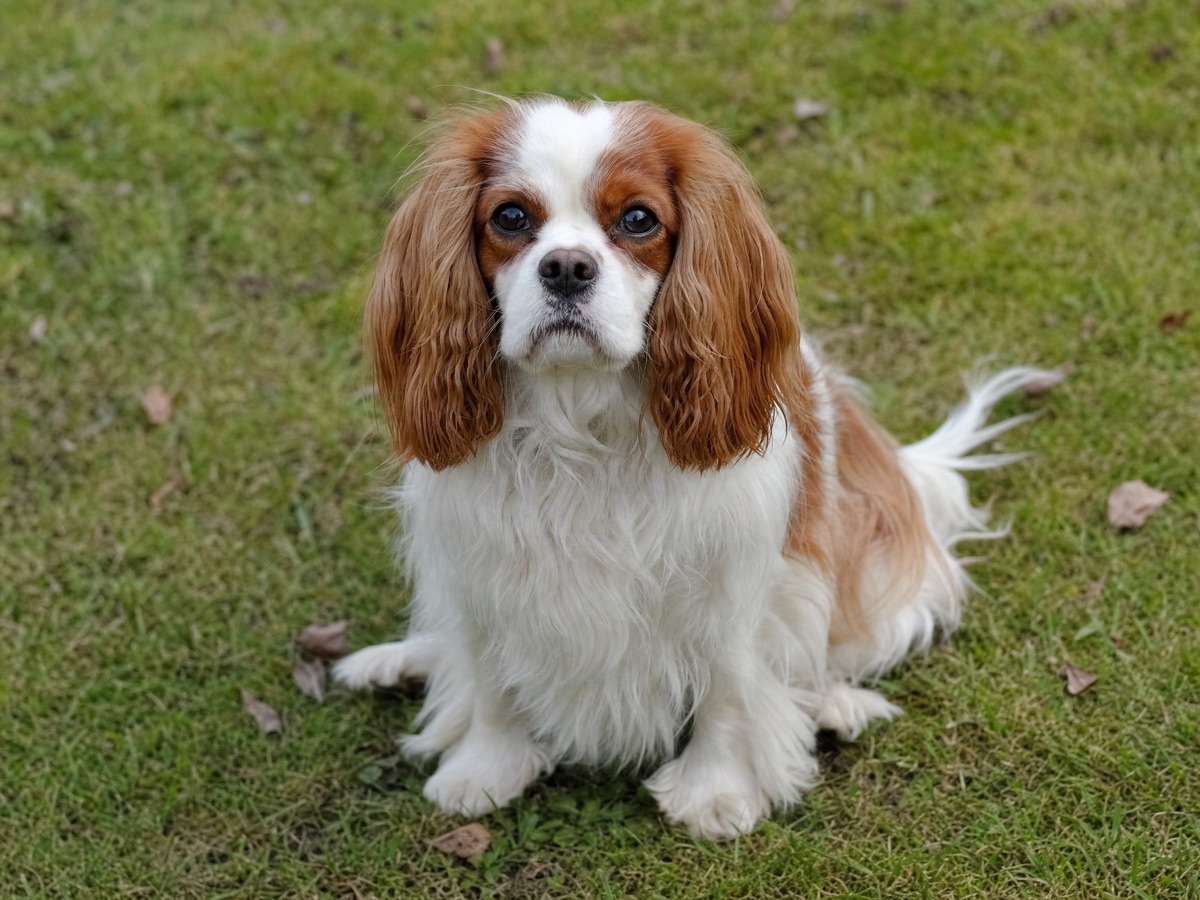
Cavalier King Charles Spaniel
A silky-eared lapdog with a spaniel's heart — sweet, gentle, everyone's friend.
On these lists: Dogs for apartments · Dogs for first-time owners · Family dogs · Therapy dogs · Dogs for seniors · Dogs for anxiety
Vital stats
| Size | Small · 30–33 cm |
| Weight | 5–8 kg |
| Life expectancy | 12–15 years |
| Energy | Moderate — 40–60 min/day |
| Shedding | Moderate, year-round |
| Coat | Silky, medium length · Blenheim, tricolour, ruby, black & tan |
| Group | Toy · FCI №136 / AKC |
| Origin | United Kingdom |
| FCI group | 9 — Companion and Toy Dogs · FCI 136 |
Breed traits
Friendliness
Care
Mind
The Cavalier King Charles Spaniel by the numbers
The Cavalier King Charles Spaniel facts owners search for most — price, lifespan, weight, shedding and colours, in one place.
Widely bred, so you can usually find a litter from a registered breeder without a long wait. Ongoing costs stay modest — it eats little and routine vet care sits at the lower end. Its coat also needs a professional groom every few weeks — a real line in the budget.
We don't quote a single figure: the real price swings with breeder, region, bloodline and health testing — and a rescue costs a fraction of a breeder's litter. Adopting is almost always the cheapest route.
Temperament
Recreated in the 1920s to match the spaniels in old royal portraits, the Cavalier is what happens when a sporting dog is optimised for laps: gentle, endlessly sociable and eager to agree with you. The spaniel wiring is still there — a passing bird can interrupt any cuddle — but its true vocation is being wherever you are.
Habits & quirks
Lap radar
The moment you sit down, a Cavalier is en route.
Spaniel intermissions
Mid-cuddle, a bird at the window can summon four centuries of hunting ancestry.
The melting look
Those enormous dark eyes are deployed strategically, usually near food.
The greeting committee
Every visitor is welcomed as a long-lost and much-missed friend.
Health
The Cavalier is a gentle, affectionate lap dog, and its health really turns on one thing: the heart. Mitral valve disease is the breed's defining risk, and it can show up early rather than only in old age, so book annual heart checks from the time your Cavalier is young. The breed also carries syringomyelia, a serious neurological condition, along with patellar luxation in the knees. Buy only from a breeder who tests for mitral valve disease and syringomyelia, keep those vet appointments as your dog grows, and take any change in the heart or the way he moves seriously.
Nutrition
| Health | Book annual heart checks from an early age and buy only from breeders who test for mitral valve disease and syringomyelia. |
| Grooming | Brush the silky coat and feathering a few times a week, and keep the long ears clean and dry. |
| Exercise | A daily walk and some play keep it fit and content — it will happily do more, or artfully less. |
| Company | This breed is not built for empty houses; arrange company, a sitter or a canine companion for long days. |
A Cavalier is small and adores company whenever there's food about, so weigh the meals and count treats into the daily total instead of feeding by eye. Keeping him lean matters more here than in most breeds: a heart already prone to mitral valve disease doesn't need extra weight to carry. Ribs you can feel but not see is the mark to aim for.
Puppy guide
A Cavalier puppy is soft, sociable and wants to be with you, which makes the early days easy and pleasant. Socialize him early and often so that easy nature sets for life, keep exercise gentle while the joints are still forming, and get him used to having his ears handled and his coat brushed from the start. Ask the breeder about the parents' heart testing before you ever bring a puppy home — with this breed that conversation matters more than any other.
Training
Cavaliers are gentle, eager little dogs that live to please, so training is genuinely easy as long as you keep it kind. Reward-based methods and short, cheerful sessions get you a well-mannered companion; harsh corrections just worry a soft dog and set you back. Teach a reliable recall and calm lead manners, and use their love of company as the reward — for a Cavalier, your attention is the best treat there is.
Known health issues
No breed is problem-free. These are the conditions most worth knowing about for this breed — with what a good breeder screens for and what an owner watches. General guidance, not a substitute for your vet.
Heart murmur (mitral valve)
A leaky heart valve that becomes common with age, especially in small breeds and the Cavalier. Good breeders screen: Heart-tested parents, ideally cardiologist-cleared. Watch for: A cough, tiring on walks, or faster breathing at rest.
Syringomyelia
A painful condition where a skull too small for the brain disturbs spinal fluid, notable in the Cavalier. Good breeders screen: MRI-screened breeding lines. Watch for: Scratching at the neck/air, yelping when touched or lifted.
Slipping kneecap
A kneecap that slips out of place, common in small breeds and usually manageable. Good breeders screen: Vet-checked knees on the parents. Watch for: An occasional skip or hop on a back leg.
Worried about a symptom right now? Why is my dog coughing? Causes and when to see a vet
Life expectancy
Cavalier King Charles Spaniels live 12–15 years. The heart decides most Cavaliers' years, so the things that help are the heart-related ones: buy from lines that test for mitral valve disease and syringomyelia, book annual heart checks from early on, and keep your dog lean so the heart isn't working harder than it must. Good breeding and steady weight are the two levers most within your control.
Popular Cavalier mixes
Cavapoo
A hugely popular doodle, bred for a lower-shedding coat and a sweet, people-loving nature. Coat type varies a lot from puppy to puppy.
Cavachon
A small, cheerful, affectionate companion with a soft coat and a fondness for laps. Gentle and easy-going with a family.
Cavador
A medium-sized family mix with the Cavalier's warmth and the Labrador's bounce. Needs more exercise than a Cavalier on its own.
Cockalier
A merry, affectionate spaniel cross that loves people and play. Expect a feathered coat that needs regular brushing.
Cavatzu
A small, devoted lap companion, gentle and low-energy. A soft coat and a flattish face mean regular grooming and a watch on breathing.
Similar breeds
Breeds with a similar build and background — worth a look if this one isn't quite the fit.
Breeds that look like this
Common questions
Are Cavaliers good for first-time owners?
Yes — they're gentle, trainable and adaptable, ideal for families and flats alike. Just don't leave them alone for long.
What health problems do Cavaliers have?
The breed is prone to mitral valve heart disease and syringomyelia. Buy only from breeders who health-test both parents.
How much exercise does a Cavalier need?
A moderate daily walk plus playtime — roughly 40 to 60 minutes in total. They cheerfully match your pace, so watch the waistline of a Cavalier living with a homebody.
Does the Cavalier King Charles Spaniel shed a lot?
Moderately. The Cavalier King Charles Spaniel sheds a fair amount, steadily through the year with heavier seasonal patches. A weekly brush keeps most of the loose hair off your floors and clothes.
Is the Cavalier King Charles Spaniel hypoallergenic?
Not really. No dog is truly hypoallergenic, and the Cavalier King Charles Spaniel's shedding coat releases plenty of the dander that sets off allergies. If someone at home is allergic, this isn't the easiest breed to live with — spend time around one first.
Is the Cavalier King Charles Spaniel good with children?
Generally yes. The Cavalier King Charles Spaniel is a friendly, people-loving breed that usually does well with children when raised and socialised well. As with any dog, teach children to be gentle and supervise around toddlers.
Is the Cavalier King Charles Spaniel easy to train?
Reasonably. The Cavalier King Charles Spaniel is trainable with consistency and rewards, though it isn't the quickest study. Keep sessions short and positive, and be patient with the basics like recall.
Stories featuring this breed
All stories →
Why is my dog coughing? Causes and when to see a vet
Kennel cough, heart disease, an irritated windpipe — what a dog cough can mean, what helps at home, and the breathing signs that make it an emergency.
How the wolf became the dog
The tamest wolves fed themselves at our campfires and bred a new animal into existence. The full, honestly bounded story.