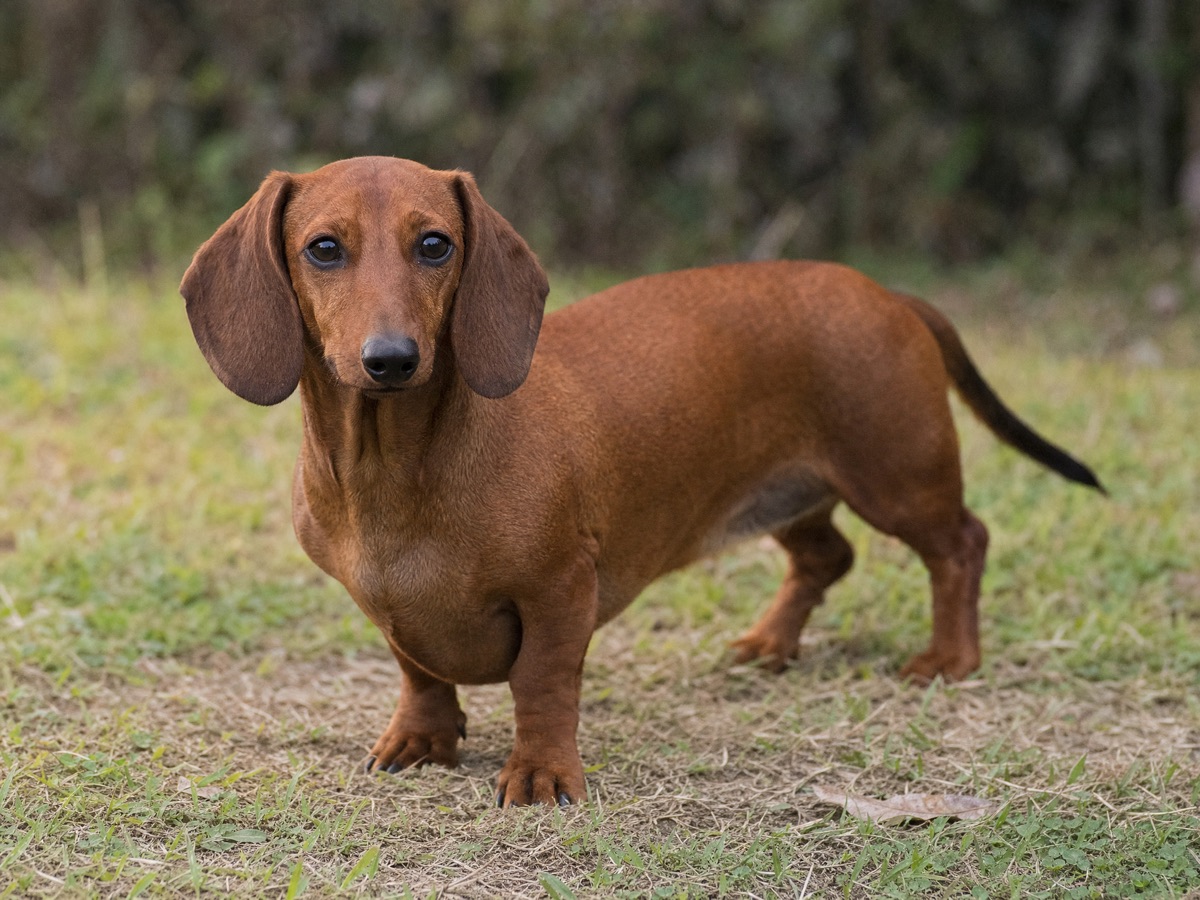
Dachshund
Long dog, huge attitude — bred to go to ground after badgers.
On these lists: Small dogs
Vital stats
| Size | Small · 20–23 cm (standard) |
| Weight | 7–14 kg (standard) |
| Life expectancy | 12–16 years |
| Energy | Moderate — 45–60 min/day |
| Shedding | Low–moderate |
| Coat | Smooth, long or wire · many colours |
| Group | Hound · FCI №148 / AKC |
| Origin | Germany |
| FCI group | 4 — Dachshunds · FCI 148 |
Breed traits
Friendliness
Care
Mind
The Dachshund by the numbers
The Dachshund facts owners search for most — price, lifespan, weight, shedding and colours, in one place.
Widely bred, so you can usually find a litter from a registered breeder without a long wait. Ongoing costs stay modest — it eats little and routine vet care sits at the lower end.
We don't quote a single figure: the real price swings with breeder, region, bloodline and health testing — and a rescue costs a fraction of a breeder's litter. Adopting is almost always the cheapest route.
Temperament
Engineered to follow a badger into its sett and argue with it underground, the Dachshund carries the courage of a far larger dog and the independence of a freelancer. At home that wiring means bold opinions, enthusiastic digging, a watchdog's bark, and a warm, comic loyalty to its chosen people.
Habits & quirks
Burrower-in-chief
Bred for tunnels, so your duvet is now a sett.
Big-dog bark
A hunter's voice built to carry from underground — the postman will assume a Rottweiler.
Excavation projects
Flowerbeds are practice setts; provide a digging pit or lose the garden.
The standoff
Orders are treated as suggestions — ask nicely and make it worth their while.
Health
The Dachshund's long back is its defining health risk: intervertebral disc disease (IVDD) is common, and one bad jump can cause serious injury. Protect the spine — ramps instead of stairs and sofas, no leaping, and keep the dog lean. The breed is also prone to kneecap trouble and, like many food-loving dogs, to obesity, which loads that back further.
Nutrition
| Back care | IVDD is the breed's big risk — ramps instead of stairs, no leaping off sofas, support the spine when lifting. |
| Feeding | Extra weight loads that long back; keep a visible waist at all costs. |
| Exercise | Two or three brisk, sniffy walks a day keep body and busy mind right. |
| Training | Bred to decide alone underground, so recall takes patience — be more interesting than the scent. |
Every extra gram loads the Dachshund's long spine, so weight control isn't optional — measure meals, go easy on treats, and keep ribs easy to feel. A lean Dachshund is a healthier back. Feed to the dog's real size (standard and miniature differ a lot) rather than by habit.
Puppy guide
A Dachshund puppy should be kept off the furniture and away from stairs while its back and joints are still forming — set up ramps and lift it up and down from the start. Keep exercise gentle and short at first, socialise early, and begin patient recall work, because this is an independent breed bred to work alone.
Training
Dachshunds were bred to go down a burrow and make their own decisions, so they're clever, brave and famously stubborn. Recall and toilet-training take patience. Keep sessions short, upbeat and food-rewarded, don't nag, and protect that back by never asking for jumps. A bored Dachshund digs and barks, so give it sniffy work.
Known health issues
No breed is problem-free. These are the conditions most worth knowing about for this breed — with what a good breeder screens for and what an owner watches. General guidance, not a substitute for your vet.
Back trouble (IVDD)
Slipped or ruptured spinal discs, a real risk in long-backed breeds like the Dachshund and Corgi. Good breeders screen: Choose lines without early disc disease; keep pups lean. Watch for: Sudden pain, a hunched back, wobbling or dragging hind legs — see a vet fast.
Slipping kneecap
A kneecap that slips out of place, common in small breeds and usually manageable. Good breeders screen: Vet-checked knees on the parents. Watch for: An occasional skip or hop on a back leg.
Tends to gain weight
A hearty appetite and easy weight gain that quietly shortens life and worsens joints if unchecked. Good breeders screen: Not a genetic test — a management point to plan for. Watch for: Keep ribs easy to feel; measure meals and go easy on treats.
Worried about a symptom right now? Why is my dog limping? Causes and when to see a vet
Life expectancy
Dachshunds live 12–16 years. Dachshunds are long-lived little dogs, and a lean weight plus a protected back is what carries them to the top of that range. The dogs that stay slim and never jump from height avoid the breed's worst problem.
Popular Dachshund mixes
Chiweenie
A tiny, bold, affectionate cross with a big personality. Loves its people, can be yappy, and still needs its back protected from jumps.
Dorkie
A small, lively lap cross with a soft coat and plenty of character. Affectionate and alert; watch the back and the teeth.
Doxiepoo
A clever, often lower-shedding cross with a wavy coat. Bright and affectionate; coat and size vary, and the long-backed ones still need care jumping.
Doxle
A friendly, scent-driven cross with a stubborn streak and a big appetite. Fun and affectionate, but keep it lean to protect the back.
Jackshund
A feisty, energetic cross with strong prey drive and a mind of its own. Lively and bold; needs exercise, patient training and back protection.
Similar breeds
Breeds with a similar build and background — worth a look if this one isn't quite the fit.
Breeds that look like this
Common questions
Are Dachshunds good with children?
With respectful older kids, yes; supervise with toddlers, as rough handling risks their fragile long back and they won't tolerate it.
Do Dachshunds have back problems?
The breed is prone to disc disease (IVDD). Limit jumping and stairs, use ramps, keep them lean, and support the whole body when lifting.
Why do Dachshunds bark so much?
They were bred to bark underground so hunters could locate them — the loud voice is a feature, not a fault. Training and enrichment lower the volume; nothing will mute it.
Does the Dachshund shed a lot?
Moderately. The Dachshund sheds a fair amount, steadily through the year with heavier seasonal patches. A weekly brush keeps most of the loose hair off your floors and clothes.
Is the Dachshund hypoallergenic?
Not really. No dog is truly hypoallergenic, and the Dachshund's shedding coat releases plenty of the dander that sets off allergies. If someone at home is allergic, this isn't the easiest breed to live with — spend time around one first.
Is the Dachshund easy to train?
Reasonably. The Dachshund is trainable with consistency and rewards, though it isn't the quickest study. Keep sessions short and positive, and be patient with the basics like recall.
Stories featuring this breed
All stories →
Why is my dog limping? Causes and when to see a vet
From a stone in the paw to a cruciate injury — the common reasons dogs go lame, what rest can and cannot fix, and the signs that mean see a vet.
Cartoon dog breeds: what Scooby-Doo, Snoopy and Brian really are
Scooby is a Great Dane and Snoopy is a Beagle, but Clifford and Blue were never given a real breed. The honest, non-Disney roundup.

Disney dog breeds: the real dog behind every one
Lady is a Cocker Spaniel and Dug is a Golden Retriever, but Pluto and Bolt were never given an official breed. The honest list.