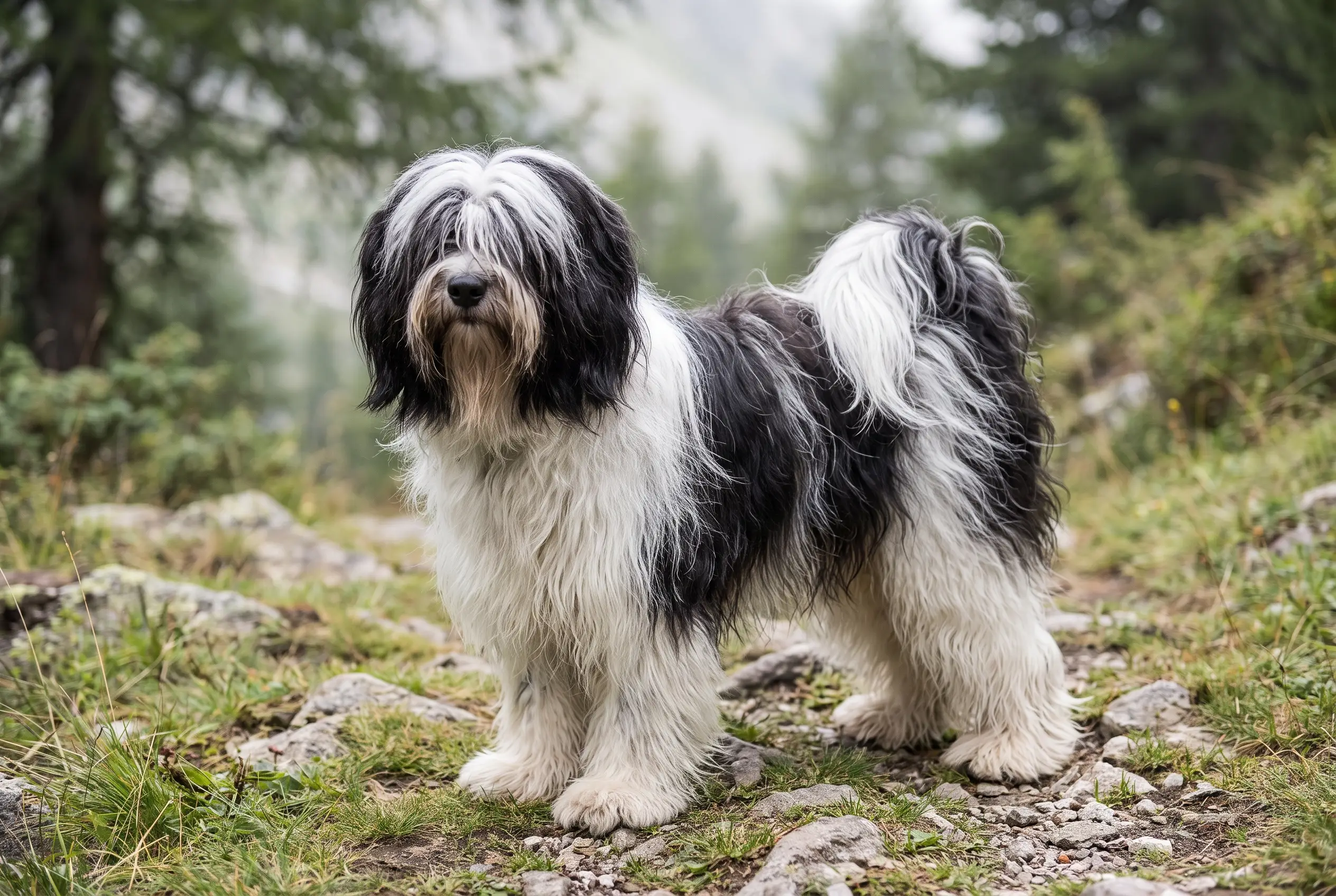
Tibetan Terrier
The Holy Dog of Tibet — a shaggy good-luck charm on snowshoe feet.
Vital stats
| Size | Medium · 36–41 cm |
| Weight | 8–14 kg |
| Life expectancy | 13–15 years |
| Energy | Moderate — 45–60 min/day |
| Shedding | Low — but coat mats readily |
| Coat | Long double coat · any colour |
| Group | Non-Sporting · FCI №209 / AKC |
| Origin | Lost Valley region, Tibet |
| FCI group | 9 — Companion and Toy Dogs · FCI 209 |
Breed traits
Friendliness
Care
Mind
The Tibetan Terrier by the numbers
The Tibetan Terrier facts owners search for most — price, lifespan, weight, shedding and colours, in one place.
Widely bred, so you can usually find a litter from a registered breeder without a long wait. Ongoing costs stay modest — it eats little and routine vet care sits at the lower end. Its coat also needs a professional groom every few weeks — a real line in the budget.
We don't quote a single figure: the real price swings with breeder, region, bloodline and health testing — and a rescue costs a fraction of a breeder's litter. Adopting is almost always the cheapest route.
Temperament
Raised in monasteries as companions and luck-bringers rather than workers, the Tibetan Terrier is sweet-natured, sensitive and quietly clever, with an agile, climbing gait inherited from mountain terrain. Expect a devoted family clown that warms to strangers on its own timetable and keeps a young heart well into old age.
Habits & quirks
Mountain goat moves
Those snowshoe feet climb — expect a dog on the table rock, the sofa arm, the stair post.
The fringe flick
Peers at you through a curtain of hair and somehow still sees everything.
Slow to say hello
Strangers get assessed before they get greeted; it's discernment, not shyness.
Forever young
Keeps its puppy bounce and sense of mischief for a decade or more.
Care
| Grooming | Brush thoroughly to the skin several times a week — the double coat mats fast, especially in adolescence. |
| Exercise | A daily walk plus play keeps it content; it will happily hike further if you do. |
| Training | Positive, varied sessions work best — this sensitive breed shuts down under harshness. |
| Health | A generally sturdy breed; choose breeders who test eyes and hips. |
Life expectancy
This breed has a typical life expectancy of 13–15 years.
Similar breeds
Breeds with a similar build and background — worth a look if this one isn't quite the fit.
Breeds that look like this
Common questions
Is the Tibetan Terrier really a terrier?
No — it has no terrier blood or temperament; European travellers just guessed from its size. In Tibet it was a cherished companion called the 'Holy Dog'.
Do Tibetan Terriers shed?
Barely — loose hair stays in the coat, which is why thorough regular brushing matters. Many owners keep pets in a shorter clip to simplify life.
Are Tibetan Terriers good for allergy sufferers?
They're often better tolerated because they shed so little, but no breed is truly hypoallergenic. Spend time with one before committing.
Is the Tibetan Terrier good with children?
They can be. The Tibetan Terrier is reasonably sociable and can be good with children in the right home, especially when socialised early. Supervise around young kids and teach dog and child to respect each other.
Is the Tibetan Terrier easy to train?
Reasonably. The Tibetan Terrier is trainable with consistency and rewards, though it isn't the quickest study. Keep sessions short and positive, and be patient with the basics like recall.