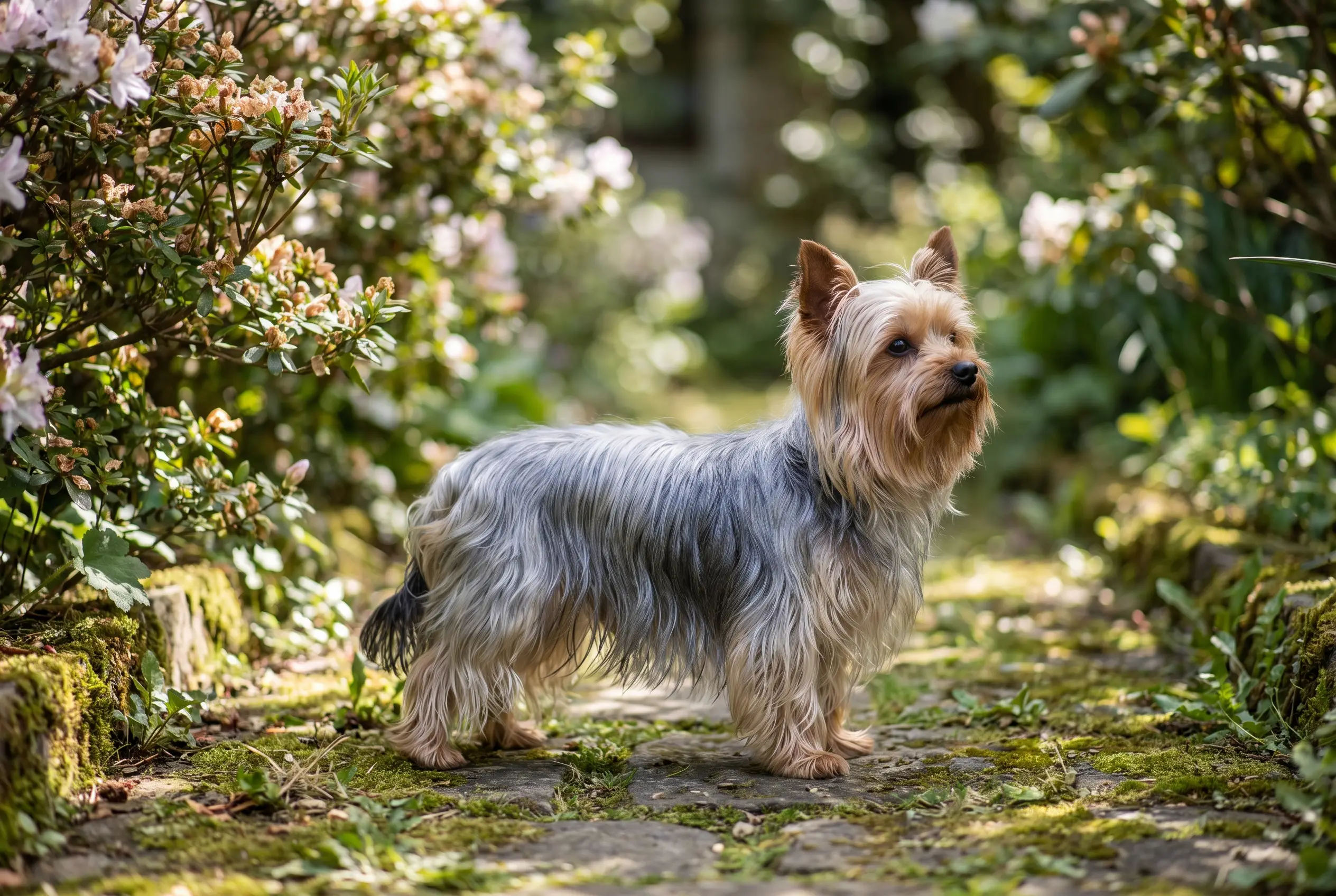
Yorkshire Terrier
Two kilos of silk-wrapped terrier certainty.
On these lists: Small dogs
Vital stats
| Size | Toy · 18–23 cm |
| Weight | 2–3.2 kg |
| Life expectancy | 12–15 years |
| Energy | Moderate — 30–45 min/day |
| Shedding | Minimal — hair-like coat |
| Coat | Long silky single coat · steel blue and tan |
| Group | Toy · FCI №86 / AKC |
| Origin | Yorkshire, England |
| FCI group | 3 — Terriers · FCI 86 |
Breed traits
Friendliness
Care
Mind
The Yorkshire Terrier by the numbers
The Yorkshire Terrier facts owners search for most — price, lifespan, weight, shedding and colours, in one place.
Widely bred, so you can usually find a litter from a registered breeder without a long wait. Ongoing costs stay modest — it eats little and routine vet care sits at the lower end. Its coat also needs a professional groom every few weeks — a real line in the budget.
We don't quote a single figure: the real price swings with breeder, region, bloodline and health testing — and a rescue costs a fraction of a breeder's litter. Adopting is almost always the cheapest route.
Temperament
Bred by Yorkshire mill workers to clear rats from looms and shafts, the Yorkie never received the memo about being a lapdog. It's brave to the point of comedy, sharp-eyed, vocal about visitors and fiercely attached to its person — a true terrier that happens to fit in a handbag.
Habits & quirks
The announcement service
Doorbells, deliveries and distant pigeons are all reported, promptly and at volume.
Big-dog delusions
Will square up to dogs twenty times its size; your job is diplomacy.
Lap by default
Wherever you settle, two kilos of silk arrives within the minute.
The topknot negotiation
Tolerates hair ties with the weary patience of a celebrity in make-up.
Health
The Yorkie's biggest health job is its teeth: tiny jaws crowd the teeth, so daily brushing and regular dental checks matter more here than in most breeds. The fine bones are genuinely fragile, so manage stairs, sofa leaps and boisterous larger dogs, and handle the dog gently. Very small Yorkies, especially puppies, can dip into low blood sugar, so keep meals small and regular and don't let a tiny pup go too long without eating.
Nutrition
| Grooming | Daily combing for a long coat, or a puppy cut every few weeks — either way, it's a standing commitment. |
| Teeth | Tiny jaws crowd teeth: daily brushing and regular dental checks are the breed's biggest health job. |
| Feeding | Small, regular meals — very small Yorkies, especially puppies, can dip into low blood sugar. |
| Safety | Fine bones and big confidence are a risky mix: manage stairs, sofa leaps and boisterous larger dogs. |
Feed a Yorkie small, regular meals — very small ones, and puppies especially, can drop into low blood sugar if they go too long between meals or burn off more than they eat. Measure the food, count treats into the day, and keep the dog lean; extra weight is a lot on a 2–3 kg frame. Favour dental-friendly chewing too, since crowded little teeth are the breed's main health concern.
Puppy guide
A Yorkie puppy is tiny, bold and busy, and its first months need a careful eye. Feed small, frequent meals so a very small pup doesn't dip into low blood sugar, and manage stairs, furniture leaps and bigger dogs so the fragile bones stay sound. Start gentle daily grooming from the beginning, socialise widely, and teach a quiet cue early — this is a born watchdog that will otherwise announce everything.
Training
Yorkies are bright, bold little terriers that learn quickly in short, reward-based sessions — treat the dog like the real terrier it is, not an ornament. The main project is the barking: this is a natural watchdog, so teach a quiet cue early and give it enough to do, and the announcements stay brief. Housetraining takes patience like most toys, so keep a routine and stay consistent.
Known health issues
No breed is problem-free. These are the conditions most worth knowing about for this breed — with what a good breeder screens for and what an owner watches. General guidance, not a substitute for your vet.
Slipping kneecap
A kneecap that slips out of place, common in small breeds and usually manageable. Good breeders screen: Vet-checked knees on the parents. Watch for: An occasional skip or hop on a back leg.
Liver shunt
A blood vessel that bypasses the liver before birth and never closes, so toxins the liver should filter build up instead — mostly seen in small breeds as puppies. Good breeders screen: A bile acids blood test on puppies before they go to new homes. Watch for: A small, poor-doing puppy, disorientation or circling after meals, or seizures — get it checked young.
Collapsing trachea
A windpipe whose cartilage rings weaken and flatten with age, common in small and toy breeds and worsened by excess weight. Good breeders screen: Not a genetic test — a harness instead of a collar is the main prevention. Watch for: A dry, honking cough, worse with excitement, heat, or pulling on the lead.
Life expectancy
Yorkshire Terriers live 12–15 years. The Yorkshire Terrier is a long-lived little dog, and steady care keeps one there: teeth brushed and checked, a lean weight, and everyday caution about leaps and falls that fragile bones don't forgive. Keep the coat combed or clipped so it never mats, book the yearly vet visit, and a well-kept Yorkie stays a bright, busy companion for many years.
Popular Yorkshire mixes
Yorkipoo
A small, clever, often low-shedding cross that's lively and affectionate; bright and easy to bond with, with a coat that needs regular brushing.
Morkie
A tiny, bold, devoted cross with a big voice for its size. Socialise early, keep up the coat care and mind the small teeth.
Chorkie
A tiny, spirited, devoted cross that bonds hard to its person and barks readily. Keep it lean, socialise early and watch the fragile frame.
Shorkie
A small, affectionate, confident cross with lots of personality; the coat needs regular brushing and the teeth daily care.
Dorkie
A small, bold, playful cross with a long body and a stubborn streak. Keep it lean to protect the back, and mind stairs and big leaps.
Similar breeds
Breeds with a similar build and background — worth a look if this one isn't quite the fit.
Breeds that look like this
Common questions
Do Yorkshire Terriers shed?
Barely — the fine, hair-like coat grows continuously rather than shedding seasonally. The trade-off is regular combing or clipping to stop mats.
Are Yorkies good with children?
Best with gentle, older children. Their bones are genuinely fragile, and rough handling can injure the dog or teach it to snap in self-defence.
Are Yorkies yappy?
They're born watchdogs and will announce everything by default. With early training and enough stimulation, the bulletins can be kept to headlines.
Is the Yorkshire Terrier hypoallergenic?
No dog is truly hypoallergenic, but the Yorkshire Terrier comes closer than most: its low-shedding coat releases less of the dander that triggers allergies. Many allergy sufferers manage well with this breed, but spend time around one before committing.
Is the Yorkshire Terrier easy to train?
Reasonably. The Yorkshire Terrier is trainable with consistency and rewards, though it isn't the quickest study. Keep sessions short and positive, and be patient with the basics like recall.
Stories featuring this breed
All stories →
The smallest dog breeds in the world
The Chihuahua is officially the smallest, at 1.5–3 kg. Here are the toy breeds just above it — and an honest warning about the 'teacup' label, which is marketing, not a breed.

Low-shedding dog breeds, ranked from our own data
We scored every breed for shedding, 1 to 5. Here are the ones that scored lowest — the curly coats worth the grooming bill, the genuinely low-maintenance short-hairs, and why none of them are hypoallergenic.