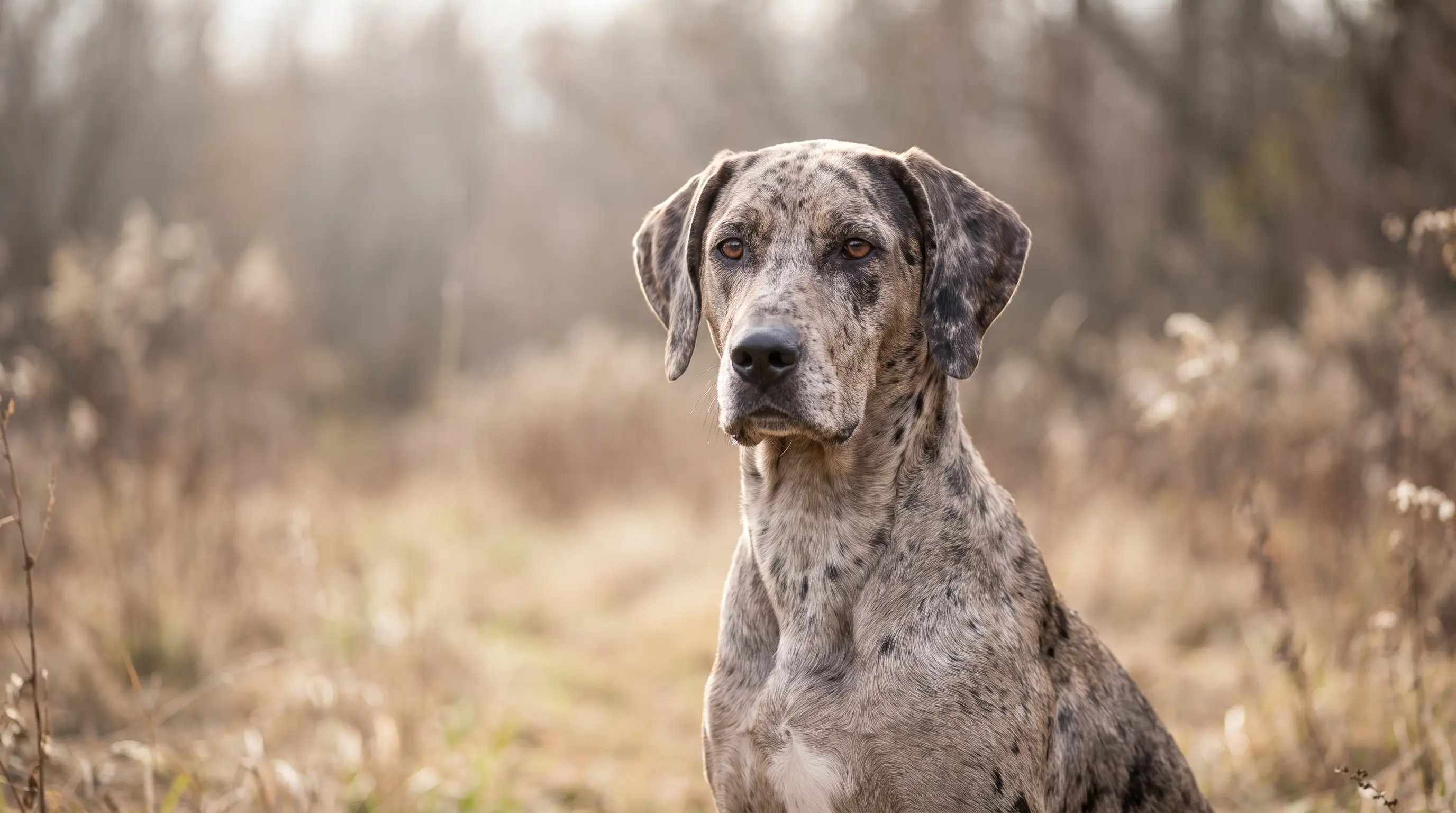
American Leopard Hound
A leopard-spotted tracker with a cold nose and a warm heart.
Vital stats
| Size | Medium-large · 53–68 cm |
| Weight | 20–34 kg |
| Life expectancy | 12–15 years |
| Energy | High — 90+ min/day |
| Shedding | Low–moderate, year-round |
| Coat | Short dense coat · merle 'leopard', many colours |
| Group | Hound · AKC |
| Origin | Southern United States |
Breed traits
Friendliness
Care
Mind
The American Leopard Hound by the numbers
The American Leopard Hound facts owners search for most — price, lifespan, weight, shedding and colours, in one place.
Less common, so expect a waitlist and some travel to a reputable breeder — which pushes the price up. Ongoing costs run high — more food, bigger doses at the vet, and pricier insurance.
We don't quote a single figure: the real price swings with breeder, region, bloodline and health testing — and a rescue costs a fraction of a breeder's litter. Adopting is almost always the cheapest route.
Temperament
Descended from dogs that treed raccoon, bear and boar across the American South, the Leopard Hound works far from its handler, unravelling scent gone hours cold and baying loudly when the job is done. At home that means independence, a big voice and a watchful gentleness — old hog hunters trusted these dogs around the kids.
Habits & quirks
Sings the news
The bay that found the raccoon will also announce the postman.
Nose down, ears off
On a fresh trail, recall becomes a suggestion — long lines exist for a reason.
Velcro off duty
Tireless in the woods, it wants the sofa and its people the moment work ends.
All-weather build
That short coat and iron constitution came from generations of year-round hunting.
Health
The American Leopard Hound is a tough, iron-constitutioned working hound bred through generations of year-round hunting, and it carries no long list of breed-specific problems. Its care is mostly management. Check the drop ears after wet or brushy outings, since ears that fold over the canal trap moisture and can turn into infections. Keep the dog lean and well exercised — this is a hound built to work for hours, and a bored, under-run one does worse than a busy one. And treat containment as a health matter: a scenting hound will roam, so secure fencing keeps it off roads and out of trouble.
Nutrition
| Exercise | Ninety minutes plus daily, ideally with tracking or scent games — a walk alone won't empty the tank |
| Containment | A scenting hound roams; 1.8 m fencing and a long line on open walks are non-negotiable |
| Training | Build recall early and pay it generously — the nose will always outbid a cheap reward |
| Grooming | A weekly rub-down does it; check the drop ears after wet or brushy outings |
This is a hard-working hound with real stamina, and it eats to fuel the work it actually does. Feed to the dog's week: a season of long tracking days burns far more than a quiet stretch at home, and the ration should follow. Weigh the meals rather than guessing, count any training treats in the day's total, and judge condition by feeling for the ribs under that short coat. A leopard hound should be lean and fit — that is the weight it works and ages best at.
Puppy guide
A leopard hound puppy is independent, confident and surprisingly gentle, and the first year is where you shape both the manners and the safety habits. Recall is the priority: teach coming back as a richly paid game long before the nose takes charge, and back it up with a long line and secure fencing, because a scenting hound will one day choose the trail over your voice. Get the puppy used to having its ears checked and cleaned early, so it stays a quick routine. Build fitness gradually on growing joints, socialize widely, and give this bright, busy breed things to do — a hound with a job stays out of mischief.
Training
Train a leopard hound early, patiently and generously, and put recall first. This is an intelligent, courageous breed that was bred to work far from its handler, unravelling a cold trail on its own, so independence is built in and blind obedience is not the goal. Pay recall well every single time, because the nose will always outbid a cheap reward, and never fully trust it against a fresh scent — manage that with fencing and a long line rather than hoping. Keep sessions short and food-driven, work with the breed's genuine attachment to its people, and accept that some of the job is management, not obedience.
Life expectancy
American Leopard Hounds live 12–15 years. The American Leopard Hound is a hardy, long-lived working breed, and it stays sound the same way it stays happy: a lean, fit weight, ears checked and dried after wet outings, a secure garden so the nose never leads it astray, and enough real exercise and scent work to satisfy a dog built for the long trail. Keep body and mind busy, and it ages well.
Similar breeds
Breeds with a similar build and background — worth a look if this one isn't quite the fit.
Breeds that look like this
Common questions
Are American Leopard Hounds good family dogs?
Yes — they're famously patient and gentle with children, a trait old breeders selected for deliberately. They still need serious daily exercise and an outlet for the nose.
Do American Leopard Hounds bark a lot?
They bay rather than bark — loudly, musically and often when excited or on scent. Rural homes cope far better than terraced streets.
Are American Leopard Hounds rare?
Yes — the breed is little known outside American treeing circles and is still working through AKC recognition. Expect a search, and probably a waiting list, for a puppy.
Does the American Leopard Hound shed a lot?
Moderately. The American Leopard Hound sheds a fair amount, steadily through the year with heavier seasonal patches. A weekly brush keeps most of the loose hair off your floors and clothes.
Is the American Leopard Hound hypoallergenic?
Not really. No dog is truly hypoallergenic, and the American Leopard Hound's shedding coat releases plenty of the dander that sets off allergies. If someone at home is allergic, this isn't the easiest breed to live with — spend time around one first.
Is the American Leopard Hound easy to train?
Reasonably. The American Leopard Hound is trainable with consistency and rewards, though it isn't the quickest study. Keep sessions short and positive, and be patient with the basics like recall.