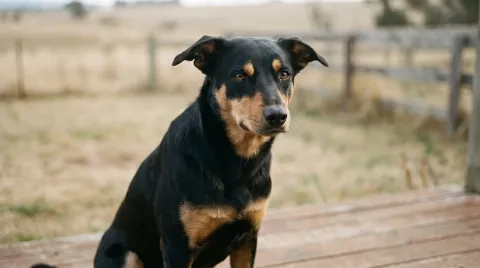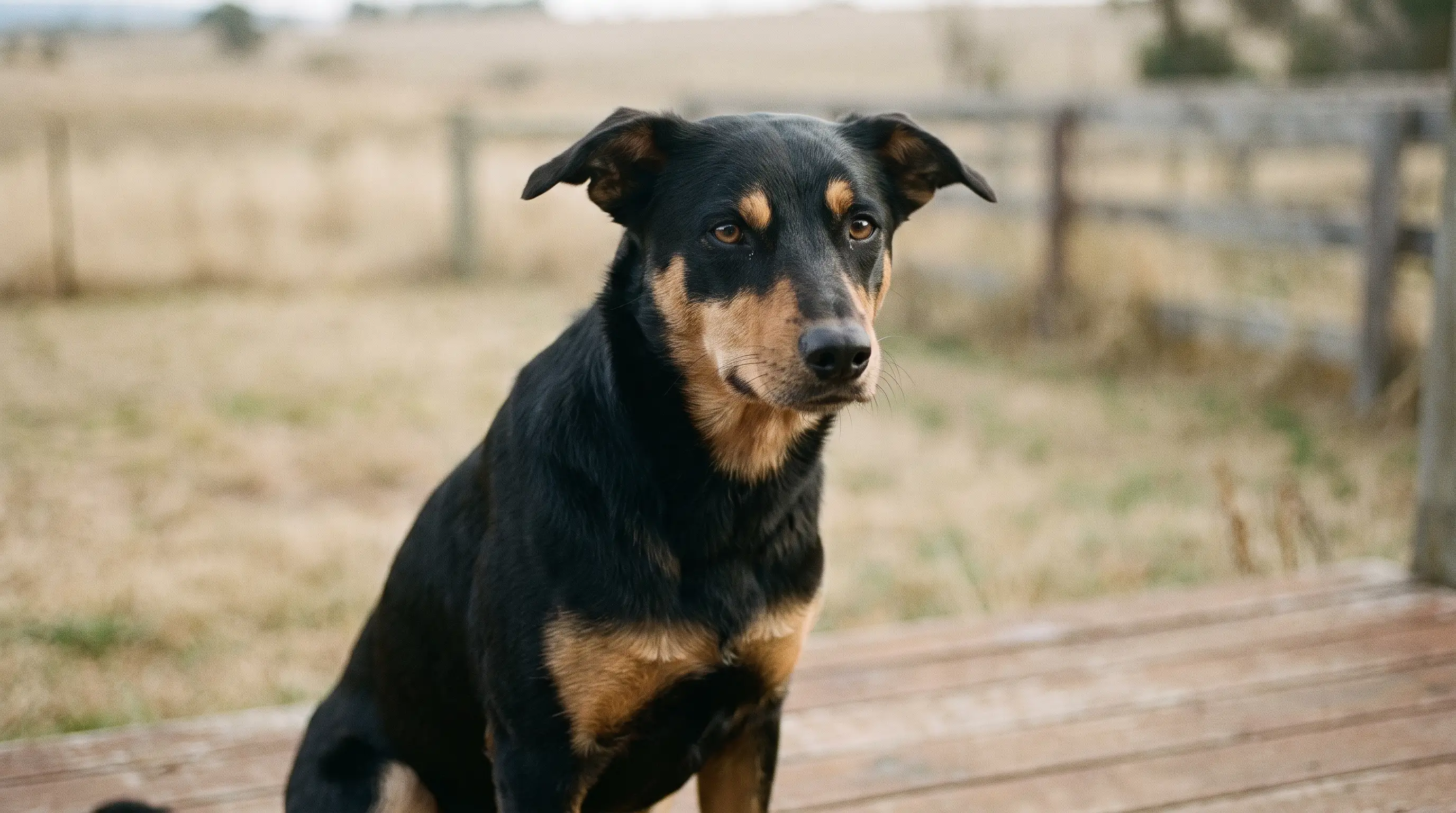
Australian Kelpie
Australia's tireless paddock genius — happiest with a mob to move.
On these lists: Dogs for runners · Farm dogs
Vital stats
| Size | Medium · 43–51 cm |
| Weight | 14–21 kg |
| Life expectancy | 12–15 years |
| Energy | Extreme — 2+ hours/day |
| Shedding | Moderate, seasonal |
| Coat | Short weatherproof double coat · black, red, blue, fawn, tan |
| Group | Herding · FCI №293 / AKC |
| Origin | Australia |
| FCI group | 1 — Sheepdogs and Cattledogs · FCI 293 |
Breed traits
Friendliness
Care
Mind
The Australian Kelpie by the numbers
The Australian Kelpie facts owners search for most — price, lifespan, weight, shedding and colours, in one place.
Widely bred, so you can usually find a litter from a registered breeder without a long wait. Plan for steady ongoing costs — mid-range food, routine vet care and insurance.
We don't quote a single figure: the real price swings with breeder, region, bloodline and health testing — and a rescue costs a fraction of a breeder's litter. Adopting is almost always the cheapest route.
Temperament
Bred for stations the size of small countries, the Kelpie works sheep in heat that stops other dogs, thinking for itself far from the handler. At home that means initiative, athleticism and a permanent question — what's my job? Answer it daily with running, training or sport and you get a superbly biddable companion.
Habits & quirks
The crouch and stare
Watch it drop low and fix its eye on anything that moves — cats, pigeons, toddlers with biscuits.
Perpetual motion
Rest is what happens after the third hour of work, not before.
Self-employed
Left jobless, a Kelpie appoints itself head of landscaping or the escape committee.
One eye on you
Checks in constantly mid-task — a partnership dog to its bones.
Health
The Kelpie is a working dog bred for stamina, and a sound one is genuinely low-maintenance at the vet — the near-nil coat and lean, athletic build do it plenty of favours. There's no long list of breed illnesses to recite here; the honest advice is the dull kind. Buy from a breeder who health-tests the parents rather than one selling on looks, keep him lean, and give him the daily work his body was built for. A Kelpie kept fit and employed tends to stay well for years.
Nutrition
| Exercise | Two hours minimum, plus brainwork — dog sport, trick training or actual stock |
| Training | Learns in two repetitions; keep sessions fresh or it starts improvising |
| Containment | Athletic enough to scale ordinary fences — height and supervision both matter |
| Grooming | Nearly nil: a quick weekly brush and more during the seasonal moult |
A working Kelpie runs on a lot of fuel, so feed the dog in front of you — a farm dog on stock and a house Kelpie between runs do not eat the same amount. Weigh the meals, fold the training treats into the day's total, and aim for a lean dog whose ribs you can feel under that short coat. Lean is the whole point on a breed this athletic: spare weight only slows down the very thing it lives to do.
Puppy guide
A Kelpie puppy learns frighteningly fast, and that cuts both ways — the good habits and the bad ones stick at the same speed. Busy the brain early with short training games and wide, gentle socialising, but keep the body's work light while the joints are forming and skip the marathon fetch sessions. Teach a settle as deliberately as you teach a recall, because a Kelpie that never learns to switch off becomes an adult that can't.
Training
A Kelpie can pick up a new behaviour in a couple of repetitions, which makes it a joy to train and a menace to leave bored. It thinks for itself — bred to work stock half a paddock from the handler — so it will happily improvise the moment your sessions go stale. Keep them short, fresh and rewarding, give it a real job in dog sport, trick training or actual stock, and remember that an under-employed Kelpie appoints itself head of landscaping. Answer its standing question — what's my job? — and you get a superbly biddable partner.
Life expectancy
Australian Kelpies live 12–15 years. The Kelpie is a hardy, long-lived working breed, and the way you keep it at the top of that range is the way you keep it happy: a lean weight, a puppy from a breeder who health-tests, and a life with enough real work in it to tire the mind as well as the legs.
Similar breeds
Breeds with a similar build and background — worth a look if this one isn't quite the fit.
Breeds that look like this
Common questions
Can a Kelpie be a family pet?
Yes, in genuinely active homes — they're loyal and gentle with their people. Without daily work, though, frustration shows fast.
Kelpie or Border Collie — which is easier?
Neither is easy, but Collies tend to work closer to their handler while Kelpies think more independently. Both need daily jobs; choose the working style that suits yours.
Do Kelpies bark much?
Working lines use their bark to move stock, and a bored Kelpie can be noisy. A properly exercised pet is usually reasonably quiet.
Does the Australian Kelpie shed a lot?
Moderately. The Australian Kelpie sheds a fair amount, steadily through the year with heavier seasonal patches. A weekly brush keeps most of the loose hair off your floors and clothes.
Is the Australian Kelpie hypoallergenic?
Not really. No dog is truly hypoallergenic, and the Australian Kelpie's shedding coat releases plenty of the dander that sets off allergies. If someone at home is allergic, this isn't the easiest breed to live with — spend time around one first.
Is the Australian Kelpie easy to train?
Yes. The Australian Kelpie is one of the more trainable breeds — quick to learn and keen to work with you, which makes reward-based training straightforward. Start early, keep it positive, and it picks things up fast.