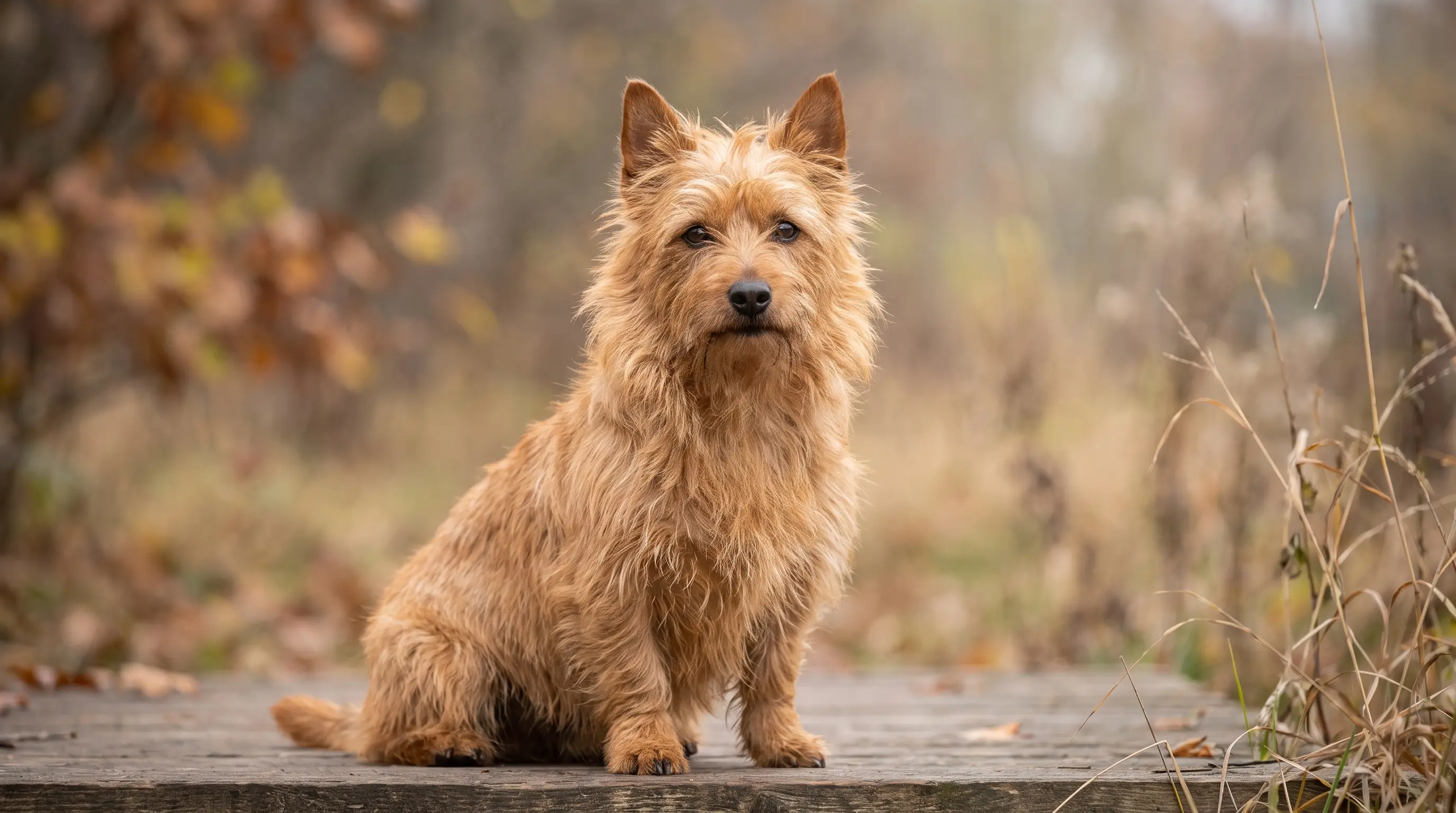
Australian Terrier
A pocket-sized pioneer — outback grit in seven cheerful kilos.
Vital stats
| Size | Small · 23–28 cm |
| Weight | 6–8 kg |
| Life expectancy | 12–15 years |
| Energy | Moderate — 45–60 min/day |
| Shedding | Low |
| Coat | Harsh double coat · blue-and-tan, red, sandy |
| Group | Terrier · FCI №8 / AKC |
| Origin | Australia |
| FCI group | 3 — Terriers · FCI 8 |
Breed traits
Friendliness
Care
Mind
The Australian Terrier by the numbers
The Australian Terrier facts owners search for most — price, lifespan, weight, shedding and colours, in one place.
Widely bred, so you can usually find a litter from a registered breeder without a long wait. Ongoing costs stay modest — it eats little and routine vet care sits at the lower end.
We don't quote a single figure: the real price swings with breeder, region, bloodline and health testing — and a rescue costs a fraction of a breeder's litter. Adopting is almost always the cheapest route.
Temperament
Developed by settlers to kill snakes and rats around remote homesteads, the Aussie Terrier is bold, busy and sharper than its scruffy charm suggests. More biddable than many terriers and devoted to its people, it still carries prey drive as original equipment — small pets and unfenced gardens need forethought.
Habits & quirks
Excavation department
Bred to dig out vermin, it will happily practise on your flowerbeds.
Town crier
Every arrival, delivery and suspicious leaf gets announced.
Snake-checker
That lightning pounce on rustling grass is ancestral pest control.
Big-dog swagger
Seven kilos of dog carrying thirty kilos of confidence.
Health
The Australian Terrier is a sturdy little working dog, and a well-bred one is generally hardy with a good long life ahead of it — there's no headline breed illness to reel off here. The sensible approach is the ordinary one: buy from a breeder who health-tests the parents, keep him lean (small dogs hide weight under a thick coat), look after the teeth as you would with any small breed, and keep him active. Do that, and the biggest health risk left is the flowerbed he's decided to excavate.
Nutrition
| Exercise | A brisk 45–60 minutes plus play — equally content in town or country |
| Grooming | Tidy or hand-strip the harsh coat a few times a year; shedding is minimal |
| Training | Keen and quick for a terrier — keep sessions short, fun and rewarding |
| Containment | Secure the garden low and deep; determined diggers find gaps under fences |
Six or eight kilos does not need much food, and that is exactly the trap — a small terrier gains on very little, and it hides under the harsh coat until you put hands on the ribs. Measure the meals instead of eyeballing the bowl, count the treats you spend on training, and check the waist by feel now and then. He'll dig and patrol on far fewer calories than his swagger suggests he's burning.
Puppy guide
An Aussie Terrier puppy arrives with the full terrier toolkit already installed — digging, a sharp voice, and a keen interest in anything small that moves. Start early: teach a quiet cue before the barking sets into a habit, socialise him widely so the boldness stays friendly, and channel the digging and chasing into games rather than fighting instincts he was bred to have. He's quicker to train than most terriers, so short, fun, well-rewarded sessions get you a long way.
Training
For a terrier the Aussie is keen and quick, more willing to work with you than many of its cousins — but it is still a terrier, with its own opinions and a strong independent streak. Keep sessions short, upbeat and well rewarded, and make listening to you more interesting than the rustle in the hedge. Teach a reliable quiet cue early, since it takes watchdog duty seriously, and give the digging and prey drive a legal outlet before the garden becomes the outlet. Meet it halfway and you get a bright, willing little dog.
Life expectancy
Australian Terriers live 12–15 years. The Australian Terrier is a hardy little breed that tends to live a good long life, and you help it reach the top of that range with plain, steady care: a lean weight, a breeder who health-tests, clean teeth, and enough daily walking and play to keep a busy terrier mind satisfied.
Similar breeds
Breeds with a similar build and background — worth a look if this one isn't quite the fit.
Breeds that look like this
Common questions
Are Australian Terriers good apartment dogs?
Yes, with daily walks and play — they're small, low-shedding and adaptable. Teach a quiet cue early, as they take watchdog duty seriously.
Do Australian Terriers get on with cats?
Often fine with cats they grow up with, but the vermin-hunting instinct runs deep. Unfamiliar small animals will be chased.
Do Australian Terriers shed?
Very little — the harsh double coat mostly holds its hair. Occasional stripping keeps texture and colour at their best.
Is the Australian Terrier hypoallergenic?
No dog is truly hypoallergenic, but the Australian Terrier comes closer than most: its low-shedding coat releases less of the dander that triggers allergies. Many allergy sufferers manage well with this breed, but spend time around one before committing.
Is the Australian Terrier good with children?
They can be. The Australian Terrier is reasonably sociable and can be good with children in the right home, especially when socialised early. Supervise around young kids and teach dog and child to respect each other.
Is the Australian Terrier easy to train?
Reasonably. The Australian Terrier is trainable with consistency and rewards, though it isn't the quickest study. Keep sessions short and positive, and be patient with the basics like recall.