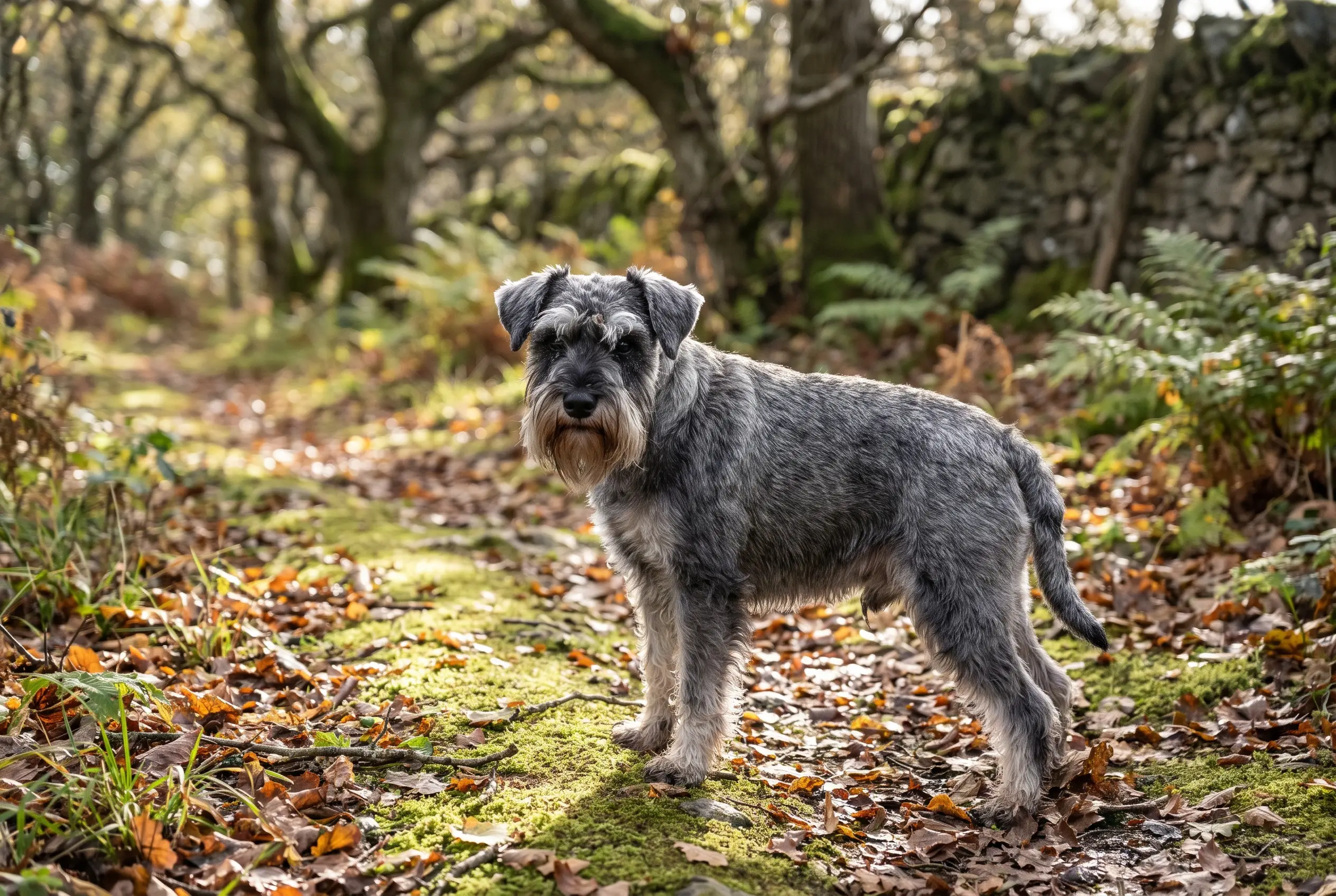
Miniature Schnauzer
A bearded farm ratter turned family sentinel — small dog, serious opinions.
On these lists: Dogs for first-time owners · Low-shedding dogs · Dogs for anxiety
Vital stats
| Size | Small · 30–36 cm |
| Weight | 5–9 kg |
| Life expectancy | 12–15 years |
| Energy | Moderate — 45–60 min/day |
| Shedding | Very low — but needs trimming |
| Coat | Wiry double coat · salt & pepper, black & silver, black |
| Group | Terrier · FCI №183 / AKC |
| Origin | Germany |
| FCI group | 2 — Pinscher and Schnauzer, Molossoid and Swiss Mountain Dogs · FCI 183 |
Breed traits
Friendliness
Care
Mind
The Miniature Schnauzer by the numbers
The Miniature Schnauzer facts owners search for most — price, lifespan, weight, shedding and colours, in one place.
Widely bred, so you can usually find a litter from a registered breeder without a long wait. Ongoing costs stay modest — it eats little and routine vet care sits at the lower end. Its coat also needs a professional groom every few weeks — a real line in the budget.
We don't quote a single figure: the real price swings with breeder, region, bloodline and health testing — and a rescue costs a fraction of a breeder's litter. Adopting is almost always the cheapest route.
Temperament
Bred down from the Standard Schnauzer to clear German farmyards of rats, the Miniature kept the working alertness and added a shadow-your-people streak. Expect a spirited, quick-learning companion who guards the window with conviction, adores its family, and treats anything squeaky — vermin or toy — as unfinished business.
Habits & quirks
The window desk
Front-facing glass is a duty station; passers-by will be logged and announced.
Beard dunk
Drinks deeply, then shares the beard-water with your trousers.
Squeak justice
Squeaky toys are dispatched with old ratting professionalism.
Room-to-room shadow
Wherever you settle, a small bearded supervisor settles too.
Health
The Miniature Schnauzer is a hardy little dog, and the health point to know sits at the food bowl: the breed is prone to pancreatitis and to high fat levels in the blood, both made worse by a rich diet and extra weight. Keep the fat low, keep the treats counted, and keep him lean — it's the single most useful thing you can do for a Schnauzer's health. Buy from a breeder who health-tests their line, stay on top of the wiry coat so the skin underneath stays healthy, and keep vaccinations and dental care current. Handled that way, it's a robust, long-lived companion.
Nutrition
| Grooming | Clip or hand-strip the wiry coat every 6–8 weeks; brush the beard and leg furnishings between visits. |
| Feeding | Keep fat low and treats measured — the breed is prone to pancreatitis and high blood lipids. |
| Exercise | Two brisk walks plus play; a bored Schnauzer becomes a louder Schnauzer. |
| Training | Teach a quiet cue early and give the watchdog instinct rules before it writes its own. |
This is a breed to feed carefully, because the Miniature Schnauzer is prone to pancreatitis and to high blood fats — so keep the diet lean and low in fat, and be genuinely strict about treats and table scraps. A fatty snack that another dog would shrug off can set a Schnauzer's pancreas off. Weigh the meals, count the treats into the daily total, skip the rich human food entirely, and keep him at a trim weight. A lean Schnauzer on a sensible diet sidesteps the breed's main health worry.
Puppy guide
A Miniature Schnauzer puppy is bright, busy and quick to learn, and two habits set now pay off for years. First, get him used to grooming early — the beard, the leg furnishings and the wiry coat all need regular work, so make brushing and handling a normal, pleasant thing before the first proper trim. Second, get ahead of the barking: this is a natural watchdog that will happily appoint itself to announce every visitor, so teach a quiet cue early and reward calm. Socialize him widely, keep the food measured from the start, and you'll raise a well-mannered version of a very opinionated breed.
Training
Schnauzers are clever and quick to learn, which cuts both ways — they pick up good habits fast and bad ones just as fast. The priority is the barking: this is a born watchdog that takes the job seriously, so teach a reliable quiet cue early and give the alarm instinct clear rules before it makes up its own. Keep sessions upbeat and reward-based, and give that busy brain enough to do, because a bored Schnauzer simply gets louder. Consistent, positive training turns the siren into a doorbell and brings out one of the most companionable small dogs there is.
Known health issues
No breed is problem-free. These are the conditions most worth knowing about for this breed — with what a good breeder screens for and what an owner watches. General guidance, not a substitute for your vet.
Slipping kneecap
A kneecap that slips out of place, common in small breeds and usually manageable. Good breeders screen: Vet-checked knees on the parents. Watch for: An occasional skip or hop on a back leg.
Inherited eye disease
Progressive retinal atrophy and cataracts run in several breeds and can dim or take sight over time. Good breeders screen: Eye-tested parents and, where available, a DNA test for PRA. Watch for: Night-time bumping, cloudy eyes, or hesitation in dim light.
Bleeding disorder (von Willebrand)
A missing clotting protein that makes bleeding hard to stop, the most common inherited bleeding disorder in dogs and especially common in the Doberman. Good breeders screen: A DNA or blood clotting test on breeding stock. Watch for: Bleeding that won't stop from a small cut, nosebleeds, or bleeding gums — tell your vet before any surgery.
Life expectancy
Miniature Schnauzers live 12–15 years. The Miniature Schnauzer is a long-lived little dog, and you keep it at the top of that range mainly through the food bowl and the scales: a lean weight and a low-fat diet head off the pancreatitis and high blood fats the breed is prone to. Add a breeder who health-tests, regular grooming to keep the skin healthy, and current vaccinations and dental care, and a well-kept Schnauzer stays a bright, bearded companion well into old age.
Popular Miniature mixes
Schnoodle
A popular, clever cross bred for a low-shedding, curly coat and a friendly nature. Needs regular grooming and enjoys training; coat type varies pup to pup.
Snorkie
A tiny, lively, affectionate cross with a big-dog attitude and a tendency to bark. Fun and portable, but train the alarm instinct early and watch dental health.
Chizer
A small, alert, spirited cross that bonds hard to its person. Bold well beyond its size — early socialization and consistent training keep it easy to live with.
Schnese
A gentle, sociable little companion with a soft, low-shedding coat that needs regular grooming. Affectionate and people-focused, well suited to flats.
Mauzer
A small, cheerful lapdog cross with a low-shedding coat and a devoted streak. Needs regular grooming and a little firmness about barking.
Similar breeds
Breeds with a similar build and background — worth a look if this one isn't quite the fit.
Breeds that look like this
Common questions
Are Miniature Schnauzers hypoallergenic?
No dog truly is, but they shed very little and many allergy-sensitive owners cope well. Regular grooming keeps dander down.
Do Miniature Schnauzers bark a lot?
Yes — they are natural alarm dogs and take the job seriously. Early training and enough exercise turn the siren into a doorbell.
Are they good for first-time owners?
One of the best terrier-type choices: small, trainable, and devoted. Budget for professional grooming and be consistent about the barking.
Does the Miniature Schnauzer shed a lot?
Not much. The Miniature Schnauzer is a low-shedding breed, so loose hair around the home stays minimal. It still needs regular grooming, but you won't be fighting drifts of fur.
Is the Miniature Schnauzer good with children?
Generally yes. The Miniature Schnauzer is a friendly, people-loving breed that usually does well with children when raised and socialised well. As with any dog, teach children to be gentle and supervise around toddlers.
Is the Miniature Schnauzer easy to train?
Reasonably. The Miniature Schnauzer is trainable with consistency and rewards, though it isn't the quickest study. Keep sessions short and positive, and be patient with the basics like recall.
Stories featuring this breed
All stories →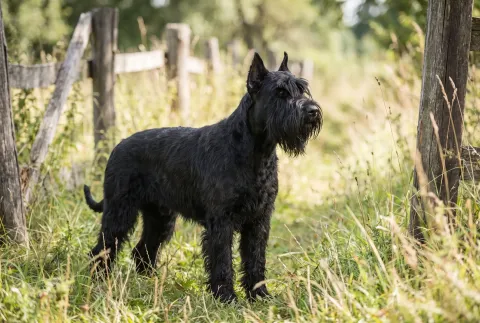
Are Schnauzers terriers? No — here's their real group
They've got the beard, the wiry coat and the attitude, but Schnauzers aren't terriers. Why the world's biggest registry files them somewhere else entirely.
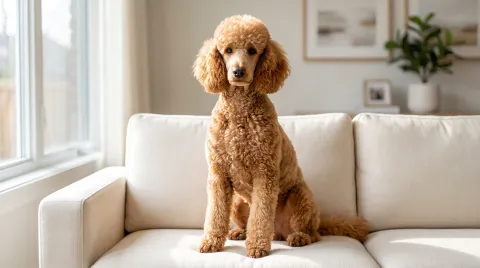
Low-shedding dog breeds, ranked from our own data
We scored every breed for shedding, 1 to 5. Here are the ones that scored lowest — the curly coats worth the grooming bill, the genuinely low-maintenance short-hairs, and why none of them are hypoallergenic.