Belgian Malinois
A work ethic with a heartbeat — the professional's shepherd.
On these lists: Protection dogs
Vital stats
| Size | Medium-large · 56–66 cm |
| Weight | 20–30 kg |
| Life expectancy | 12–14 years |
| Energy | Extreme — 2+ hours/day |
| Shedding | Moderate, year-round |
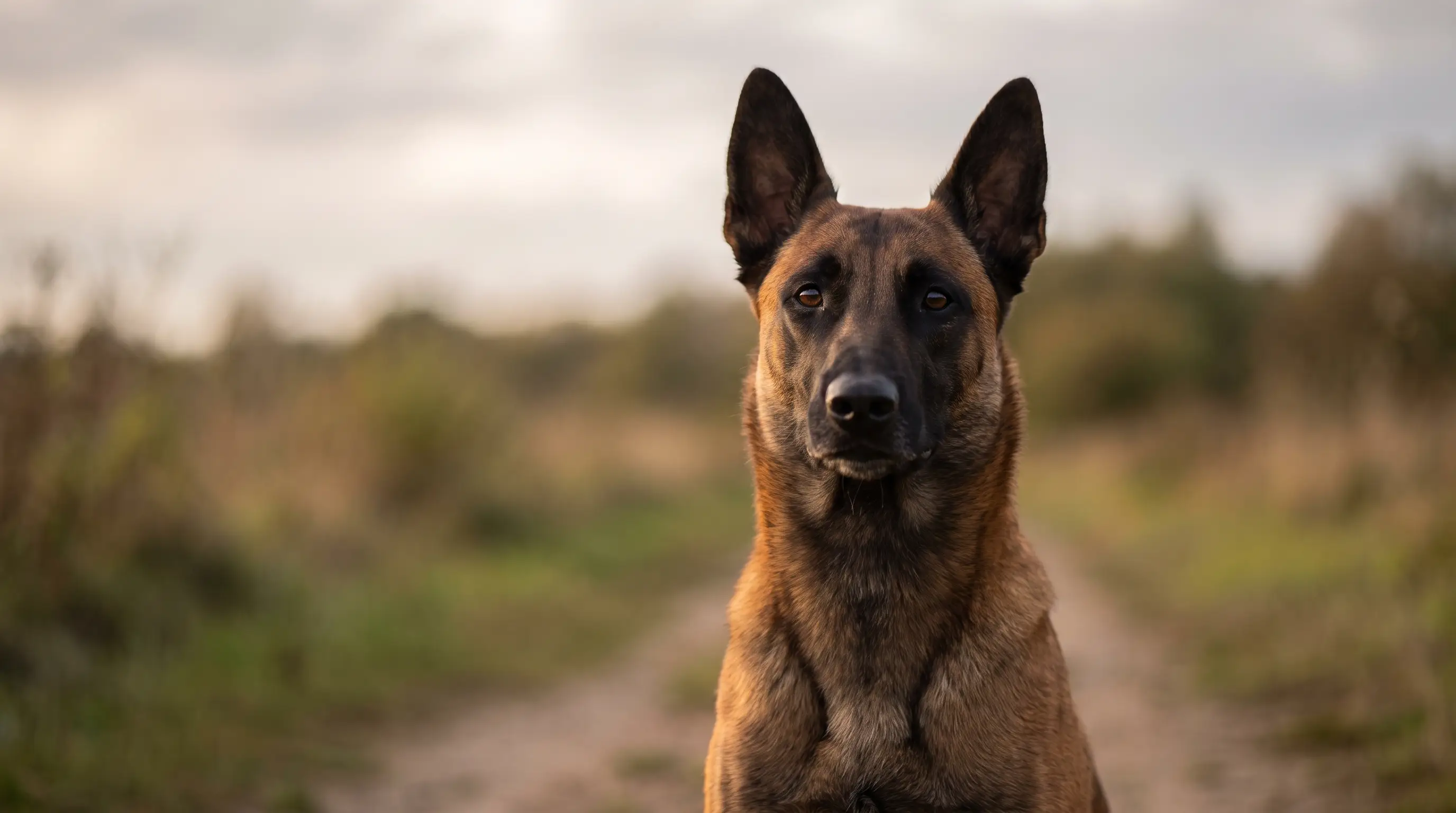
| Coat | Short double coat · fawn to mahogany, black mask |
| Group | Herding · FCI №15 / AKC |
| Origin | Malines (Mechelen), Belgium |
| FCI group | 1 — Sheepdogs and Cattledogs · FCI 15 |
Breed traits
Friendliness
Care
Mind
The Belgian Malinois by the numbers
The Belgian Malinois facts owners search for most — price, lifespan, weight, shedding and colours, in one place.
Widely bred, so you can usually find a litter from a registered breeder without a long wait. Ongoing costs run high — more food, bigger doses at the vet, and pricier insurance.
We don't quote a single figure: the real price swings with breeder, region, bloodline and health testing — and a rescue costs a fraction of a breeder's litter. Adopting is almost always the cheapest route.
Temperament
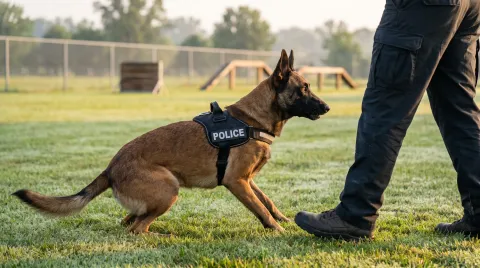
A century of selection for police and protection work stacked herding brains with speed, courage and an almost unsettling need to work. The Malinois notices everything, learns in single repetitions, and bonds ferociously to its handler. Without a genuine outlet, all that voltage arcs into spinning, chewing and shadow-chasing — this breed has no idle setting.
Habits & quirks
The maligator moment
High arousal comes out through the mouth — tug toys are essential equipment, not accessories.
Air superiority
Malinois leap absurdly high from a standstill; six-foot fences are a suggestion, not a barrier.
Handler radar
It tracks its person constantly, reading micro-signals you didn't know you were sending.
Work worship
The happiest Malinois is mid-task; the second-happiest is asking what's next.
Health
The Malinois is a tough, athletic dog, and on paper it is a healthy breed with no single disorder hanging over it. The catch is that its wellbeing depends less on a list of conditions than on one demand being met: this dog has to work. Under-stimulation is the real health problem here — a Malinois with nothing to do arcs its energy into spinning, chewing and shadow-chasing, and that is a genuine welfare issue, not a quirk. So choose a breeder who works and health-tests their lines, keep the dog lean and properly exercised, and understand before you take one on that meeting the drive is not optional.
Nutrition
| Exercise | Two hours minimum of combined physical and mental work daily — sport, detection or protection training, not just running. |
| Training | Precision and fairness from day one; this dog learns your bad habits as fast as your good ones. |
| Socialisation | Early, extensive and ongoing, so drive and wariness don't curdle into reactivity. |
| Containment | Secure high fencing and supervision — Malinois climb, jump and problem-solve their way out. |
A working Malinois burns serious fuel, so feed to the actual workload — a dog in daily sport or detection training and one on a lighter week do not eat the same amount. Weigh the meals, count training treats into the day's total (and there will be a lot of them, because so much of this breed's work is paid in food), and keep the dog lean and hard. Extra weight on an explosive, athletic frame is exactly the wrong thing: it blunts the speed and drive that are the whole point of the breed.
Puppy guide
A Malinois puppy arrives switched on, notices everything, and learns fast in both directions — the good habits and the bad ones — so precision and fairness matter from day one. Socialise him early, extensively and then keep going, because that is what stops the drive and natural wariness from curdling into reactivity later. Give the busy brain proper outlets, keep hard exercise sensible while the joints form, and start channelling that intensity into games and simple work rather than letting it spill into chaos. What you build in the first year, good or bad, you tend to keep.
Training
This is one of the most trainable dogs alive, which is precisely why it is not a casual pet — a Malinois notices everything, learns in single repetitions, and bonds ferociously to the handler it works with. Train with precision and fairness from the start, because it picks up your bad habits as quickly as your good ones, and give the drive a real outlet: detection, obedience, bite sport, herding, something with genuine purpose. Channel the intensity into a job and you have an almost telepathic partner; leave it unspent and the same brilliance turns straight into problems.
Known health issues
No breed is problem-free. These are the conditions most worth knowing about for this breed — with what a good breeder screens for and what an owner watches. General guidance, not a substitute for your vet.
Hip dysplasia
A poorly fitting hip joint that wears early and can cause pain and arthritis, most common in larger breeds. Good breeders screen: Hip-scored parents (BVA/OFA/FCI). Watch for: Stiffness, a bunny-hop run, or reluctance on stairs.
Elbow dysplasia
A developmental fault in the elbow that leads to lameness and arthritis, seen in fast-growing large breeds. Good breeders screen: Elbow-scored parents. Watch for: Front-leg limping that worsens after exercise.
Epilepsy
Recurring seizures with no other cause found, usually starting between one and five years old and running in specific lines. Good breeders screen: Avoid breeding a dog that has seizured or has close relatives who have. Watch for: Sudden collapse, jerking or paddling, drooling, and confusion afterward — film it for your vet if it happens.
Life expectancy
Belgian Malinois live 12–14 years. That is a good span for a medium-large working dog, and the Malinois tends to stay fit and capable late, provided the essentials are in place. Keep the dog lean, buy from a breeder who works and health-tests their lines, stay on top of teeth, vaccinations and parasite control — and, above all, keep it working, because a Malinois kept genuinely busy in body and mind holds its condition and its sharpness for years.
Popular Belgian mixes
Shepinois
Two top working breeds crossed for police and protection lines. Sharp, driven and endlessly energetic, this is a dog for experienced, active owners only.
Dutch Malinois
A working cross of two closely related herders, one Belgian, one Dutch. Near-identical drive and stamina, popular in bite-sport and detection work.
Malador
The Malinois work ethic softened by a Labrador's friendliness. Still a high-drive dog that needs a job, but a touch more relaxed with family and strangers.
Similar breeds
Breeds with a similar build and background — worth a look if this one isn't quite the fit.
Compare this breed
Breeds that look like this
Common questions
Is a Belgian Malinois a good family pet?
For most families, honestly, no — the drive and exercise needs overwhelm ordinary pet life. In working or serious sport homes they're extraordinary, devoted companions.
What's the difference between a Malinois and a German Shepherd?
The Malinois is lighter, faster and typically higher-drive, with a straighter back and shorter coat. Police and military units increasingly favour it for exactly those traits.
How much exercise does a Malinois need?
Plan for at least two hours daily, and make much of it mental — detection games, obedience, bite sport or herding. A physically tired but mentally bored Malinois is still a problem.
Does the Belgian Malinois shed a lot?
Moderately. The Belgian Malinois sheds a fair amount, steadily through the year with heavier seasonal patches. A weekly brush keeps most of the loose hair off your floors and clothes.
Is the Belgian Malinois hypoallergenic?
Not really. No dog is truly hypoallergenic, and the Belgian Malinois's shedding coat releases plenty of the dander that sets off allergies. If someone at home is allergic, this isn't the easiest breed to live with — spend time around one first.
Is the Belgian Malinois easy to train?
Yes. The Belgian Malinois is one of the more trainable breeds — quick to learn and keen to work with you, which makes reward-based training straightforward. Start early, keep it positive, and it picks things up fast.