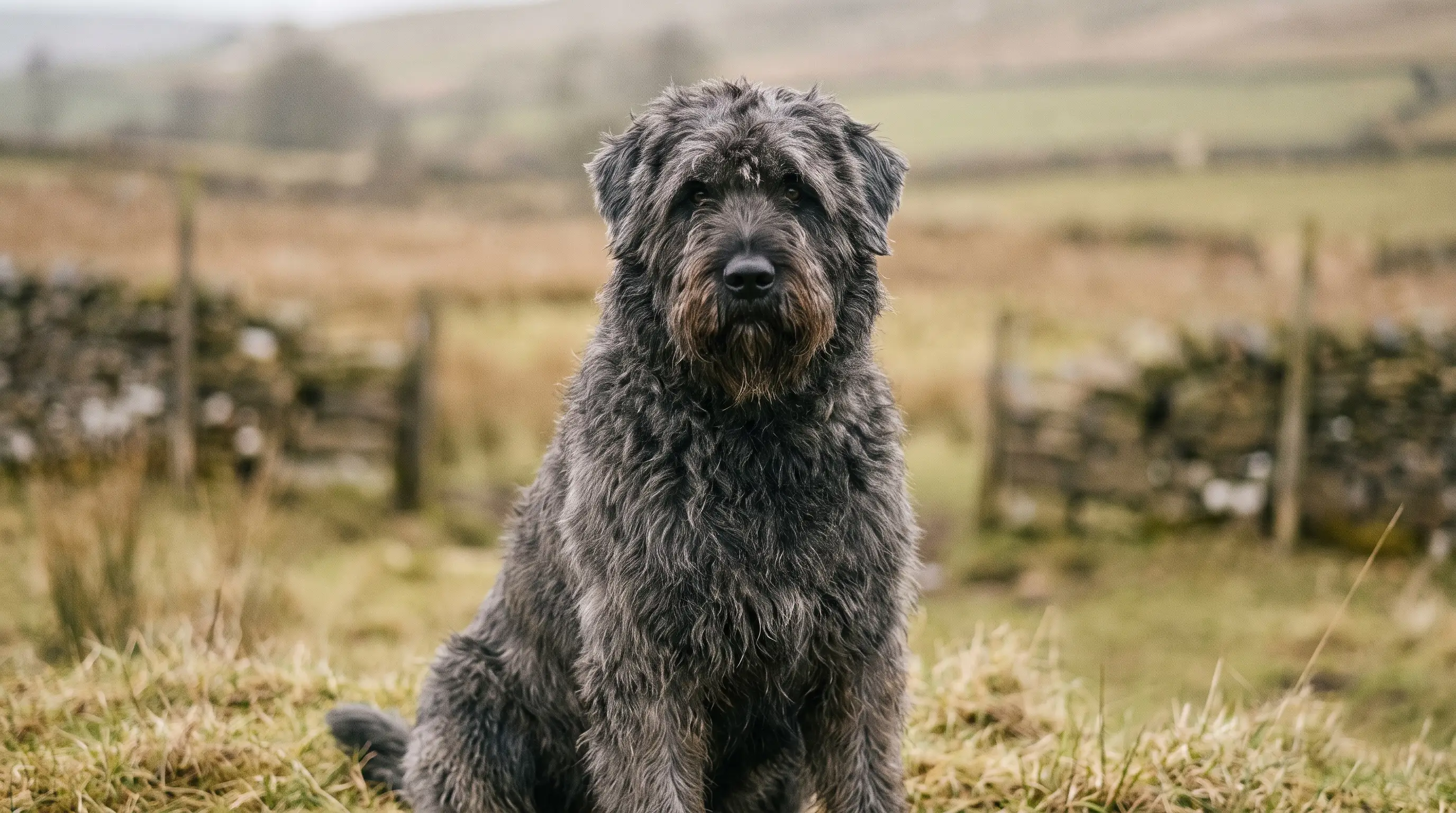
Bouvier des Flandres
Flanders' bearded farmhand — a gentle mountain of a dog that never forgot how to work.
Vital stats
| Size | Large · 59–68 cm |
| Weight | 27–40 kg |
| Life expectancy | 10–12 years |
| Energy | Moderate-high — an hour-plus/day |
| Shedding | Low, but the coat traps loose hair |
| Coat | Rough tousled double coat · black, brindle, grey, fawn |
| Group | Herding · FCI №191 / AKC |
| Origin | Flanders, Belgium |
| FCI group | 1 — Sheepdogs and Cattledogs · FCI 191 |
Breed traits
Friendliness
Care
Mind
The Bouvier des Flandres by the numbers
The Bouvier des Flandres facts owners search for most — price, lifespan, weight, shedding and colours, in one place.
Widely bred, so you can usually find a litter from a registered breeder without a long wait. Ongoing costs run high — more food, bigger doses at the vet, and pricier insurance. Its coat also needs a professional groom every few weeks — a real line in the budget.
We don't quote a single figure: the real price swings with breeder, region, bloodline and health testing — and a rescue costs a fraction of a breeder's litter. Adopting is almost always the cheapest route.
Temperament
Flemish farmers asked one dog to drive cattle, pull carts, churn butter and guard the yard — and the Bouvier obliged. That all-rounder heritage produced a composed, thinking dog: watchful without being jumpy, affectionate without being clingy, and confident enough to make its own decisions if you don't make them first.
Habits & quirks
The wet beard
Every drink is stored in the beard and redistributed across your trousers.
Doorway auditor
It settles where it can see every entrance — old guarding habits die hard.
The lean
Affection is delivered at scale: forty kilos of dog resting gently against your legs.
Slow-burn play
Less fetch-mad than the herders it resembles — it prefers a job, a walk and your company.
Health
The Bouvier des Flandres has few widespread problems, but it's a big dog, so buy from a breeder who health-tests: ask about hip and elbow scores and eye testing. The other half of its health is that coat — a rough double coat that traps loose hair and mats if it isn't kept up, which quietly turns into skin trouble when it's neglected. Brush it thoroughly two or three times a week, keep the dog lean, and stay on top of the grooming, and you've headed off most of what goes wrong.
Nutrition
| Grooming | The tousled double coat mats easily — thorough brushing two or three times a week, plus a trim every few months. |
| Training | Confident and strong; early socialisation and calm, consistent leadership matter more than endless drilling. |
| Exercise | An hour or more daily of walks, play or work — body and brain both need employment. |
| Health | Few widespread problems; ask breeders about hip and elbow scores and eye testing. |
A Bouvier is a large, powerful working dog, and the weight it carries lands straight on its joints — so keep it lean and measure every meal rather than feeding by eye. Count treats into the day's total, aim for ribs you can feel under the thick coat, and for the first year feed a large-breed puppy diet so a big frame grows slowly. A calm feeder that puts on weight quietly is easy to let get heavy; don't.
Puppy guide
A Bouvier des Flandres puppy grows into a lot of dog, so the first year is about steadiness. Keep exercise gentle while the joints are still forming — short walks and play, not long runs or stairs — and let the big frame come on slowly. Socialise early and often, because the breed is naturally reserved with strangers and you want that reserve to stay calm and confident. And start the grooming young: get the puppy used to being brushed and handled before the coat becomes a real job.
Training
The Bouvier is confident, strong and clever, and it will make its own decisions if you don't make them first — so early socialisation and calm, consistent leadership matter far more than endless drilling. Keep sessions short and reward-based, set the rules kindly and hold them, and give this dog something to do: it was bred to drove cattle, pull carts and guard the yard, and it's happiest with a job and your company. Harsh handling gets you nowhere with a dog this self-assured.
Life expectancy
Bouviers des Flandres live 10–12 years. Like most big breeds, the Bouvier lives its best years lean. Keep the weight off the joints, buy from parents screened for hips, elbows and eyes, and keep the coat and skin in good order, and you give this gentle giant the best shot at a full, sound life.
Similar breeds
Breeds with a similar build and background — worth a look if this one isn't quite the fit.
Breeds that look like this
Common questions
Are Bouviers good family dogs?
Yes — calm, patient and naturally protective of their own children. They're big and reserved with strangers, so early socialisation and supervision around visiting kids matter.
Do Bouviers des Flandres shed?
Surprisingly little — but loose hair stays trapped in the rough coat, so without regular thorough brushing it mats instead of falling.
Are Bouviers aggressive?
Properly bred and socialised, they're steady and discerning rather than aggressive. They are natural guardians, though, and won't fawn over strangers.
Is the Bouvier des Flandres hypoallergenic?
No dog is truly hypoallergenic, but the Bouvier des Flandres comes closer than most: its low-shedding coat releases less of the dander that triggers allergies. Many allergy sufferers manage well with this breed, but spend time around one before committing.
Is the Bouvier des Flandres easy to train?
Reasonably. The Bouvier des Flandres is trainable with consistency and rewards, though it isn't the quickest study. Keep sessions short and positive, and be patient with the basics like recall.