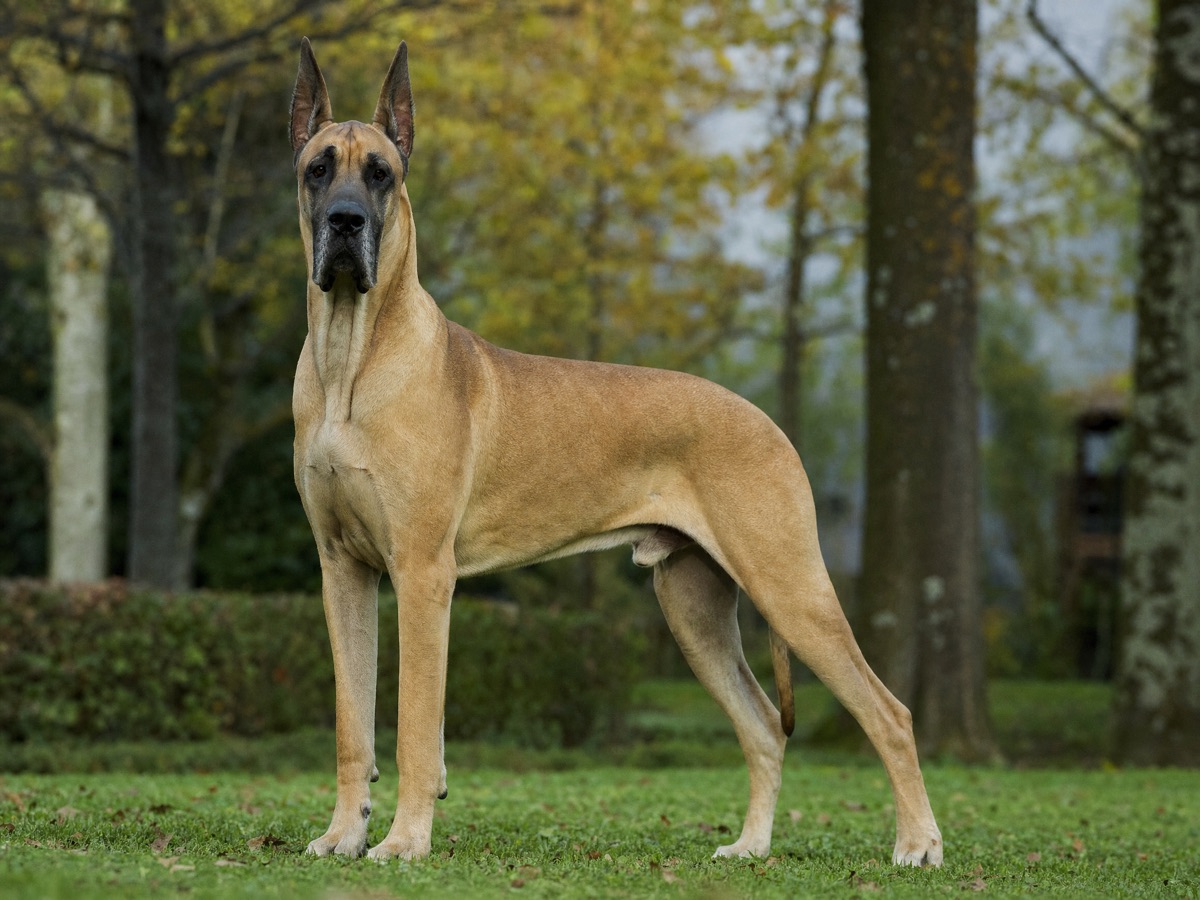
Great Dane
The gentle giant — a horse-sized lapdog with a calm, sweet soul.
Vital stats
| Size | Giant · 71–86 cm |
| Weight | 50–80 kg |
| Life expectancy | 7–10 years |
| Energy | Moderate — 45–60 min/day |
| Shedding | Moderate |
| Coat | Short, sleek · fawn, brindle, blue, black, harlequin |
| Group | Working · FCI №235 / AKC |
| Origin | Germany |
| FCI group | 2 — Pinscher and Schnauzer, Molossoid and Swiss Mountain Dogs · FCI 235 |
Breed traits
Friendliness
Care
Mind
The Great Dane by the numbers
The Great Dane facts owners search for most — price, lifespan, weight, shedding and colours, in one place.
Less common, so expect a waitlist and some travel to a reputable breeder — which pushes the price up. Ongoing costs run high — more food, bigger doses at the vet, and pricier insurance.
We don't quote a single figure: the real price swings with breeder, region, bloodline and health testing — and a rescue costs a fraction of a breeder's litter. Adopting is almost always the cheapest route.
Temperament
Bred by German nobility to catch wild boar and grace castle halls, the Dane long ago traded ferocity for serenity. What remains is a courteous, people-adoring giant: patient with children, welcoming to guests, and convinced that sofas and laps were engineered with it in mind. It wants very little from life beyond proximity to its family — and adequate furniture.
Habits & quirks
The lean of love
Fifty-plus kilograms of affection, deposited gently against your legs until you stagger.
Lap optimist
The whole dog will not fit on your knees; the Dane will keep trying anyway.
Counter surfing, effortless
No jumping required — the kitchen worktop is simply at chin height.
The dramatic flop
A Dane doesn't lie down so much as collapse, with a sigh audible from the next room.
Health
The Great Dane's size drives its health. Bloat, where the stomach fills with gas and can twist, is the breed's biggest killer and a true emergency, so learn the warning signs before you ever need them. The heart can develop dilated cardiomyopathy (DCM), and the hips can develop dysplasia. Buy from a breeder who screens hearts and hips, feed a giant puppy to grow slowly, and know where your nearest emergency vet is.
Nutrition
| Exercise | Moderate daily walks suit adults, but strictly limit running and stairs during the long, fragile growth phase. |
| Health | Bloat is the breed's biggest killer — feed several smaller meals, keep mealtimes calm, and learn the emergency signs cold. |
| Feeding | Giant-breed puppies need controlled growth on an appropriate large-breed diet, never maximum-speed bulking. |
| Training | Teach manners early: a bouncing puppy is charming at 15 kg and a hazard at 70. Danes are soft-natured and respond best to gentle consistency. |
Feed a Great Dane several smaller meals rather than one big one, and keep mealtimes calm — a huge, deep-chested dog is the classic shape for bloat. A giant-breed puppy needs to grow slowly on a large-breed diet, never pushed to bulk up fast, because rushed growth stores up joint trouble in a dog this heavy. Measure the food and keep the dog lean for its whole life.
Puppy guide
A Great Dane puppy grows for a long time and is fragile while it does. Go easy on the joints through that stretch: limit running, jumping and stairs, and keep walks moderate rather than hard. Teach manners early, too — a bouncing puppy is charming when it's small and a hazard when it's huge — and grow it slowly on a large-breed diet. Gentle, steady handling suits this soft-natured breed.
Training
Great Danes are gentle and soft-natured, and they respond to calm, consistent, reward-based training far better than to any heavy hand. Start early, while the dog is still a manageable size, and teach the everyday manners a giant dog has to have — greeting people without leaning or jumping, walking nicely on the lead. A well-mannered Dane is a joy; an untrained one is simply too big to argue with.
Known health issues
No breed is problem-free. These are the conditions most worth knowing about for this breed — with what a good breeder screens for and what an owner watches. General guidance, not a substitute for your vet.
Bloat (GDV)
A sudden, life-threatening twisting of the stomach, mostly in deep-chested breeds — a true emergency. Good breeders screen: Ask about family history; discuss preventive gastropexy for high-risk lines. Watch for: A swollen belly, unproductive retching, restlessness — go to a vet at once.
Heart muscle disease (DCM)
A weakening of the heart muscle that enlarges the heart, seen in several large and giant breeds. Good breeders screen: Heart-screened parents (echo/Holter where advised). Watch for: Tiring, coughing, fainting, or a swollen belly.
Hip dysplasia
A poorly fitting hip joint that wears early and can cause pain and arthritis, most common in larger breeds. Good breeders screen: Hip-scored parents (BVA/OFA/FCI). Watch for: Stiffness, a bunny-hop run, or reluctance on stairs.
Worried about a symptom right now? Why is my dog vomiting? Causes and when to see a vet
Life expectancy
Great Danes live 7–10 years. Like most giant breeds, the Great Dane is short-lived, but good breeding and steady care push toward the better end. Buy from lines that screen hearts and hips, feed for slow growth and a lean adult weight, and know the signs of bloat cold — the emergency you catch in time is the one your dog survives.
Popular Great mixes
Great Danoodle
A very large, gentle, often lower-shedding cross that wants calm company and steady training. Its growth and joints need the same care as any giant dog.
Labradane
A big, friendly, family-focused mix — more active than a purebred Dane, and easy to train. Watch the growing joints and the appetite.
Daniff
A giant, calm, deeply loyal guardian cross. Gentle at home but seriously large, so early manners and slow growth matter from day one.
Great Bernard
An enormous, sweet-natured family dog with a heavy coat and a love of company. Giant-breed care throughout, and it feels the heat.
Weiler Dane
A powerful, protective cross that's a lot of dog for a confident, experienced home. It needs early socialising, real training and joint-friendly growth.
Similar breeds
Breeds with a similar build and background — worth a look if this one isn't quite the fit.
Breeds that look like this
Common questions
Are Great Danes good apartment dogs?
Surprisingly yes for calm households — they're low-energy indoors, but their sheer size needs room to move and sturdy space.
What health issues do Great Danes have?
Bloat (gastric torsion) is the big risk — feed smaller meals and avoid exercise right after eating. Heart and joint issues and a short 7–10 year lifespan are also common.
How much does it cost to keep a Great Dane?
More than most breeds: giant-dog quantities of food, larger medication doses, bigger everything from beds to boarding. Budget generously for insurance too — giant-breed health care is priced to match the dog.
Does the Great Dane shed a lot?
Moderately. The Great Dane sheds a fair amount, steadily through the year with heavier seasonal patches. A weekly brush keeps most of the loose hair off your floors and clothes.
Is the Great Dane hypoallergenic?
Not really. No dog is truly hypoallergenic, and the Great Dane's shedding coat releases plenty of the dander that sets off allergies. If someone at home is allergic, this isn't the easiest breed to live with — spend time around one first.
Is the Great Dane good with children?
Generally yes. The Great Dane is a friendly, people-loving breed that usually does well with children when raised and socialised well. As with any dog, teach children to be gentle and supervise around toddlers.
Is the Great Dane easy to train?
Reasonably. The Great Dane is trainable with consistency and rewards, though it isn't the quickest study. Keep sessions short and positive, and be patient with the basics like recall.
Stories featuring this breed
All stories →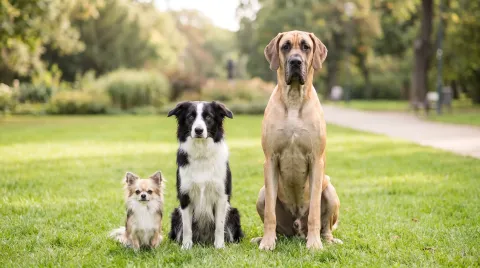
When is a dog an adult? Age milestones by size
Small dogs grow up fast and age slowly; giant breeds are seniors at 6. The real age milestones for every size, and why size flips the whole timeline.
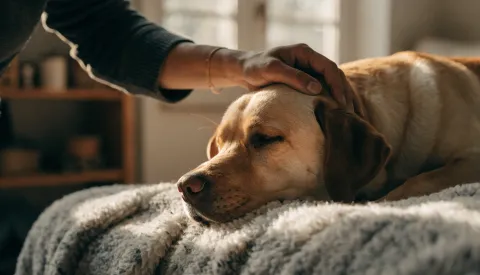
Why is my dog vomiting? Causes and when to see a vet
The common reasons dogs are sick, what you can safely do at home for a one-off, and the warning signs that mean call the vet now rather than wait.
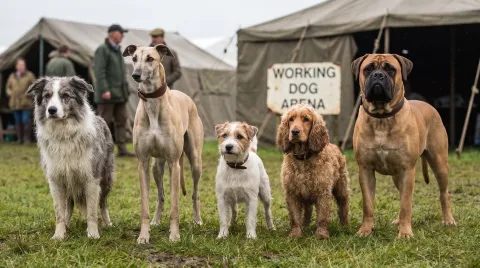
Seven groups, ten groups, three answers: how dog breeds get sorted
Kennel clubs sort several hundred breeds into a handful of groups. Here is how those lines were drawn, why the AKC's seven don't match the FCI's ten, and why the Standard Schnauzer belongs to three groups at once.