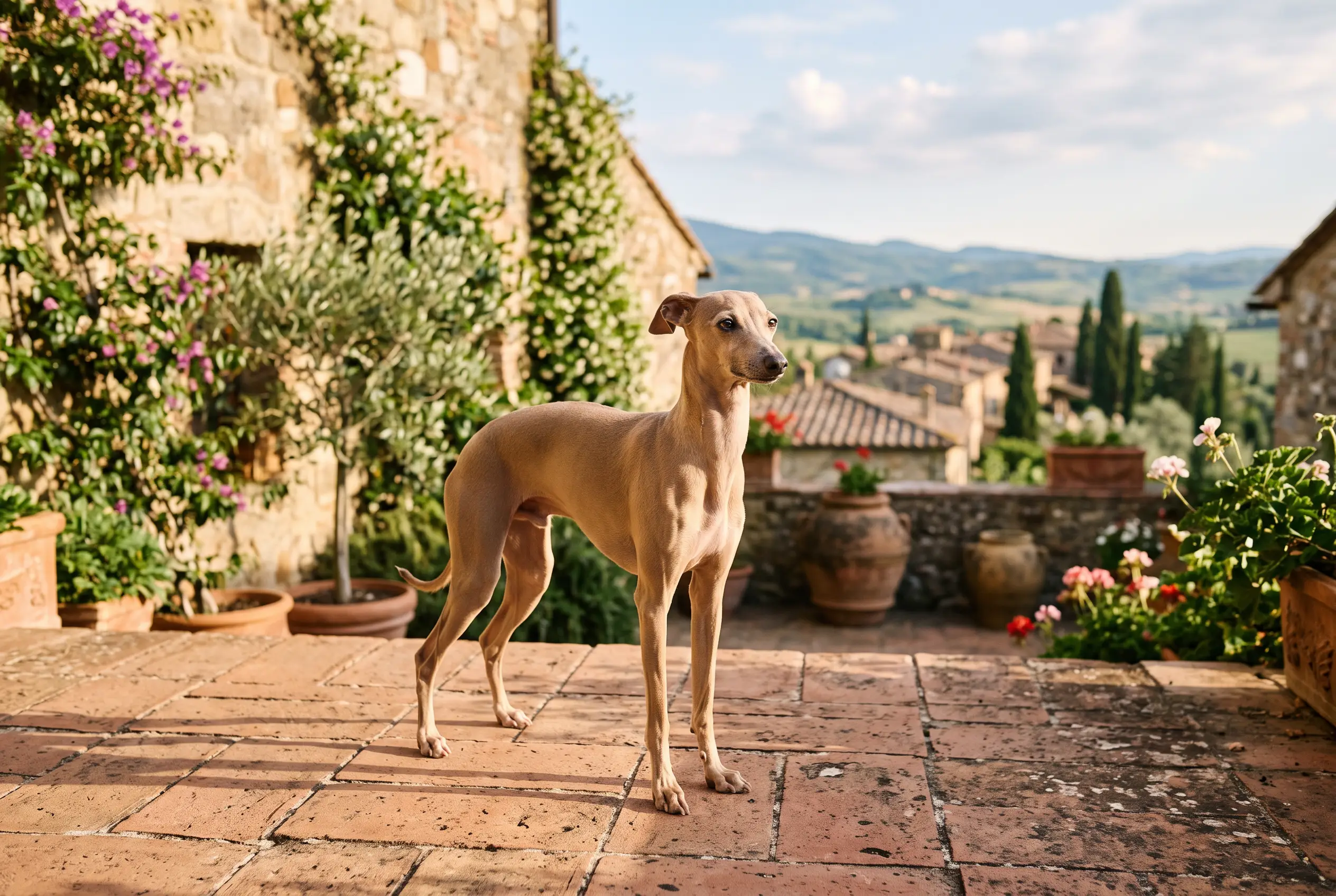
Italian Greyhound
A Renaissance sprinter the size of a cat, built for sunbeams and speed.
On these lists: Dogs for apartments · Small dogs
Vital stats
| Size | Toy · 32–38 cm |
| Weight | 3.6–5 kg |
| Life expectancy | 13–15 years |
| Energy | Moderate — 30–45 min/day plus zoomies |
| Shedding | Minimal |
| Coat | Fine, short, single · grey, fawn, black, cream |
| Group | Toy (AKC) · Sighthound (FCI №200) |
| Origin | Italy |
| FCI group | 10 — Sighthounds · FCI 200 |
Breed traits
Friendliness
Care
Mind
The Italian Greyhound by the numbers
The Italian Greyhound facts owners search for most — price, lifespan, weight, shedding and colours, in one place.
Widely bred, so you can usually find a litter from a registered breeder without a long wait. Ongoing costs stay modest — it eats little and routine vet care sits at the lower end.
We don't quote a single figure: the real price swings with breeder, region, bloodline and health testing — and a rescue costs a fraction of a breeder's litter. Adopting is almost always the cheapest route.
Temperament
Bred purely for companionship and small-game coursing, the Italian Greyhound alternates between statue-still elegance on your lap and flat-out laps of the garden. It is deeply attached, a little reserved with strangers, and allergic to cold, rain and hard floors — a velvet dog that wants velvet living.
Habits & quirks
Burrowing
Under the duvet, under the cushion, under your jumper — if there's a blanket, there's an Iggy inside it.
Sun worship
It will track the warmest patch of floor across the room like a small solar panel.
The tap dance
Cold or excited, it lifts its front paws in a delicate little trot on the spot.
Velcro mode
Wherever you sit, a warm grey comma appears against your leg within seconds.
Health
Three things shape day-to-day care of an Italian Greyhound. Its single fine coat and thin skin give almost no protection from cold or wet, so a coat in winter is equipment, not fashion. Young dogs' long, delicate legs are genuinely prone to fractures, so manage jumping until they finish growing. And the breed is prone to dental disease, which makes daily tooth-brushing one of the most useful things you can do for it.
Nutrition
| Warmth | A single fine coat means jumpers and coats aren't fashion — they're kit for anything below mild. |
| Bones | Young Iggies break legs leaping off furniture; use ramps and block high jumps until fully grown. |
| Housetraining | Notoriously slow — small bladder, hatred of wet grass. Consistency and covered options win eventually. |
| Teeth | The breed is prone to dental disease; daily brushing genuinely matters. |
An Iggy is tiny and eats accordingly, so quality matters far more than quantity: measure the meals and keep it lean, because even a little extra weight is a lot on such a light frame. Lean dogs are also kinder on those fine legs. Because the breed is prone to dental disease, build in daily dental care rather than working against it with sticky, sugary extras.
Puppy guide
The delicate years are the ones to plan for: young Iggies break legs leaping off sofas and beds, so use ramps and block high jumps until about eighteen months. Housetraining is famously slow — a small bladder and a hatred of wet grass — so keep trips frequent, reward on the spot and offer a covered option in the rain. Keep the puppy warm, start daily tooth-brushing early, and socialise gently, as the breed is naturally a little reserved.
Training
Italian Greyhounds are sensitive and take gentle, upbeat, reward-based training best; harsh handling shuts them down. Recall is worth practising, but be honest about it — a sighthound at full stretch stops hearing you the moment something runs, so secure fencing is the real safety net, not training. Patience is the whole game with housetraining; count on months rather than weeks, and keep the sessions warm and low-stress.
Life expectancy
Italian Greyhounds live 13–15 years. Italian Greyhounds are long-lived little sighthounds, and the everyday basics keep them there: a lean weight that spares those fine legs, daily tooth-brushing against the dental disease the breed is prone to, and warmth in cold, wet weather. Protect young legs from big jumps, and let regular vet checks catch dental trouble early.
Similar breeds
Breeds with a similar build and background — worth a look if this one isn't quite the fit.
Breeds that look like this
Common questions
Are Italian Greyhounds fragile?
Their adult build is sturdier than it looks, but young dogs' long thin legs are genuinely prone to fractures. Manage jumping and rough play until about 18 months.
Can Italian Greyhounds be let off lead?
Only in securely fenced areas — a sighthound at 40 km/h stops hearing you the moment something runs. Recall training helps, but fencing is the real safety net.
Are Italian Greyhounds hard to housetrain?
They have a fair reputation as one of the trickiest breeds. Frequent trips out, rewards on the spot and shelter from rain get you there — expect months, not weeks.
Does the Italian Greyhound shed a lot?
Not much. The Italian Greyhound is a low-shedding breed, so loose hair around the home stays minimal. It still needs regular grooming, but you won't be fighting drifts of fur.
Is the Italian Greyhound hypoallergenic?
No dog is truly hypoallergenic, but the Italian Greyhound comes closer than most: its low-shedding coat releases less of the dander that triggers allergies. Many allergy sufferers manage well with this breed, but spend time around one before committing.
Is the Italian Greyhound good with children?
Generally yes. The Italian Greyhound is a friendly, people-loving breed that usually does well with children when raised and socialised well. As with any dog, teach children to be gentle and supervise around toddlers.
Stories featuring this breed
All stories →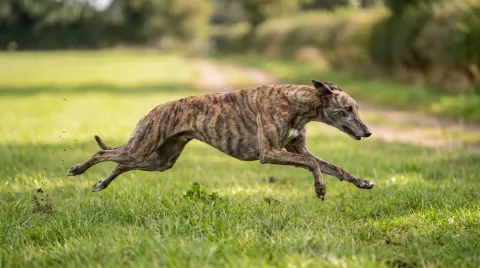
The fastest dog breeds, and how fast they really go
The Greyhound hits about 72 km/h — second only to the cheetah, and the winner over any real distance. Honest top speeds for the sighthounds and the surprises, plus how fast a Dobermann actually is.
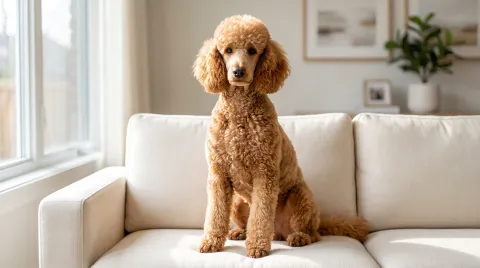
Low-shedding dog breeds, ranked from our own data
We scored every breed for shedding, 1 to 5. Here are the ones that scored lowest — the curly coats worth the grooming bill, the genuinely low-maintenance short-hairs, and why none of them are hypoallergenic.