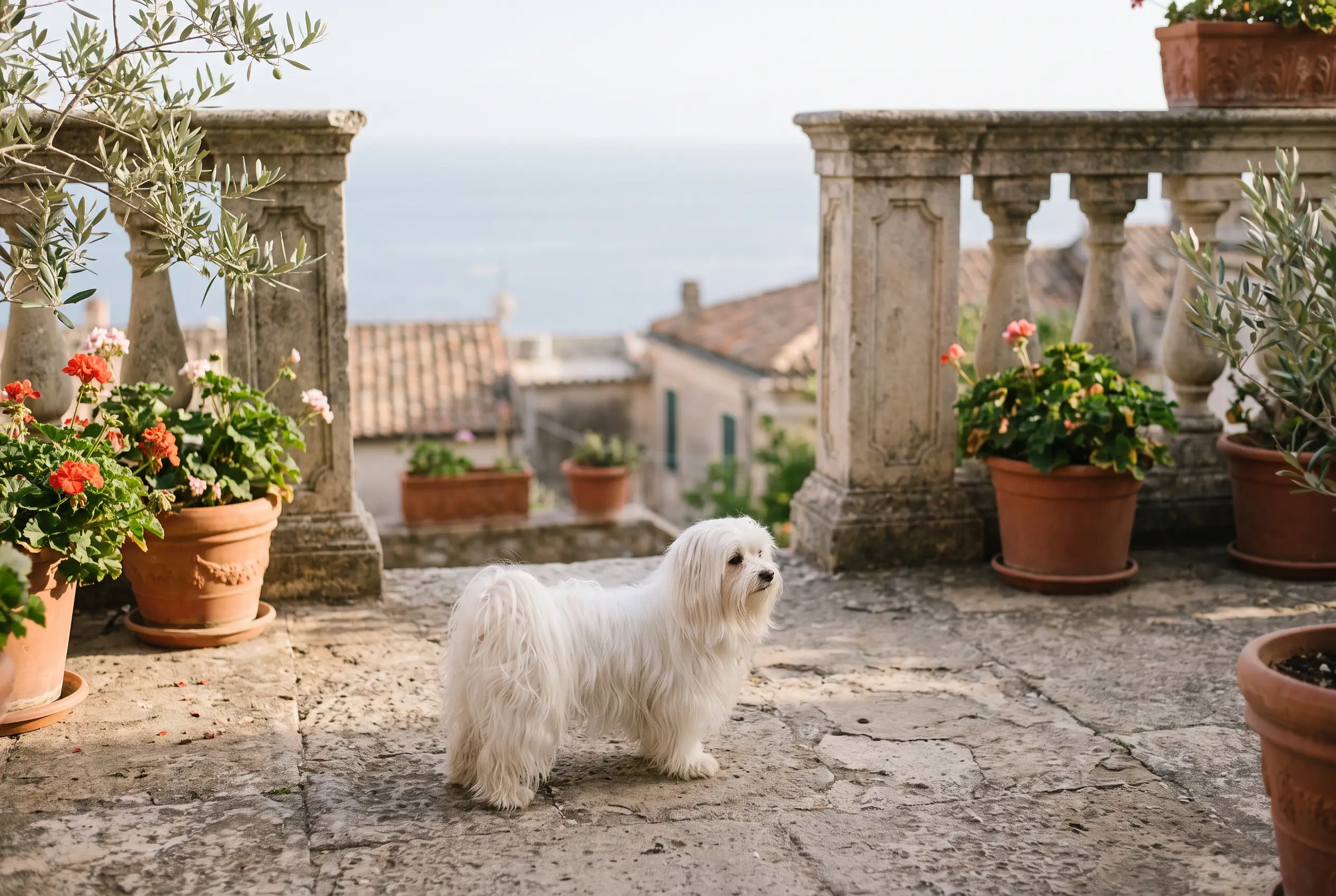
Maltese
Two thousand years of lapdog perfection in a cloud of white silk.
On these lists: Small dogs · Dogs for seniors
Vital stats
| Size | Toy · 21–25 cm |
| Weight | 3–4 kg |
| Life expectancy | 12–15 years |
| Energy | Low-moderate — 20–30 min/day |
| Shedding | Minimal — single coat |
| Coat | Long, silky, pure white single coat |
| Group | Toy · FCI №65 / AKC |
| Origin | Malta, Mediterranean |
| FCI group | 9 — Companion and Toy Dogs · FCI 65 |
Breed traits
Friendliness
Care
Mind
The Maltese by the numbers
The Maltese facts owners search for most — price, lifespan, weight, shedding and colours, in one place.
Widely bred, so you can usually find a litter from a registered breeder without a long wait. Ongoing costs stay modest — it eats little and routine vet care sits at the lower end. Its coat also needs a professional groom every few weeks — a real line in the budget.
We don't quote a single figure: the real price swings with breeder, region, bloodline and health testing — and a rescue costs a fraction of a breeder's litter. Adopting is almost always the cheapest route.
Temperament
The Maltese has held one job for over two millennia — beloved companion — and it has become superb at it. Expect a gentle, sparkly little dog that reads your mood, plays in short merry bursts, and considers your lap its permanent address. Bred for closeness, it genuinely suffers when routinely left alone.
Habits & quirks
Permanent lap lease
Wherever you settle, a small white cloud arrives and takes up residence.
The prance
That floating, show-ring trot isn't taught — Maltese simply move like they're presenting themselves.
Sleeve-dog instincts
Burrows into blankets, bags and the crook of your arm, exactly as its noblewomen owners intended.
Small dog, full alarm
Devoted lapdogs still announce every knock — training a quiet cue early pays off.
Health
The Maltese is a hardy little dog, but its size brings a few things to watch. The teeth are the main one — toy breeds like this are prone to dental disease, so start daily brushing early. Ask breeders about the knees (patellar luxation), keep the weight lean to spare them, and wipe the face daily to manage tear staining. At 3–4 kg it's easily hurt by a fall or a rough grab, so handle it gently and mind the leaps.
Nutrition
| Grooming | Brush and comb daily to keep the silk mat-free, and wipe the face daily to manage tear stains — or opt for a short puppy clip. |
| Feeding | Small, regular meals suit a 3 kg frame; go easy on treats and prioritise dental-friendly chewing. |
| Health | Teeth are the big one — start brushing early, as toy breeds are prone to dental disease; ask breeders about knees (patellar luxation). |
| Training | Sweet but slow to housetrain like many toys; consistency, a routine and patience win. |
A Maltese eats very little, so quality matters more than quantity — measure the meals and go easy on treats, because a few extra a day is a lot on a 3 kg frame. Keep it lean; even a little weight sits heavily on a dog this small. Small-dog teeth crowd and suffer, so favour dental-friendly chewing and start daily brushing early.
Puppy guide
A Maltese puppy bonds fast and hates being alone, so teach short, calm separations early and build them up rather than being together every minute. Get it used to gentle brushing and face-wiping from the start — that silk coat needs daily care for life. Socialise it widely, teach a quiet cue before the watchdog habit sets in, and be patient with housetraining, which takes longer in toy breeds.
Training
Maltese are sweet, sensitive little dogs that learn best in short, upbeat, reward-based sessions. The slow part is housetraining — like many toys they take longer, so stay consistent, keep a routine and don't lose patience. Teach a reliable quiet cue early, since a devoted lapdog still announces every knock. Reward what you want and they're a delight to teach.
Known health issues
No breed is problem-free. These are the conditions most worth knowing about for this breed — with what a good breeder screens for and what an owner watches. General guidance, not a substitute for your vet.
Slipping kneecap
A kneecap that slips out of place, common in small breeds and usually manageable. Good breeders screen: Vet-checked knees on the parents. Watch for: An occasional skip or hop on a back leg.
Liver shunt
A blood vessel that bypasses the liver before birth and never closes, so toxins the liver should filter build up instead — mostly seen in small breeds as puppies. Good breeders screen: A bile acids blood test on puppies before they go to new homes. Watch for: A small, poor-doing puppy, disorientation or circling after meals, or seizures — get it checked young.
Life expectancy
Maltese live 12–15 years. The Maltese is a long-lived little dog, and steady small-dog care keeps it there: daily dental care, a lean weight that spares the knees, and regular grooming so the coat never mats. Keep up the yearly vet check and the face-cleaning, and give it the company it was bred for — a Maltese left alone too much frets rather than thrives.
Popular Maltese mixes
Maltipoo
A small, often low-shedding cross with a soft, wavy coat; bright, affectionate and a popular pick for allergy-conscious homes. The coat needs regular brushing and the teeth need daily care.
Malshi
A soft, sociable little companion that loves being with its people; the coat mats without regular brushing and small-dog teeth need looking after.
Morkie
A tiny, bold, devoted cross with a big voice for its size. Socialise it early, keep up the coat care and watch those small teeth.
Maltichon
Two white companion breeds combined: small, affectionate and devoted, with a fluffy coat that needs regular grooming.
Malchi
A tiny, lively, big-hearted cross that bonds hard to one person. Keep it lean, socialise early and mind the fragile frame and teeth.
Similar breeds
Breeds with a similar build and background — worth a look if this one isn't quite the fit.
Breeds that look like this
Common questions
Do Maltese dogs shed?
Barely — the single silky coat drops very little hair, which is why the breed suits many allergy-conscious homes. The trade-off is daily brushing to prevent mats.
Are Maltese good with children?
Gentle by nature, but at 3–4 kg they're fragile — a tumble or rough grab can genuinely injure them. Best with older, careful children.
Can a Maltese be left alone all day?
No — this is one of the most companionship-dependent breeds, bred for millennia to be with people. Regular long absences invite anxiety and barking; arrange company or choose a more independent breed.
Is the Maltese hypoallergenic?
No dog is truly hypoallergenic, but the Maltese comes closer than most: its low-shedding coat releases less of the dander that triggers allergies. Many allergy sufferers manage well with this breed, but spend time around one before committing.
Is the Maltese easy to train?
Reasonably. The Maltese is trainable with consistency and rewards, though it isn't the quickest study. Keep sessions short and positive, and be patient with the basics like recall.
Stories featuring this breed
All stories →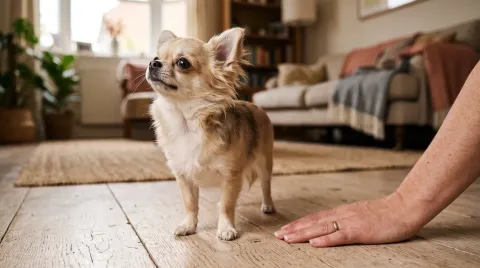
The smallest dog breeds in the world
The Chihuahua is officially the smallest, at 1.5–3 kg. Here are the toy breeds just above it — and an honest warning about the 'teacup' label, which is marketing, not a breed.
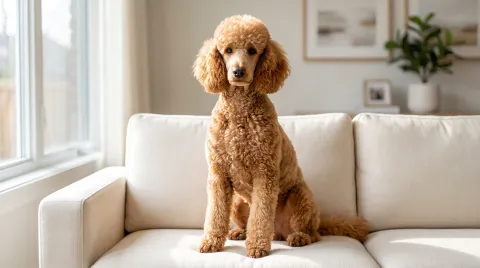
Low-shedding dog breeds, ranked from our own data
We scored every breed for shedding, 1 to 5. Here are the ones that scored lowest — the curly coats worth the grooming bill, the genuinely low-maintenance short-hairs, and why none of them are hypoallergenic.