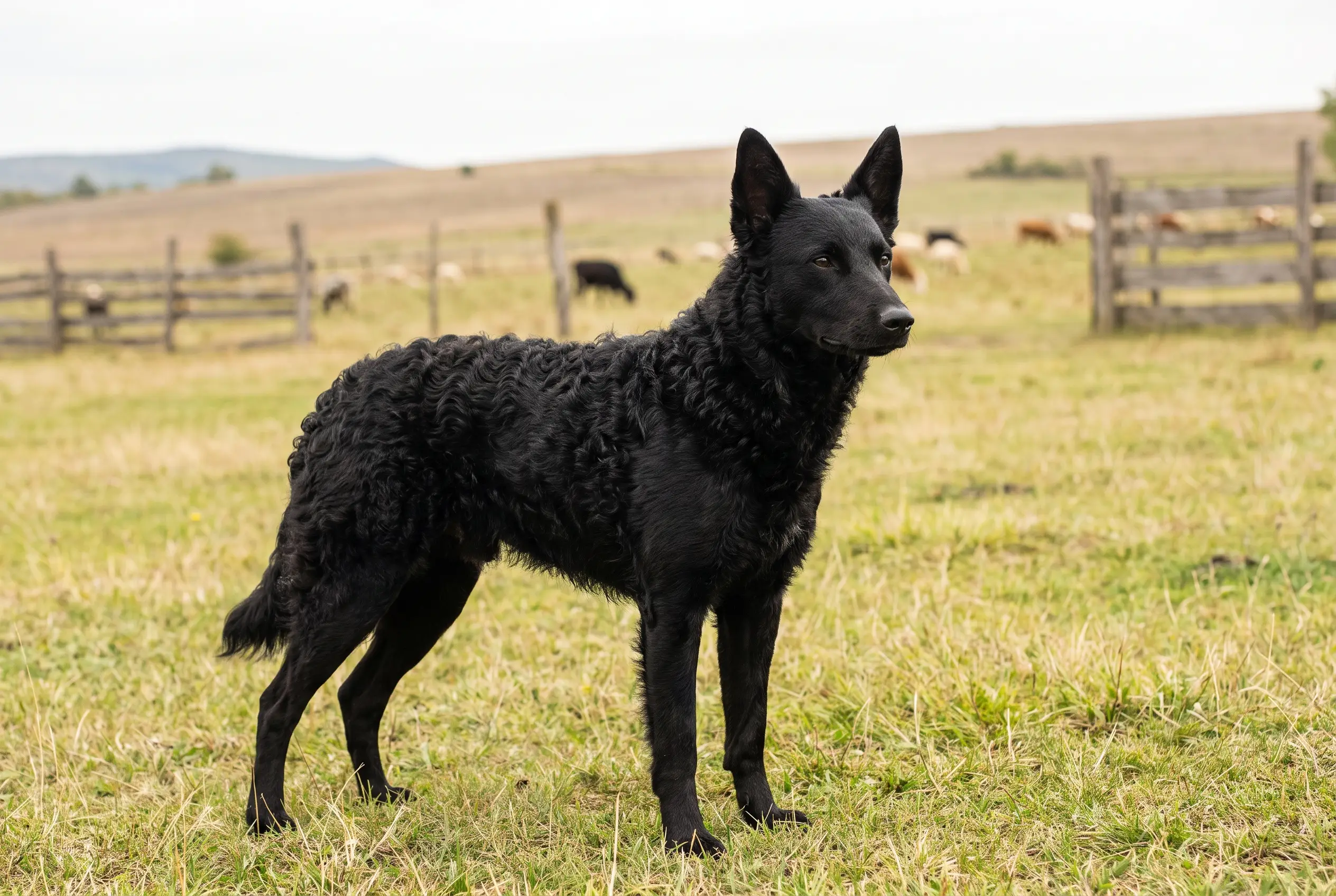
Mudi
Hungary's curly secret — a farmhand's whole staff in one small dog.
Vital stats
| Size | Small-medium · 38–47 cm |
| Weight | 8–13 kg |
| Life expectancy | 12–14 years |
| Energy | Very high — 90+ min/day |
| Shedding | Moderate, seasonal |
| Coat | Wavy-to-curly · black, brown, grey, white, yellow, merle |
| Group | Herding · FCI №238 / AKC |
| Origin | Hungary |
| FCI group | 1 — Sheepdogs and Cattledogs · FCI 238 |
Breed traits
Friendliness
Care
Mind
The Mudi by the numbers
The Mudi facts owners search for most — price, lifespan, weight, shedding and colours, in one place.
Less common, so expect a waitlist and some travel to a reputable breeder — which pushes the price up. Ongoing costs stay modest — it eats little and routine vet care sits at the lower end.
We don't quote a single figure: the real price swings with breeder, region, bloodline and health testing — and a rescue costs a fraction of a breeder's litter. Adopting is almost always the cheapest route.
Temperament
On Hungarian farms the Mudi did everything — drove cattle and sheep, dispatched rats, guarded the yard — and that all-purpose wiring survives intact. It is fast, watchful, and startlingly clever, devoted to its own people and reserved with everyone else, with a herder's habit of announcing whatever moves.
Habits & quirks
The commentary track
Arrivals, departures, and suspicious hedgehogs are all reported in full.
Head-tilt calculus
New words get visibly processed; this breed collects vocabulary.
Yard rounds
The garden perimeter is walked and audited like a shift worker's checklist.
Job applications
Idle Mudik volunteer — fetching shoes, herding children, reorganising socks.
Care
| Exercise | At least 90 active minutes daily, and mental work counts double — trick training, scent games, sport. |
| Training | A natural at agility, herding trials and obedience; short, varied sessions keep the quick mind hooked. |
| Socialisation | Meet plenty of people and places early to soften the farm dog's natural reserve. |
| Grooming | Genuinely low-effort: a weekly brush and the curls look after themselves. |
Life expectancy
This breed has a typical life expectancy of 12–14 years.
Similar breeds
Breeds with a similar build and background — worth a look if this one isn't quite the fit.
Breeds that look like this
Common questions
How rare is the Mudi?
Very — it only joined the AKC in 2022 and most of the breed still lives and works in Hungary. Expect a waiting list and a conversation with a dedicated breeder.
Is a Mudi a good family dog?
With an active family, wonderfully — it bonds hard and plays endlessly. It needs daily work for body and brain, and may try to herd small children.
Do Mudis bark a lot?
They are vocal by trade; barking was part of the herding job. Training helps, but a silent Mudi was never on offer.
Does the Mudi shed a lot?
Moderately. The Mudi sheds a fair amount, steadily through the year with heavier seasonal patches. A weekly brush keeps most of the loose hair off your floors and clothes.
Is the Mudi hypoallergenic?
No dog is truly hypoallergenic, but the Mudi comes closer than most: its low-shedding coat releases less of the dander that triggers allergies. Many allergy sufferers manage well with this breed, but spend time around one before committing.
Is the Mudi easy to train?
Yes. The Mudi is one of the more trainable breeds — quick to learn and keen to work with you, which makes reward-based training straightforward. Start early, keep it positive, and it picks things up fast.