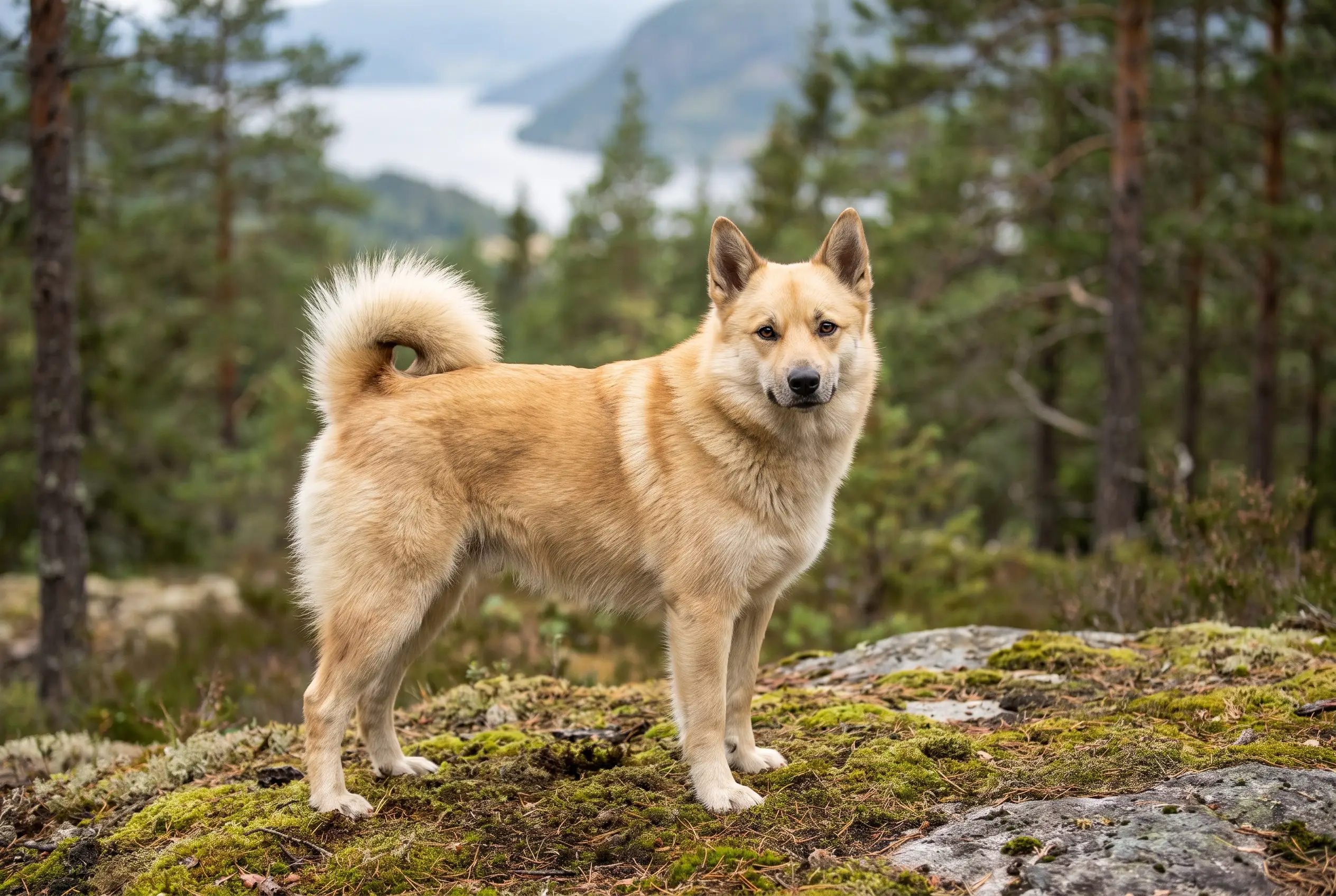
Norwegian Buhund
The Viking farm dog — cheerful, wheaten, and wired for work.
Vital stats
| Size | Medium-small · 41–47 cm |
| Weight | 12–18 kg |
| Life expectancy | 12–15 years |
| Energy | High — 60–90 min/day |
| Shedding | Heavy, seasonal blows |
| Coat | Thick double coat · wheaten, black |
| Group | Herding · FCI №237 / AKC |
| Origin | Norway |
| FCI group | 5 — Spitz and primitive types · FCI 237 |
Breed traits
Friendliness
Care
Mind
The Norwegian Buhund by the numbers
The Norwegian Buhund facts owners search for most — price, lifespan, weight, shedding and colours, in one place.
Less common, so expect a waitlist and some travel to a reputable breeder — which pushes the price up. Plan for steady ongoing costs — mid-range food, routine vet care and insurance.
We don't quote a single figure: the real price swings with breeder, region, bloodline and health testing — and a rescue costs a fraction of a breeder's litter. Adopting is almost always the cheapest route.
Temperament
'Bu' means homestead, and that was the Buhund's whole brief: herd the stock, guard the yard, mind the children, announce the visitors. The result is a rare thing — a spitz that genuinely wants to work with you. Expect brightness, energy, a quick bark, and deep attachment to its people.
Habits & quirks
The homestead report
Anything crossing the property line is announced promptly and in full.
Herding nudges
Family members drifting apart on walks get gently gathered back together.
Snow celebration
The first cold snap is greeted like a national holiday.
Chore shadowing
Whatever job you're doing, a wheaten assistant is doing it too.
Care
| Exercise | An active hour or more daily, plus mental work — this farm all-rounder was never built for idleness. |
| Grooming | A weekly brush suffices until the seasonal moults, when daily raking barely keeps pace. |
| Training | Quick, willing, and a natural at obedience and agility; keep sessions upbeat and varied. |
| Barking | An alert guard by design — teach a quiet cue early, before the habit sets. |
Life expectancy
This breed has a typical life expectancy of 12–15 years.
Similar breeds
Breeds with a similar build and background — worth a look if this one isn't quite the fit.
Breeds that look like this
Common questions
Do Norwegian Buhunds bark a lot?
Yes — announcing things was part of the job description for a thousand years. Training and enough exercise keep it to headlines rather than full bulletins.
Is the Buhund a good family dog?
Excellent for active families: affectionate, playful, and gentle with children it knows. It needs daily exercise and inclusion in family life to stay that sunny.
Are Norwegian Buhunds easy to train?
Unusually so for a spitz — the breed herded and worked alongside farmers for centuries. Expect fast learning, with occasional independent second opinions.
Does the Norwegian Buhund shed a lot?
Yes — the Norwegian Buhund is a heavy shedder, dropping hair year-round or in big seasonal moults. Brush it several times a week and expect regular vacuuming; it isn't the coat for you if loose fur is a dealbreaker.
Is the Norwegian Buhund hypoallergenic?
Not really. No dog is truly hypoallergenic, and the Norwegian Buhund's shedding coat releases plenty of the dander that sets off allergies. If someone at home is allergic, this isn't the easiest breed to live with — spend time around one first.