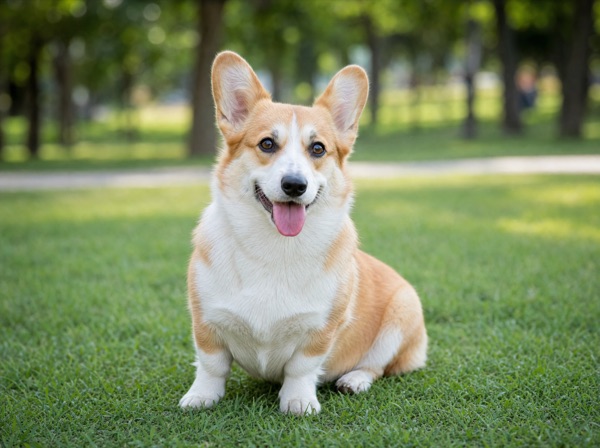
Pembroke Welsh Corgi
Big dog, short legs, royal résumé. Herds ankles with glee.
Vital stats
| Size | Small · 25–30 cm |
| Weight | 10–14 kg |
| Life expectancy | 12–15 years |
| Energy | Moderate-high — 60 min/day |
| Shedding | Heavy for the size |
| Coat | Medium double coat · red, sable, fawn, tricolour |
| Group | Herding · AKC / FCI №39 |
Breed traits
Friendliness
Care
Mind
Temperament
A true herder in a small frame, the Corgi is confident, clever and busy — happiest with a job, an alert to raise, or ankles to marshal. Devoted to its family and famously the breed of Queen Elizabeth II, it is bigger in attitude than in stature.
Habits & quirks
Ankle herding
No livestock? Children, guests and other pets will do nicely.
Big bark
A serious watchdog voice in a knee-high body.
Sheds like a big dog
That double coat blows twice a year and mid-blow it is everywhere.
Back care matters
Long spine, short legs — limit stairs and jumping to protect the back.
Care
| Exercise | About 60 min/day plus mental work — smart and easily bored |
| Weight | Guard the waistline; extra weight strains the long back |
| Grooming | Brush 2–3× weekly, daily during seasonal sheds |
| Training | Quick learner with a stubborn streak — keep it fun and firm |
Common questions
Do Corgis shed a lot?
Yes — a lot for their size, year-round, with two heavy seasonal blows. Regular brushing is essential.
Are Corgis good with children?
Generally yes, though the herding instinct can mean nipping at heels — teach and supervise with young kids.
Do Corgis bark a lot?
They're alert and vocal by design — excellent watchdogs, but early training keeps the barking in check.