Why do dogs sniff each other's butts? The chemical handshake
The greeting that embarrasses owners is, to dogs, a business card exchange conducted with laboratory equipment. A few seconds at the rear tells one dog the other's identity, sex, status and mood — more than ten minutes of face-to-face could — and it's performed to an etiquette older than any obedience class. Here's what's in the message, the astonishing hardware that reads it, and when a polite human should and shouldn't interrupt.
The business card: what's actually being read
Either side of a dog's rear sit two small anal sacs whose secretions carry a chemical signature as individual as a fingerprint. Written into that blend is a surprising dossier: who this dog is, its sex and reproductive status, broad strokes of diet and health, and — through stress compounds — something of how it's feeling right now. Because the signature is individual, dogs recognise friends by it and file strangers for next time; a dog re-meeting a park acquaintance is checking the card against its records as much as reading it fresh. That's why the sniff is the greeting rather than an add-on to it: faces tell a dog comparatively little, while the rear is where the authoritative documents are kept. The whole exchange typically takes seconds, and when both parties are fluent it ends with the social question settled — no barking, no posturing, business concluded.
The equipment doing the reading
The reason a three-second sniff carries so much is the instrument behind it. A dog's nose runs on hundreds of millions of scent receptors to our few million, backed by olfactory brain real estate scaled to match, and dogs sniff in stereo — each nostril samples separately, which helps localise a smell's direction. The specialist tool for social chemistry is the vomeronasal organ (Jacobson's organ), a dedicated sensor above the roof of the mouth wired to its own brain circuitry, tuned precisely to the chemical signals other dogs emit. It's the difference between smelling and reading: the kit turns another dog's rear into a document. It also explains a finding from the brain-scanner work covered in do dogs love their owners — scent is so central to a dog's social world that its reward centre answers to a familiar human's smell above all others. To a dog, smell isn't one sense among five. It's the main feed.
The etiquette your dog is following
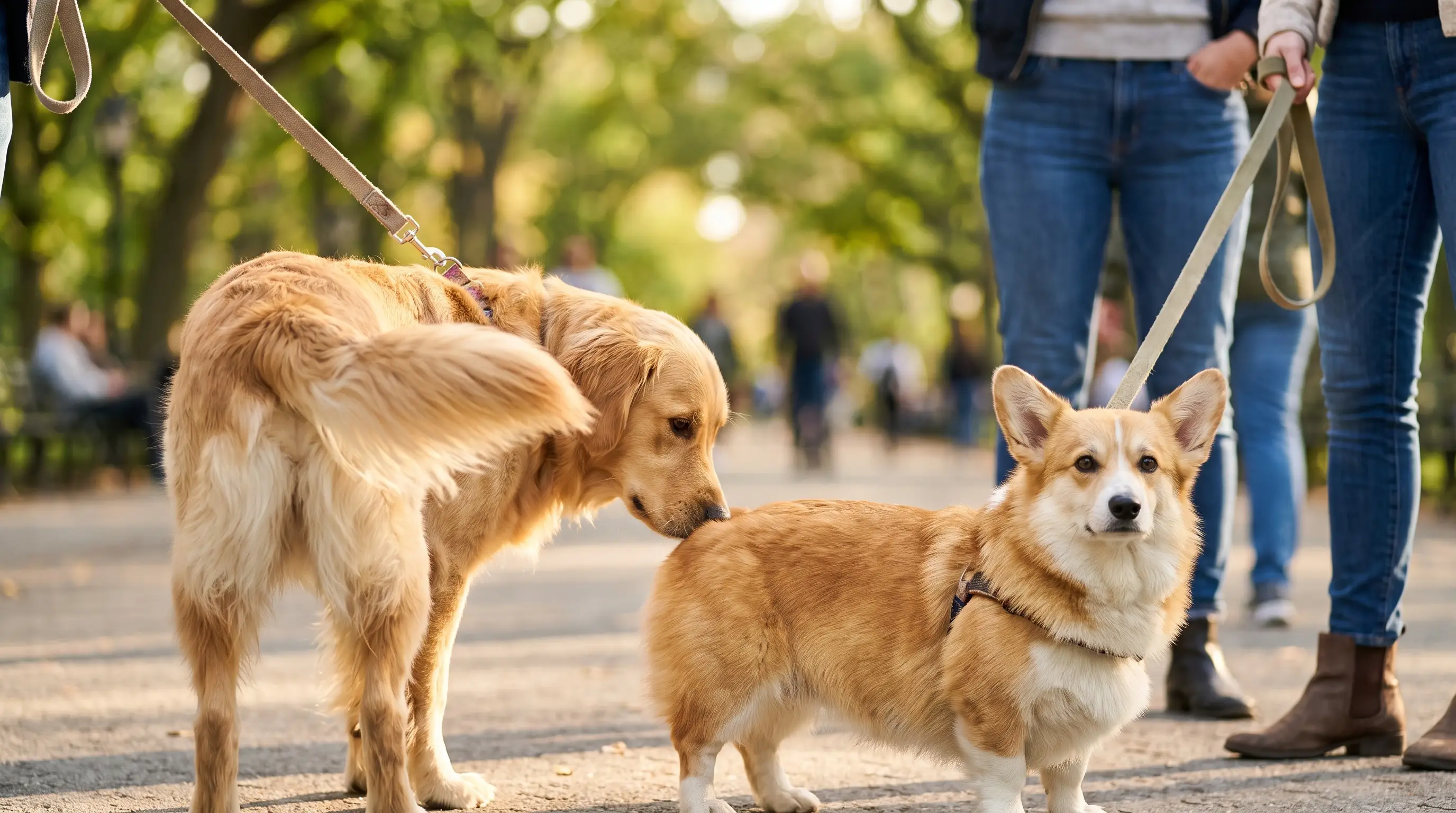
Watch two fluent dogs meet and you'll see a choreography. They approach in a curve rather than head-on, avoid hard eye contact, and go rear-first — because in dog manners, the face is the confrontational end and the rear is the polite one. They take turns: I read yours, you read mine, each standing patiently for inspection. Head-on approaches, a muzzle shoved straight into another dog's face, or endless unreciprocated sniffing are all rude in dog, and well-socialised dogs — the curriculum in socialising a puppy — learned the rules in their first months. Humans routinely force violations without realising: pavements funnel dogs into face-first meetings, and a tight lead deletes the curve entirely, which is one reason on-lead greetings go wrong so much more often than off-lead ones — the mechanics behind that live in leash reactivity. Where you can, give greeting dogs slack and an arc.
The nose runs the walk
The butt-sniff is one page of a habit that fills your dog's whole day: the walk itself is mostly a reading session. Every lamp post and corner is a community noticeboard of who passed, when, and in what condition, and the intense sniffing that slows your circuit to a crawl is your dog catching up on the news — recognising individuals it has never met face to face. This reframes the "slow" walk: a sniff-rich amble works a dog's brain harder than a brisk march, drains energy more efficiently, and doubles as the cheapest enrichment there is. Letting the nose lead for at least part of every walk isn't indulgence; it's letting the dog do the thing walks are for. A dog hurried past every scent post is a reader being dragged through a library by the collar.
Crotches, interruptions, and the glands themselves
Three practical notes. First, the awkward one: dogs sniff human groins for exactly the reason they sniff each other's rears — that's where our scent glands are concentrated, and the dog is reading, not misbehaving. Teach an incompatible greeting (a sit, or a nose-touch to an offered fist) for visitors rather than punishing curiosity. Second, when to interrupt a dog-dog sniff: after a few seconds, or the moment either party stiffens, tucks its tail or tries to leave — the exit signals are in dog body language — because a greeting that one dog has finished isn't a greeting any more. Move on cheerfully; don't yank. Third, the glands behind all this chemistry can misbehave: a dog that scoots, licks its rear excessively or suddenly smells fishy may have blocked or infected anal sacs, which is a quick vet fix and not a training matter. The messaging system, in other words, occasionally needs a plumber.
Common questions
Why do dogs sniff each other's butts?
Because that's where the information is: anal-sac secretions carry a chemical signature as individual as a fingerprint, encoding identity, sex, status and even mood. A few seconds of sniffing settles who the other dog is — it's the standard canine greeting, performed rear-first because in dog etiquette the face is the confrontational end.
What do dogs learn from sniffing another dog?
Identity first — dogs recognise individuals by scent and remember them — plus sex, reproductive status, rough health and diet, and emotional state via stress compounds. It's why the sniff replaces the small talk: the rear carries the authoritative record, read by a nose with hundreds of millions of receptors and a dedicated chemical-signal organ.
Why do dogs sniff human crotches?
Same logic, wrong species: human scent glands are concentrated there, so it's the most informative spot on a person. The dog is gathering information, not being rude. If it bothers guests, train an incompatible greeting — a sit, or a nose-touch to an offered fist — instead of punishing what is, to the dog, ordinary politeness.
Should I let my dog sniff other dogs?
Yes, when both dogs are willing — it's the greeting working as designed, and it prevents more conflict than it causes. Help it go well: approach in an arc rather than head-on, keep the lead slack, and end it after a few seconds or the moment either dog stiffens, tucks its tail or turns away.
Why does my dog sniff everything on walks?
It's reading the neighbourhood news: scent marks tell it who passed, when, and in what state, and processing that works its brain harder than the walking does. A sniff-rich walk is better exercise and enrichment than a hurried march, so let the nose lead for at least part of every outing.
How long should dogs sniff each other?
A polite greeting runs a few seconds each way, taken in turns. Step in cheerfully — no yanking — when the sniffing runs long and one-sided, or when either dog goes stiff, tucks its tail, or tries to disengage. A greeting one party has finished is over, whatever the other party thinks.
More in Dogs
Do dogs love their owners? What the science measured
Yes — and unusually for a question about feelings, we have the receipts: oxytocin loops, attachment tests and brain scans. What dog love is made of, and what it looks like from the sofa.
Why do dogs eat grass? The myth, the data, the real risks
It's rarely self-medication and almost never a missing nutrient — the biggest survey ever run on grass-eating dogs retired both stories. What's actually going on, and when to pay attention.
Dog zoomies: why dogs suddenly sprint like maniacs
The tucked tail, the mad loops, the gleeful eyes — zoomies have a scientific name, a set of reliable triggers, and exactly one thing you shouldn't do about them.
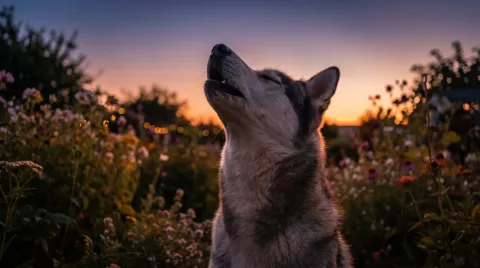
Why do dogs howl? Sirens, solitude and the wolf inside
The howl is long-distance radio inherited from wolves — and no, the siren isn't hurting your dog's ears. What each howl broadcasts, and the one kind that's a message for you.
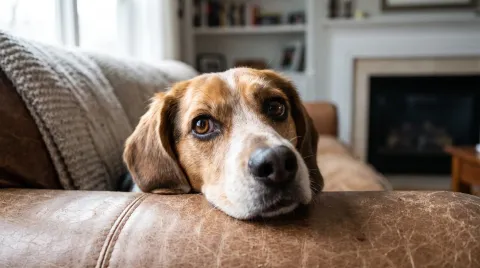
Why does my dog stare at me? Every stare, decoded
Affection, forecasting, negotiation, security detail — a dog's stare is never empty. What each one means, including the famous bathroom vigil, and the one stare to take seriously.
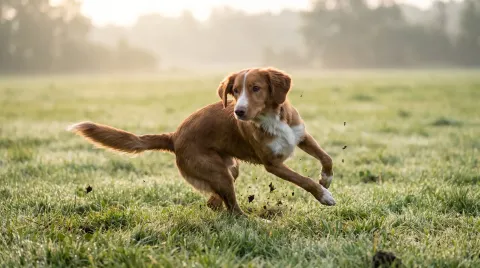
Dog body language: what your dog is really telling you
A wag is not always happy, and hackles are not always aggression. How to read the whole dog — tail, ears, eyes, mouth and posture — and spot stress before it becomes a bite.