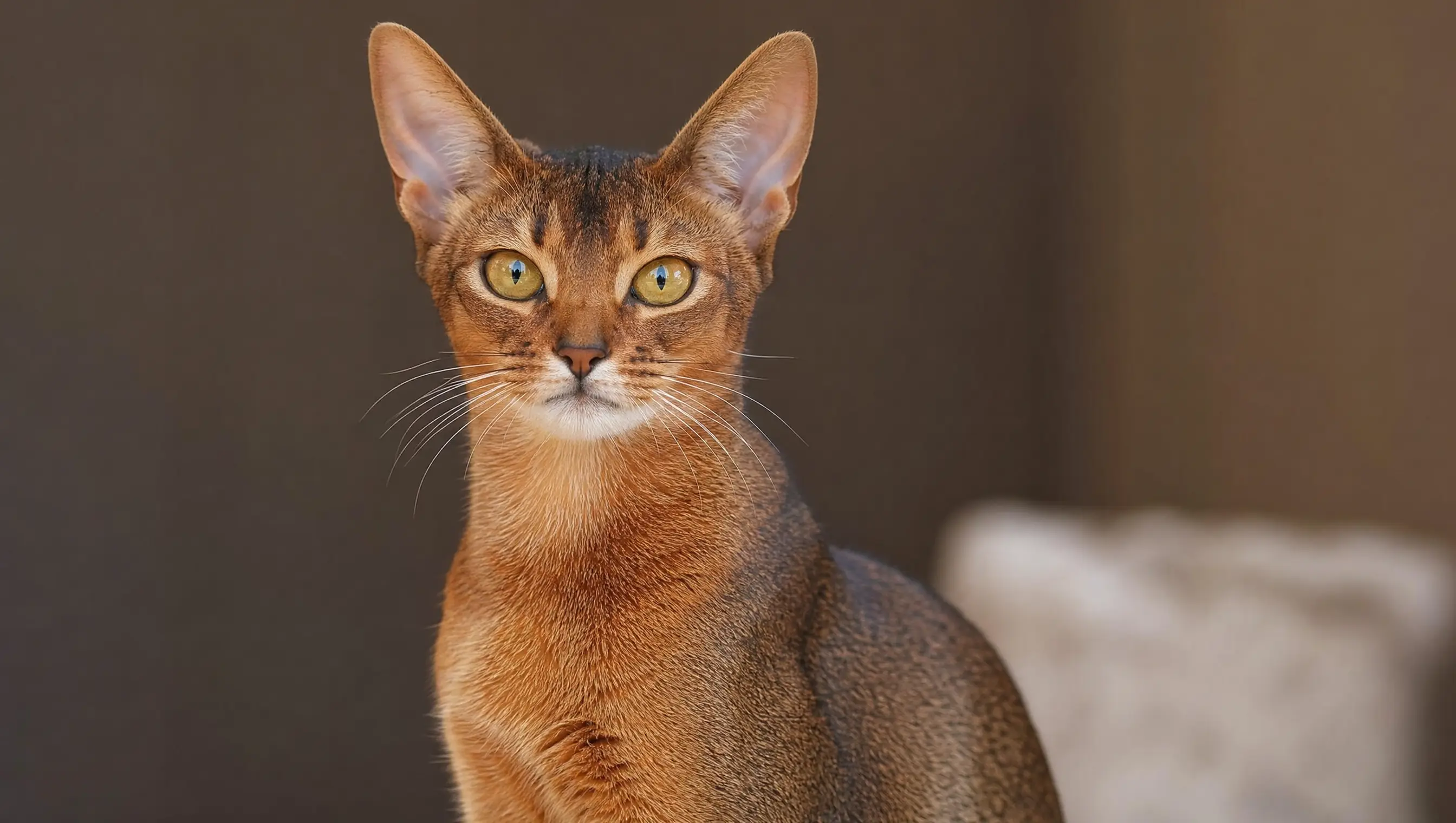
Abyssinian
A lean, restless athlete with a coat that looks lit from within — the cat that never quite sits down.
On these lists: Family cats
Vital stats
| Size | Small to medium · fine-boned, muscular |
| Weight | 3–5 kg · males heavier |
| Life expectancy | 12–15 years |
| Energy | High — busy from morning to night |
| Shedding | Low, short coat |
| Coat | Short, fine, ticked (agouti) |
| Group | Shorthair |
| Origin | Ethiopia |
Breed traits
Friendliness
Care
Mind
The Abyssinian by the numbers
The Abyssinian facts owners search for most — price, lifespan, weight, shedding and colours, in one place.
Widely bred, so you can usually find a litter from a registered breeder without a long wait. Ongoing costs stay modest — it eats little and routine vet care sits at the lower end.
We don't quote a single figure: the real price swings with breeder, region, bloodline and health testing — and a rescue costs a fraction of a breeder's litter. Adopting is almost always the cheapest route.
Temperament
Abyssinians are curious to the point of nosiness — they want to be up high, into the cupboards, and involved in whatever you've got open on the counter. They bond hard to their people but show it by shadowing you and supervising your tasks rather than melting into a lap. The voice is soft, more chirp and trill than yowl, so a busy Aby is usually quiet company right up until it knocks something off a shelf to see what happens. They stay kitten-like well into adulthood and get bored, then destructive, without enough to do. Most do better with a second cat or an active household than left alone all day. Sociable with visitors and generally fine with cat-savvy dogs and older, gentle children.
Habits & quirks
Climbs everything
Give an Aby the tallest route in the room and it will take it — tops of doors, fridges and bookcases are all fair game.
Working cat
Bright and food-motivated enough for clicker tricks, puzzle feeders and fetch; a bored Aby invents its own, messier games.
Soft-spoken
Rarely loud — communicates in quiet chirrups and trills, so you notice the mischief before you hear it.
Velcro supervisor
Follows you room to room and inspects every task, less lap cat than tireless assistant.
Health
The Abyssinian is a lean, athletic cat that mostly stays healthy, but the breed carries a few inherited conditions worth knowing before you buy. Two have a DNA test, so a good breeder can simply show you the results: progressive retinal atrophy (the rdAc form, which slowly takes a cat's sight) and pyruvate kinase deficiency, which causes anaemia. Abyssinians are also over-represented for renal amyloidosis, a kidney disease, and for kneecap luxation. Day to day, the thing you'll actually manage is the mouth, because the breed is prone to gingivitis, so get it used to having its teeth brushed while it's young. Ask the breeder for the DNA test results in writing, keep up with dental care, and you've dealt with most of the risk before it starts.
Nutrition
| Grooming | Almost nothing — the short coat needs only an occasional rub-down or weekly comb to lift dead hair. Watch the gums instead, as the breed is prone to gingivitis. |
| Health | Ask the breeder for DNA tests for PRA (rdAc, a form of inherited blindness) and pyruvate kinase deficiency (which causes anaemia); the breed also carries higher-than-average risk of renal amyloidosis and patellar luxation. |
| Exercise & enrichment | This is a high-energy cat that must have vertical space, daily interactive play and puzzle toys, or it will find trouble to keep itself occupied. |
| Company | Abys hate being ignored; a second active pet or a household that's home a fair amount prevents the loneliness that turns into destructive boredom. |
Cats are obligate carnivores, so an Abyssinian needs a diet built on animal protein rather than filler. Pick a complete food, wet or a wet-and-dry mix, and feed measured meals instead of leaving a bowl down all day, because even a busy Aby puts on weight if the food never runs out. Wet food does a lot of quiet good here: cats drink little by nature, and taking water in through the food supports the kidneys, which matters in a breed that carries a higher risk of kidney disease. Keep fresh water available anyway, and count any treats inside the day's total. You want ribs you can feel under a light cover, not see.
Kitten guide
An Abyssinian kitten is busy from the day it can walk, and that shapes the whole first year. Feed a complete kitten food in small, frequent meals while it's growing fast, and don't rush the switch to adult food; follow the pace the breeder started. This is a breed that needs height and things to do from the start, so give it a tall cat tree, safe climbing routes and plenty of interactive play, or it will invent its own games on your shelves. Handle it often and gently in the early weeks, introduce it calmly to visitors, other pets and everyday noise, and you'll get the confident, sociable adult the breed is known for. Many Aby owners keep two, and a kitten raised with company is rarely a lonely adult.
Training
Abyssinians are bright and food-motivated, which makes the household basics easy and enrichment essential. Litter training usually looks after itself: give a clean, low tray in a quiet spot, scoop it daily, and keep it well away from the food. Set out a tall, sturdy scratching post early so the climbing and scratching urges land there instead of the sofa. Where this breed really pays you back is training for fun. An Aby will learn to come to its name, sit, fetch and work a puzzle feeder, and a clicker plus a few pieces of kibble is all it takes. Treat that as part of daily care rather than a party trick, because a busy mind kept occupied is the difference between a happy Aby and a destructive one.
Life expectancy
Abyssinians live 12–15 years. Most of that range comes down to the things you can influence. The inherited conditions the breed carries, the kidney and eye problems, are the reason to buy from a breeder who DNA-tests and to keep up with yearly vet checks as the cat ages, because catching kidney trouble early buys time. Beyond that it's the ordinary stuff that adds up: a lean weight, clean teeth, the safety of an indoor or supervised-outdoor life, and the mental and physical activity this restless cat needs. Look after those and the upper end of that range is a realistic goal.
Similar breeds
Breeds with a similar build and background — worth a look if this one isn't quite the fit.
Common questions
Are Abyssinians lap cats?
Not really. They're deeply attached to their people but show it by following you and staying involved, not by settling down to be held for long stretches. If you want a cuddly cat that sits still, this isn't the breed.
Do Abyssinians need a lot of attention?
Yes. They're intelligent and get bored easily, and a bored Aby becomes destructive. Plan for daily play, climbing space, and ideally company — many owners keep them in pairs.
What health problems do Abyssinians have?
The main inherited concerns are progressive retinal atrophy (PRA) and pyruvate kinase deficiency, both of which have DNA tests. The breed is also over-represented for renal amyloidosis, dental/gum disease and kneecap luxation, so buy from a breeder who screens and keep up with dental care.
Does the Abyssinian shed a lot?
Not much. The Abyssinian is a low-shedding breed, so loose hair around the home stays minimal. It still needs regular grooming, but you won't be fighting drifts of fur.
Are Abyssinian cats hypoallergenic?
No cat breed is truly hypoallergenic. The trigger is Fel d 1, a protein in a cat's saliva and skin that transfers to the coat during grooming and then travels on loose hair and dander — so a cat that sheds less, like the Abyssinian, spreads less of it around the house, but still produces it. If someone at home reacts to cats, spend real time with this breed before deciding, and no breeder should promise you an allergy-free cat.
Are Abyssinian cats good with children?
Usually yes. The Abyssinian is a sociable cat that tends to tolerate the noise and handling of family life better than most, which is why it comes up so often for homes with kids. It still needs somewhere high and quiet to retreat to, and children need teaching that a cat walking away is allowed to.
How much grooming does a Abyssinian need?
Very little. The Abyssinian handles its own coat and a comb once a week or so is plenty — mostly to catch loose hair before the cat swallows it. Claws, teeth and ears still want the usual checks, which is the part people skip on an easy-coated cat.
Stories featuring this breed
All stories →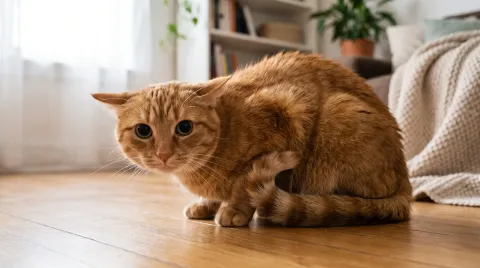
Why is my cat aggressive? Causes and how to calm it
Cat aggression isn't a personality — it's a diagnosis with about six usual suspects, and each one has a different fix. Work through them in order and the biting usually explains itself.
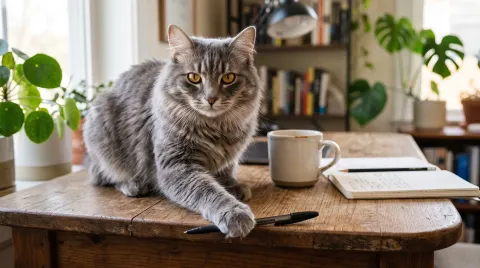
Why cats knock things off tables
The slow push, the held eye contact, the pen hitting the floor. Three real reasons behind the most theatrical move in cat ownership — and the honest one is that it reliably summons you.
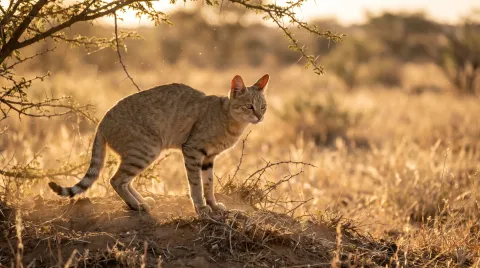
How cats domesticated themselves
No one set out to tame the cat. It walked into the grain stores of the first farmers about 10,000 years ago and stayed — barely changed from the wildcat it still is.