Why is my cat aggressive? Causes and how to calm it
An aggressive cat is almost never an angry cat. Behind nearly every scratch and bite sits fear, pain, frustrated hunting drive, or a territory dispute — states with causes you can find and remove. That's the useful way to read aggression: not as what your cat is, but as a message about what's happening to it. This guide works through the usual suspects in the order a behaviourist would, from the ambush at your ankles to the housemates who suddenly can't share a hallway.
First, read the posture: offensive or defensive?
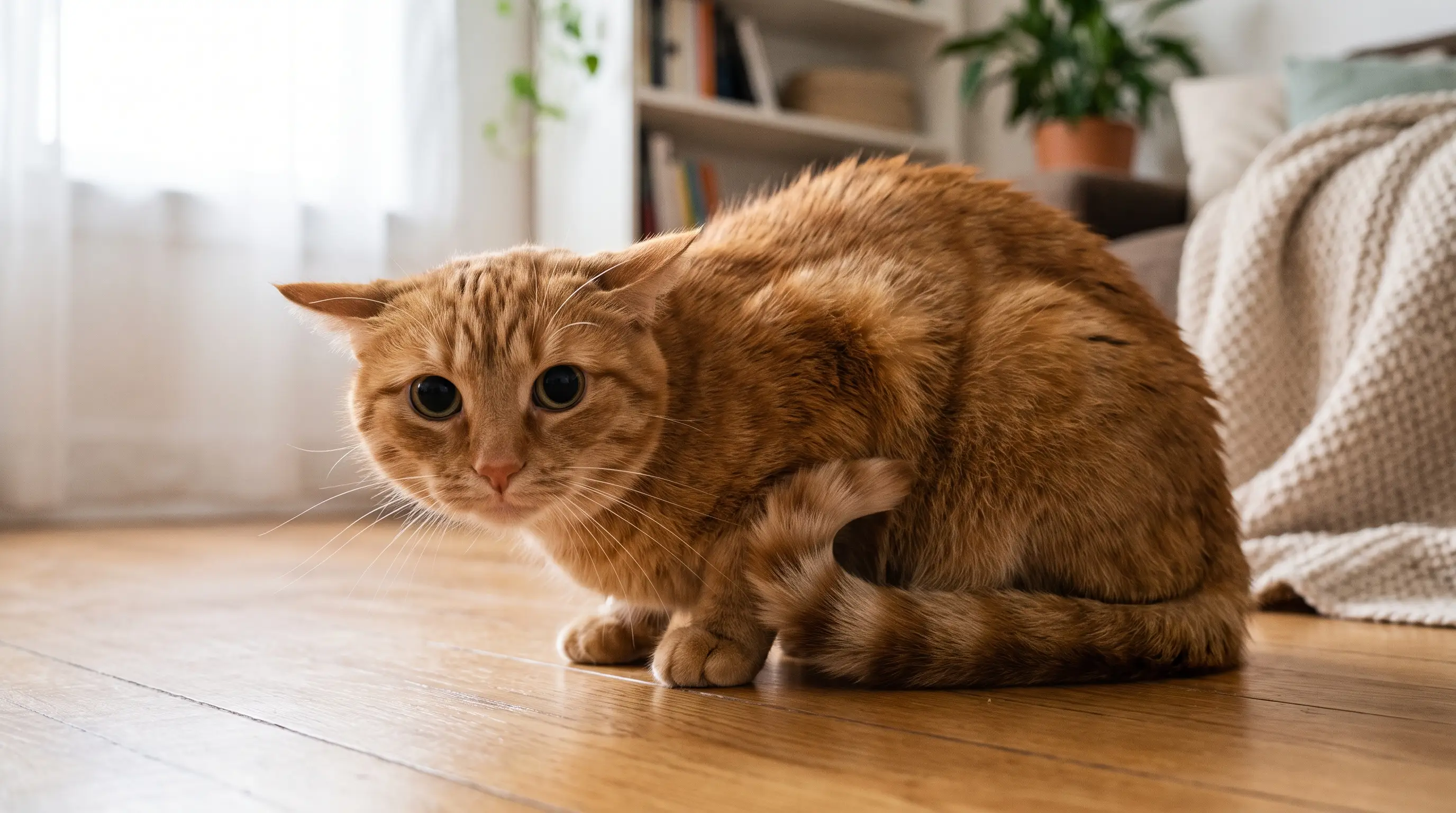
Before assigning a cause, look at the shape of the cat. A defensive cat makes itself small and slanted: crouched, weight leaning away, ears flattened sideways, tail wrapped or tucked, pupils wide — an animal that wants the encounter to end and will bite only if you close the distance. An offensive cat makes itself big and straight: stiff legs, direct stare, ears rotated but upright at the base, fur raised along the spine and tail — an animal prepared to shorten the distance itself. The distinction matters because a defensive cat needs escape routes and space, while an offensive one needs the dispute resolved, and the full vocabulary is in our guide to cat body language. Between two cats, add one more check first: real fights are rarer than they look, and playing or fighting shows how to tell wrestling from war.
Play aggression: the ambush at your ankles
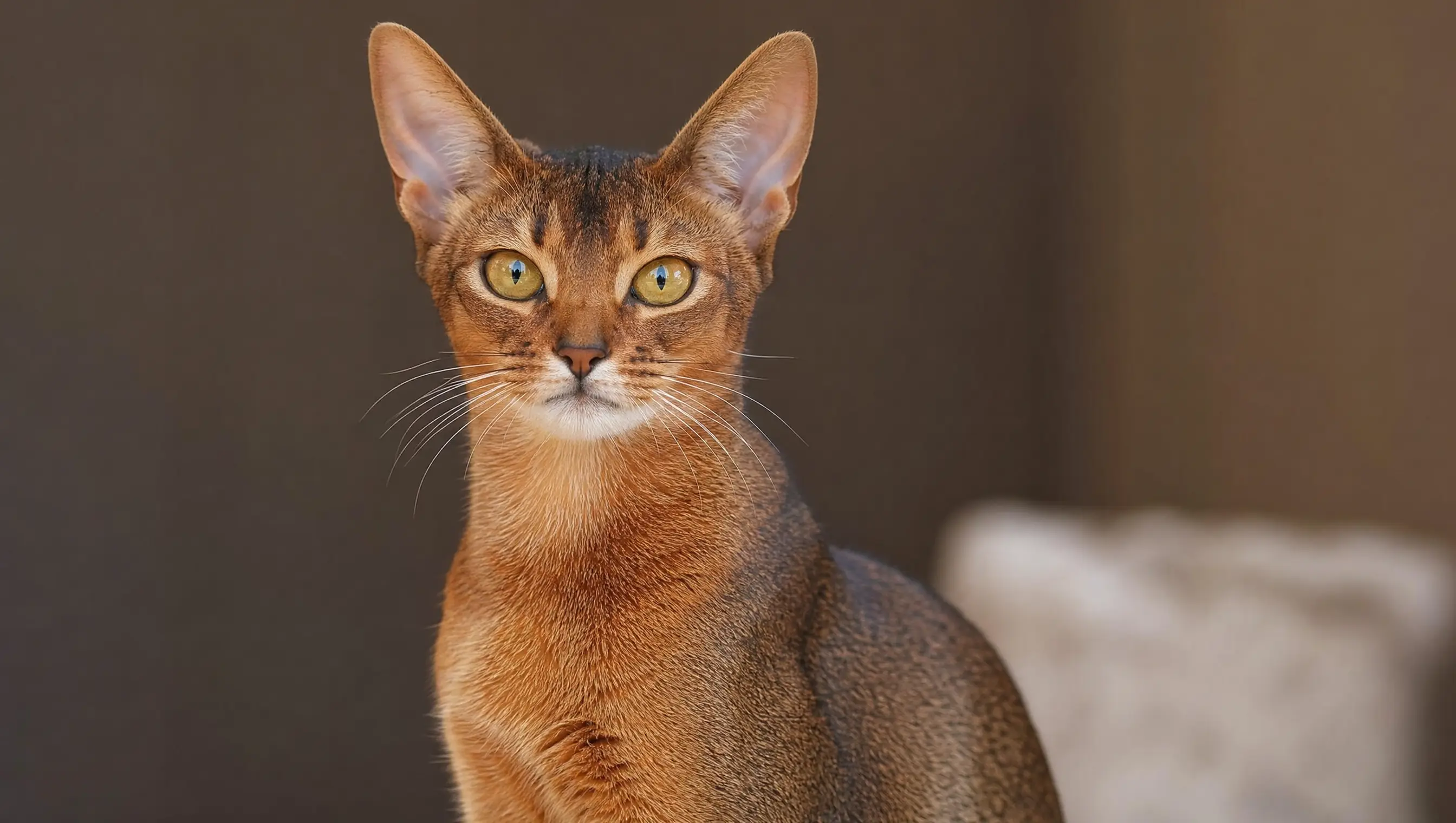
The commonest aggression aimed at owners isn't hostility at all — it's hunting with nowhere to go. The profile is a young cat, often one that grew up without littermates to teach it bite limits, ambushing feet on the stairs, grabbing hands mid-stroke of the keyboard, raking with the back legs. Kittens normally learn to pull their punches by playing rough with siblings and getting punished with the end of the game; a kitten that grew up alone, or one taught that wiggling fingers are a toy, never got the lesson. The fix is redirection, not suppression: schedule real hunts with a wand toy morning and evening, let the cat catch and 'kill' the target, and make hands boring forever — no hand-wrestling, ever, even with a kitten, and no reaction beyond going still and ending the game when teeth land. High-energy cats like the Abyssinian need more of these outlets than a sofa cat, not a firmer telling-off.
Pain and fear: the sudden change
A previously gentle cat that starts hissing, swatting or biting has earned a vet visit before any behaviour plan, because pain is the classic driver of sudden aggression. Arthritis makes handling hurt, dental disease makes the face untouchable, and an overactive thyroid can turn a placid senior irritable and jumpy — all common, all treatable, and all invisible from the outside. The tell is aggression tied to touch, or to the approach of a hand toward one region of the body. Fear aggression, the other defensive kind, has the opposite geography: it appears when the cat is cornered — the carrier, the vet table, a visitor's toddler — and vanishes when the cat has an exit. You defuse it by never cornering the cat, letting it choose distance, and pairing scary things with food from far away. What you never do is punish: punishment converts a frightened cat into a frightened cat with proof you're dangerous, and it makes every kind of aggression on this page worse.
Redirected aggression: the wrong target
The strangest attacks are the borrowed ones. A cat winds itself up at something it can't reach — a rival cat through the window is the textbook case, a sudden noise or a smell will do — and the arousal has to land somewhere, so it lands on whoever is nearest: the other resident cat, or your leg. The attack looks unprovoked because the provocation was outside the glass. Two things make redirected aggression distinctive: it's violent out of all proportion to anything that just happened between you, and the cat can stay dangerously wound up for hours afterwards. Don't comfort, don't handle — separate. Put the cat alone in a dim, quiet room with water and a tray and let the arousal drain before any reunion. Then remove the trigger: block the view of the window the outside cat patrols, exactly the sightline management that stops the closely related problem of urine spraying. If the bites come mid-cuddle instead, that's a different diagnosis with its own logic — petting aggression has warnings you can learn to count.
Territorial aggression: when housemates fall out
Aggression between resident cats has its own clock. Cats reach social maturity somewhere between two and four years old, which is why two cats that shared a bed as kittens can start disputing doorways as adults — the relationship didn't break, it renegotiated, and one party filed an objection. A new cat, a returning cat that smells of the vet clinic, or building work that scrambles the scent map can trigger the same dispute. The warfare is mostly cold: staring, blocking corridors, ambushes at the litter tray, one cat living on top of the wardrobe. The fix is to stop making the cats compete — one of every resource per cat plus a spare, spread through the house — and, when the tension has turned to actual fighting, a full separation and staged reintroduction, run as slowly as a first meeting. A household audit against the signs of a stressed cat usually shows you which resource is being contested.
What actually helps, in order
Work the list the way a behaviourist would. Vet first, always, for any aggression that is new, worsening, or tied to touch — you cannot train away pain or a thyroid. Then identify the pattern from this page: who gets attacked, where, after what. Then remove or defuse the trigger, add legitimate outlets for hunting, and give every cat space and escape routes; most cases respond to exactly that. There is no over-the-counter fix worth your money — calming supplements are unproven, and anything that genuinely alters behaviour, like fluoxetine for severe anxiety-driven cases, is prescription territory that only makes sense alongside behaviour work, not instead of it. If the aggression involves injury — punctures, a cat you're afraid of, fights that draw blood — skip to the end of the list: ask your vet for a referral to a qualified behaviourist. That isn't defeat; injurious aggression is the one version of this problem that reliably gets worse while owners experiment.
Common questions
Why is my cat suddenly aggressive?
A sudden change in a previously calm cat points first at pain or illness — arthritis, dental disease and an overactive thyroid are classic — so a vet check comes before any training. If the vet finds nothing, look for a new trigger: an outside cat at the window, a new pet or person, or redirected arousal from something the cat couldn't reach.
Why does my cat attack me unprovoked?
Truly unprovoked attacks are usually one of two things: play aggression in a young cat ambushing you as prey, or redirected aggression, where the cat was wound up by something else — typically a rival cat through the window — and you were simply the nearest target. In both cases the provocation exists; it just wasn't you.
How do you calm an aggressive cat?
In the moment: back off, give it space and an escape route, and don't touch, chase or comfort it — a wound-up cat can stay dangerous for hours, so let it settle alone in a quiet, dim room. Long term, calm comes from removing the trigger, scheduled play that drains hunting energy, and a vet check to rule out pain.
Why is my cat hissing and attacking me?
Hissing is a distance-keeping warning, so a cat that hisses before attacking is telling you it feels threatened and wants you further away — that's defensive aggression, driven by fear or pain, not dominance. Stop approaching when you hear it, give the cat an exit, and book a vet check if this behaviour is new.
Should I punish my cat for attacking me?
No. Punishment — shouting, spraying water, physical corrections — reliably makes aggression worse, because nearly all of it is driven by fear, pain or arousal, and punishment adds more of all three. End the interaction instead: go still, withdraw attention, leave the room, and fix the cause rather than the symptom.
What can I give my cat for aggression?
Nothing over the counter is worth relying on — calming supplements have weak evidence, and a pheromone diffuser is at best a supporting player. Genuine medication for aggression, such as fluoxetine for severe anxiety-driven cases, exists but is prescription-only and works alongside a behaviour plan, so the route is through your vet, not a shop shelf.
More in Cats
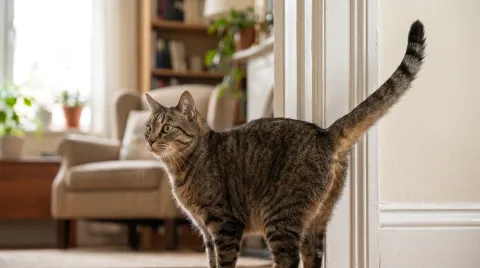
Why is my cat spraying? What it means and how to stop it
Spraying isn't a litter-box failure — it's a message about territory, written in urine. How to tell it from peeing, what's behind it, and the fixes that hold.
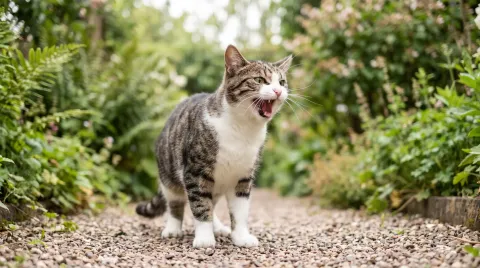
Why do cats hiss? What it means and what to do
A hiss is not an attack — it's the thing a cat does to avoid one. What the sound actually is, what triggers it, and why the polite answer is always to back off.
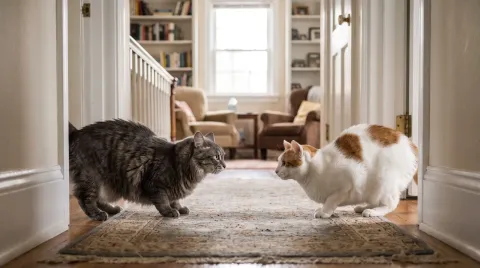
Why are my cats fighting? How to restore the peace
Two cats that shared a bed for years can turn into enemies in an afternoon. What breaks a feline relationship, why 'letting them fight it out' entrenches the war, and the reset that works.
How neutering changes cat behavior — and what it won't fix
Neutering deletes the hormone-driven behaviours — the roaming, the spraying, the 3am opera — and touches almost nothing else. What changes, what doesn't, and when.
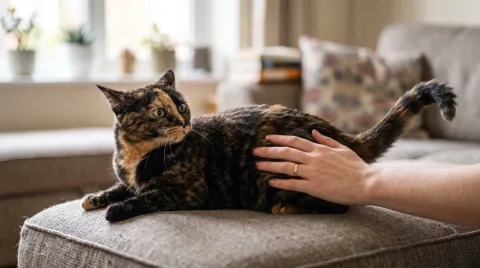
Why your cat bites you mid-stroke
Purring one second, teeth the next — petting-induced aggression is the most misread move in cat ownership. The warnings arrive earlier than you think, and the fix is counting, not forgiveness.
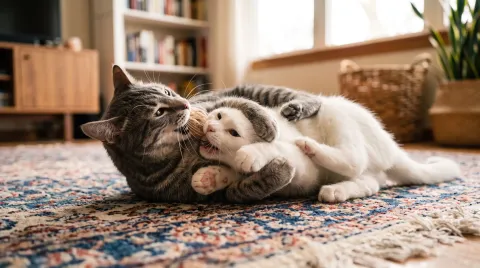
Are my cats playing or fighting? The five reads
Wrestling, neck bites, bunny kicks and thundering chases — most of it is play, some of it isn't, and the difference is visible in five places. What to check, when to step in, and how to step in without getting shredded.