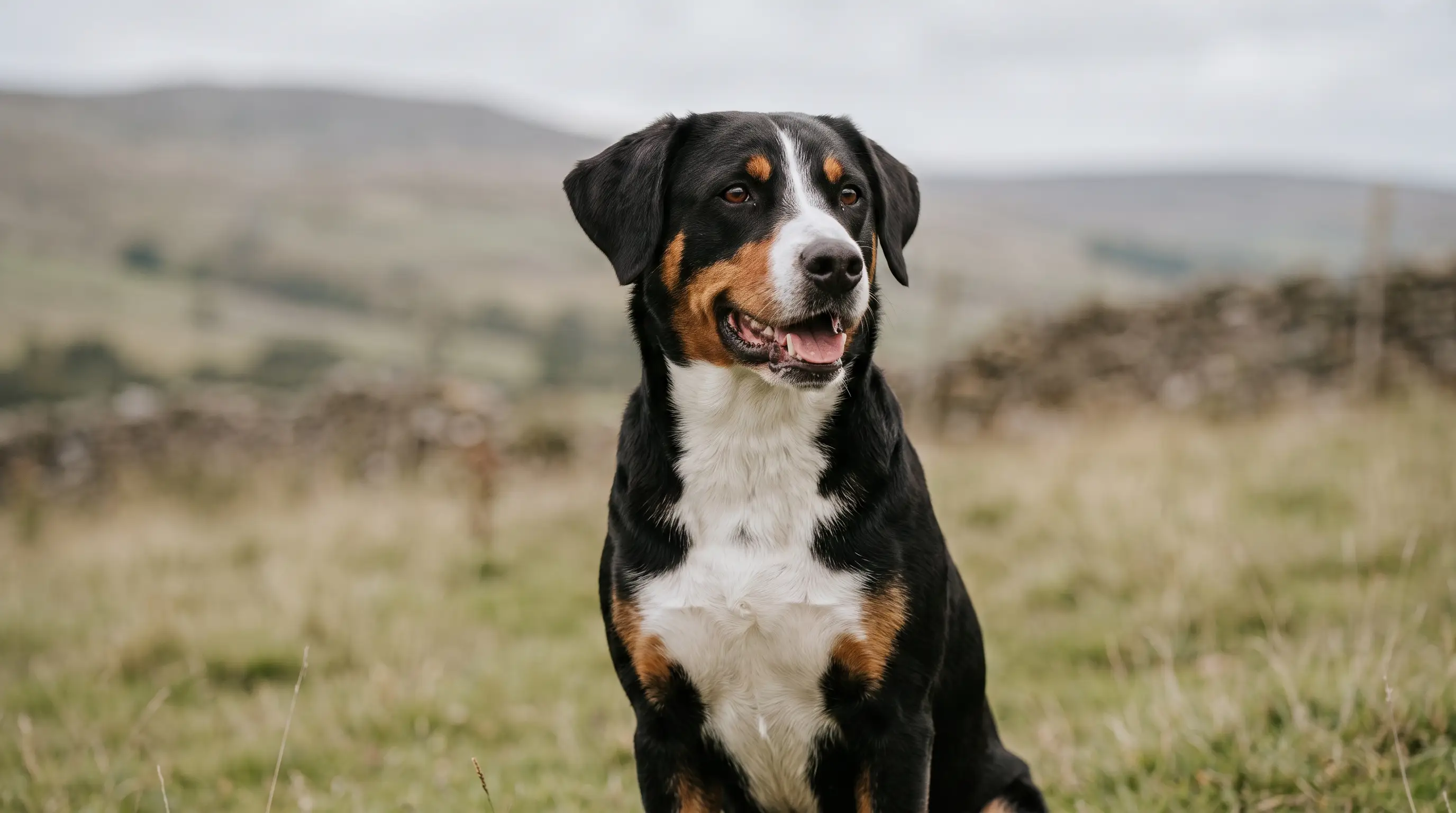
Appenzeller Sennenhund
The liveliest of Switzerland's mountain dogs, with a tail curled like a post horn.
Vital stats
| Size | Medium · 50–56 cm |
| Weight | 22–32 kg |
| Life expectancy | 12–15 years |
| Energy | Very high — 90+ min/day |
| Shedding | Moderate, heavier in season |
| Coat | Short tricolour double coat · black or havana-brown base |
| Group | Working · FCI №46 / AKC |
| Origin | Appenzell, Switzerland |
| FCI group | 2 — Pinscher and Schnauzer, Molossoid and Swiss Mountain Dogs · FCI 46 |
Breed traits
Friendliness
Care
Mind
The Appenzeller Sennenhund by the numbers
The Appenzeller Sennenhund facts owners search for most — price, lifespan, weight, shedding and colours, in one place.
Widely bred, so you can usually find a litter from a registered breeder without a long wait. Ongoing costs run high — more food, bigger doses at the vet, and pricier insurance.
We don't quote a single figure: the real price swings with breeder, region, bloodline and health testing — and a rescue costs a fraction of a breeder's litter. Adopting is almost always the cheapest route.
Temperament
Bred to drive cattle through Alpine passes and guard the farmyard in between, the Appenzeller is quick, bold and thoroughly self-assured. It bonds hard to its family, announces every visitor, and needs genuine work — herding, agility, long mountain walks — or it will freelance as security consultant for the entire street.
Habits & quirks
Announces everything
Visitors, weather, squirrels — the farm bark comes fitted as standard.
Heel management
Cattle-driving instinct can resurface around joggers and bicycles; teach an off-switch early.
One-family dog
Full devotion for its own people, healthy scepticism for everyone else.
All-terrain drive
Rain, snow or scree, this dog does not do 'too tired'.
Health
There's no breed-specific screening scheme to quote for the Appenzeller, so treat it as the fit, driven working dog it is and buy from a breeder who health-tests the parents and keeps the small gene pool honest. The real health work here is a life that matches the dog: this is a breed with the stamina to go all day, and the surest way to keep one sound is to keep it genuinely exercised, mentally worked and lean rather than idle and overweight. Keep vaccinations and parasite cover current, and check the ears and coat over as part of the weekly brush.
Nutrition
| Exercise | Plan on 90 minutes to two hours of vigorous activity daily, plus mental work |
| Training | Clever and quick, but strong-minded — consistent, early leadership pays for a lifetime |
| Socialisation | Broad, positive exposure in puppyhood keeps natural wariness from hardening |
| Grooming | An easy weekly brush, stepped up during the seasonal moults |
An Appenzeller runs on real fuel — plan on ninety minutes to two hours of hard activity a day — so feed it to that workload and adjust when the work does. Keep it lean and muscled, with ribs you can feel under the short double coat, because spare weight on a busy herding dog just gets in the way of the very stamina it's known for. Weigh the meals, count the training treats in the day's total, and let the dog's condition, not the size of the bowl, set the amount.
Puppy guide
An Appenzeller puppy is bright, bold and quick to decide it runs the place, so early, consistent leadership and broad socialisation are the whole game. Give it positive experiences with people, dogs, traffic and livestock while it's young, so the breed's natural wariness settles into a watchdog's judgment rather than hardening into suspicion. Teach an off switch early — the cattle-driving instinct can surface around joggers and bikes — and start giving the busy brain real jobs from the start, because an under-worked Appenzeller finds its own.
Training
Clever and quick, but strong-minded — the Appenzeller learns fast and will happily run the household if you let it, so consistent, early leadership pays for a lifetime. Give it real work for body and brain, herding, agility, long mountain walks, tracking, and it repays you; leave it idle and it freelances as security consultant for the whole street. Build an off switch and a solid recall early, keep training fair and consistent, and channel the drive into a job rather than trying to switch it off.
Life expectancy
Appenzeller Sennenhunde live 12–15 years. The Appenzeller is a robust, long-lived working breed, and you hold it at the top of that range the way you keep it happy: lean weight, genuine daily exercise for body and mind, and parents from a breeder who health-tests a small gene pool honestly. A fit, well-bred, properly worked Appenzeller stays sound for a long time — the quickest way to shorten that is to leave it idle and let it run to fat.
Similar breeds
Breeds with a similar build and background — worth a look if this one isn't quite the fit.
Breeds that look like this
Common questions
Are Appenzellers good family dogs?
For active families, yes — loyal, playful and naturally protective. Their energy and barking will overwhelm quiet or apartment households.
How much exercise does an Appenzeller Sennenhund need?
Ninety minutes to two hours a day, plus jobs for the brain. A stroll round the block will not touch the sides.
Are Appenzeller Sennenhunde rare?
Outside Switzerland, yes — far fewer are bred than their Bernese cousin. Expect a search and a waiting list from the small circle of dedicated breeders.
Does the Appenzeller Sennenhund shed a lot?
Moderately. The Appenzeller Sennenhund sheds a fair amount, steadily through the year with heavier seasonal patches. A weekly brush keeps most of the loose hair off your floors and clothes.
Is the Appenzeller Sennenhund hypoallergenic?
Not really. No dog is truly hypoallergenic, and the Appenzeller Sennenhund's shedding coat releases plenty of the dander that sets off allergies. If someone at home is allergic, this isn't the easiest breed to live with — spend time around one first.
Is the Appenzeller Sennenhund easy to train?
Reasonably. The Appenzeller Sennenhund is trainable with consistency and rewards, though it isn't the quickest study. Keep sessions short and positive, and be patient with the basics like recall.