Boxer
The clown of the working group — a bouncy, big-hearted goofball.
On these lists: Family dogs
Vital stats
| Size | Medium-large · 53–63 cm |
| Weight | 25–32 kg |
| Life expectancy | 10–12 years |
| Energy | High — 1–2 hours/day |
| Shedding | Low–moderate, year-round |
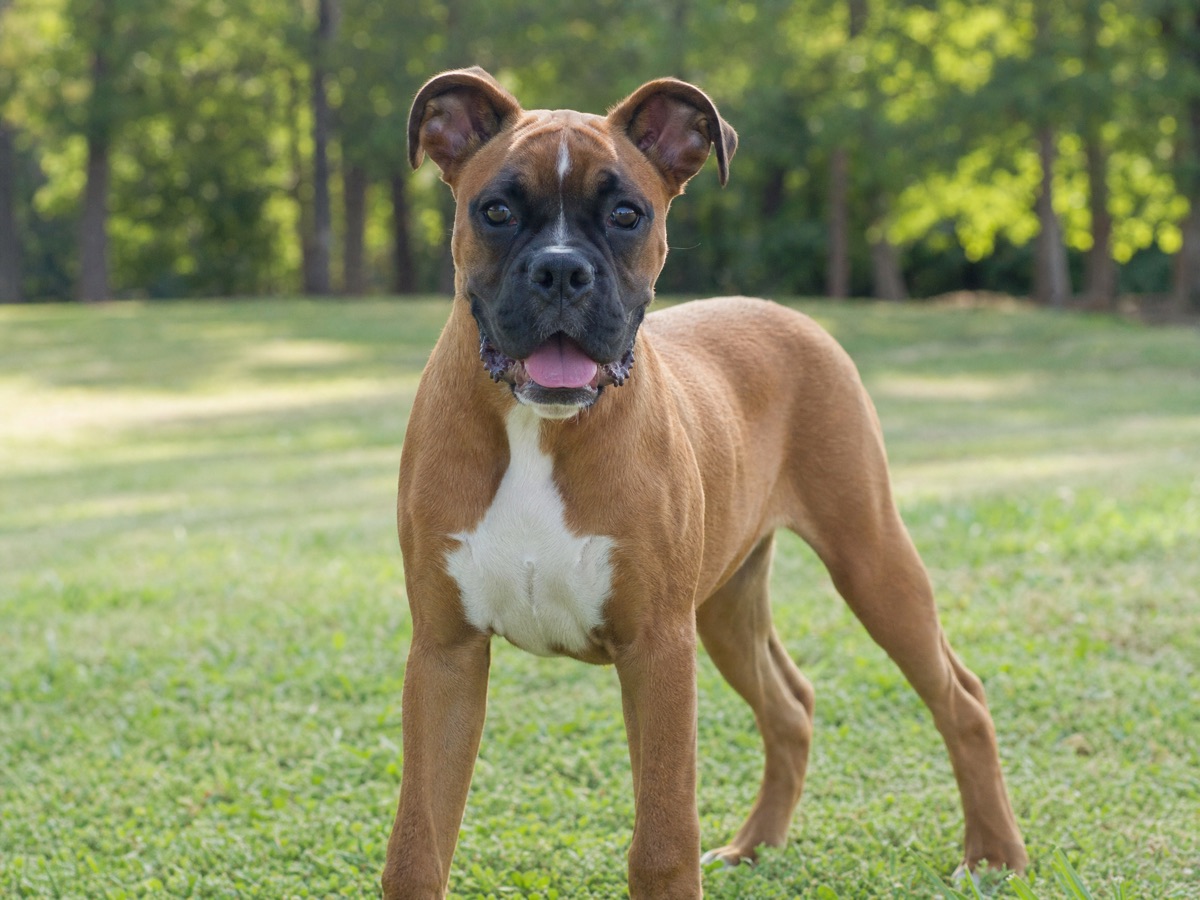
| Coat | Short smooth coat · fawn or brindle, often white-marked |
| Group | Working · FCI №144 / AKC |
| Origin | Munich, Germany |
| FCI group | 2 — Pinscher and Schnauzer, Molossoid and Swiss Mountain Dogs · FCI 144 |
Breed traits
Friendliness
Care
Mind
The Boxer by the numbers
The Boxer facts owners search for most — price, lifespan, weight, shedding and colours, in one place.
Widely bred, so you can usually find a litter from a registered breeder without a long wait. Ongoing costs run high — more food, bigger doses at the vet, and pricier insurance.
We don't quote a single figure: the real price swings with breeder, region, bloodline and health testing — and a rescue costs a fraction of a breeder's litter. Adopting is almost always the cheapest route.
Temperament
Developed in Germany from the Bullenbeisser hunting mastiff, the Boxer went on to serve as butcher's dog, police dog and family guardian. What remains is a powerful, agile athlete with a comedian's soul: watchful with strangers, silly with its people, and famously among the last breeds to grow up.
Habits & quirks
The kidney bean
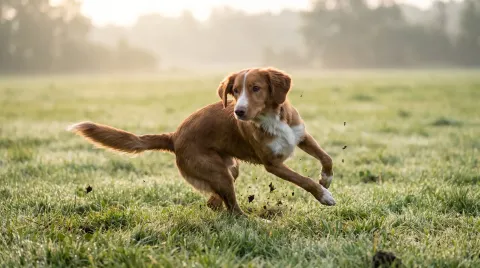
Too happy for a mere wag, a delighted Boxer folds itself into a wiggling crescent.
Paw play
It spars with its front feet like a prizefighter — the habit often credited with naming the breed.
The woo-woo
Not a bark, not a howl — an indignant talking noise reserved for demands.
Chin on knee
All that muscle ends in a soft head parked on your lap, eyes rolled up hopefully.
Health
The Boxer is an athletic, big-hearted dog, and its main health risks sit in the heart, the airways and cancer. The breed carries heart disease, including dilated cardiomyopathy (DCM) and aortic stenosis, so ask any breeder about heart screening. Its short muzzle limits how well it can cool itself, and Boxers carry an above-average cancer risk as they age, along with a tendency to hypothyroidism. Buy from lines that screen the heart, keep vet checks regular, and never let a Boxer overheat.
Nutrition
| Exercise | One to two hours of vigorous play and walks daily — never in the heat of the day, as the short muzzle limits cooling. |
| Health | Ask breeders about heart screening (aortic stenosis, cardiomyopathy); the breed also carries an elevated cancer risk. |
| Training | Bright but bouncy; channel the exuberance early with reward-based training and impulse-control games. |
| Weather | Short coat, short muzzle: too hot in summer, too cold in deep winter. A jumper helps; shade is essential. |
A Boxer is all muscle and motion, so feed enough to fuel one to two hours of play a day while keeping him lean — extra weight sits heavily on a short-muzzled dog that already has to work to cool itself. Weigh the meals, count treats into the daily total, and aim for ribs you can feel under the muscle.
Puppy guide
A Boxer puppy is pure exuberance and stays that way for years, so the work you do early is really about shaping the bounce, not suppressing it. Start reward-based training and impulse-control games the day he arrives, socialize him widely so all that friendliness has an outlet, and keep his exercise off hard surfaces and out of the heat while he's growing. A Boxer raised with clear, kind rules turns into a wonderful, if permanently youthful, dog.
Training
Boxers are bright and willing but genuinely bouncy, so training is less about teaching them things than about giving all that energy somewhere to go. Start early, keep sessions short and rewarding, and lean on impulse-control games — wait, settle, leave it — to fit the enthusiasm with brakes. They stay playful and puppyish for life, which is a joy once the manners are in; harsh handling just winds an already excitable dog up further.
Known health issues
No breed is problem-free. These are the conditions most worth knowing about for this breed — with what a good breeder screens for and what an owner watches. General guidance, not a substitute for your vet.
Heart muscle disease (DCM)
A weakening of the heart muscle that enlarges the heart, seen in several large and giant breeds. Good breeders screen: Heart-screened parents (echo/Holter where advised). Watch for: Tiring, coughing, fainting, or a swollen belly.
Underactive thyroid
A slowed thyroid that saps energy and coat, common in mid-size and large breeds and easily treated. Good breeders screen: Ask about thyroid testing in the line. Watch for: Weight gain, low energy, and thinning coat — a simple blood test confirms it.
Breathing trouble (BOAS)
Flat-faced breeds are prone to obstructed airways — the full story is here. Good breeders screen: Airway-graded parents (RFG 0–3); open nostrils. Watch for: Snoring, easy tiring, and overheating in warm weather.
Life expectancy
Boxers live 10–12 years. Like many bigger breeds the Boxer isn't especially long-lived, and heart disease and cancer are the two shadows over the breed. You can push toward the better end of the range: buy from lines that screen the heart, keep your dog lean, catch lumps and changes early with regular vet checks, and never let a short-muzzled dog overheat. Good breeding and a watchful eye are what count most.
Popular Boxer mixes
Boxador
A big, energetic, people-loving family mix with power to spare. Needs early training and a lot of daily exercise.
Bullboxer
A muscular, affectionate companion with a strong protective streak. The short muzzle on both parents means real care in the heat.
Boxweiler
A large, powerful, loyal cross with plenty of energy and a goofy side. Wants early socialization and a confident hand.
Boxerdoodle
A lively, clever, lower-shedding mix that needs both exercise and a job for its brain. Playful and devoted with family.
Boxer Shepherd
A big, athletic, alert cross that bonds hard and needs a lot to do. Early training and daily work keep it steady.
Similar breeds
Breeds with a similar build and background — worth a look if this one isn't quite the fit.
Breeds that look like this
Common questions
Are Boxers good family dogs?
Excellent — playful, patient and protective, they adore children. Their bounciness just needs managing around toddlers.
Do Boxers need a lot of exercise?
Yes — one to two hours a day of play and walks. Avoid hard exercise in heat, as the short muzzle makes cooling harder.
How long do Boxers live?
Typically 10–12 years. The breed's main concerns are heart conditions and a higher-than-average cancer rate, so choose breeders who screen their stock.
Does the Boxer shed a lot?
Moderately. The Boxer sheds a fair amount, steadily through the year with heavier seasonal patches. A weekly brush keeps most of the loose hair off your floors and clothes.
Is the Boxer hypoallergenic?
Not really. No dog is truly hypoallergenic, and the Boxer's shedding coat releases plenty of the dander that sets off allergies. If someone at home is allergic, this isn't the easiest breed to live with — spend time around one first.
Is the Boxer easy to train?
Reasonably. The Boxer is trainable with consistency and rewards, though it isn't the quickest study. Keep sessions short and positive, and be patient with the basics like recall.