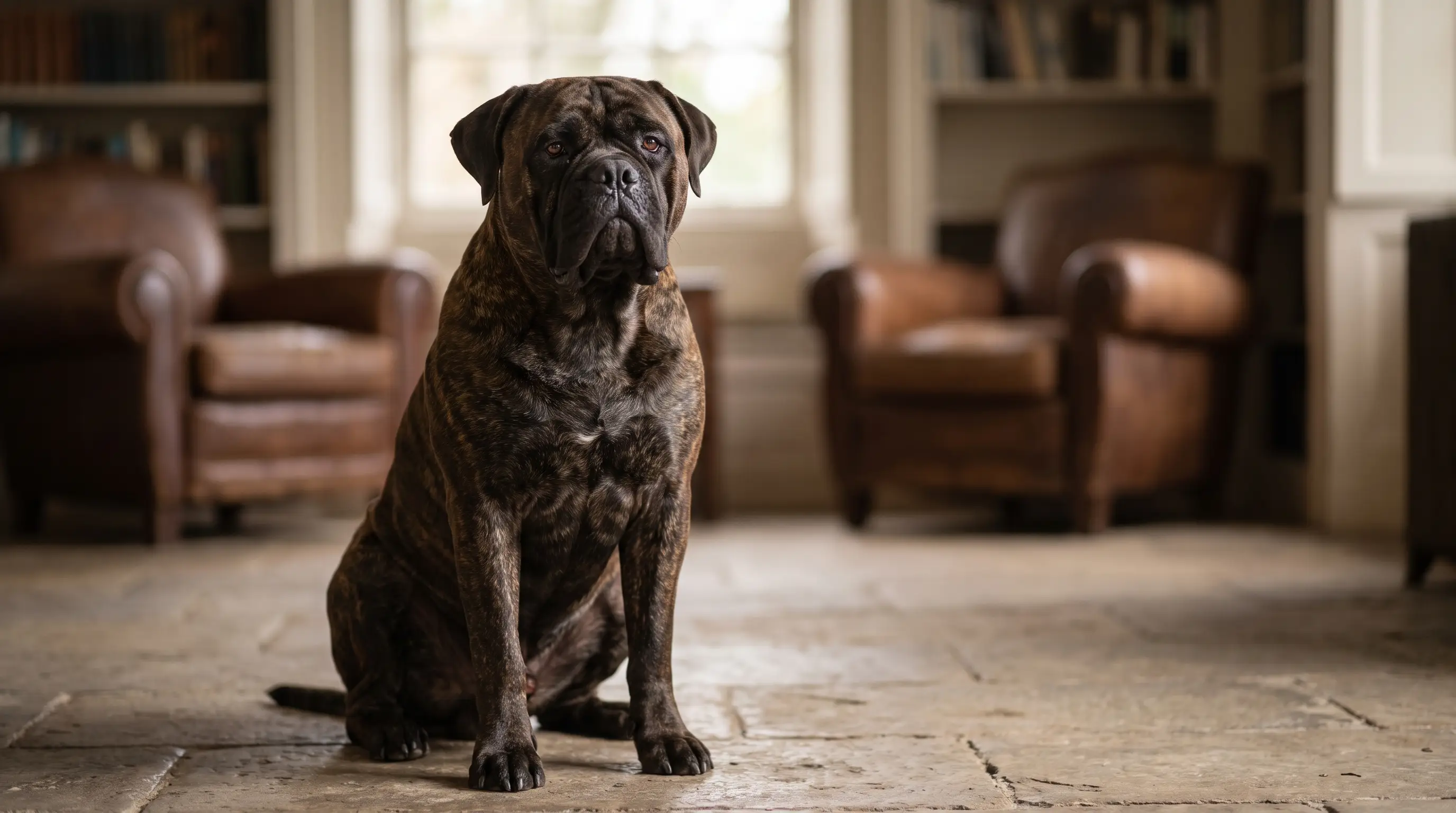
Bullmastiff
The gamekeeper's night dog — silent, immense, and gentle with everyone on the guest list.
On these lists: Guard dogs
Vital stats
| Size | Giant · 61–69 cm |
| Weight | 41–59 kg |
| Life expectancy | 7–9 years |
| Energy | Moderate — 40–60 min/day |
| Shedding | Low–moderate, year-round |
| Coat | Short, dense · fawn, red, brindle |
| Group | Working · FCI №157 / AKC |
| Origin | England |
| FCI group | 2 — Pinscher and Schnauzer, Molossoid and Swiss Mountain Dogs · FCI 157 |
Breed traits
Friendliness
Care
Mind
The Bullmastiff by the numbers
The Bullmastiff facts owners search for most — price, lifespan, weight, shedding and colours, in one place.
Widely bred, so you can usually find a litter from a registered breeder without a long wait. Ongoing costs run high — more food, bigger doses at the vet, and pricier insurance.
We don't quote a single figure: the real price swings with breeder, region, bloodline and health testing — and a rescue costs a fraction of a breeder's litter. Adopting is almost always the cheapest route.
Temperament
Gamekeepers crossed Mastiff with Bulldog in the 1860s to create a dog that could track a poacher in darkness, knock him flat and hold him — silently, without biting. That job description survives as watchful stillness: a Bullmastiff is placid and affectionate at home, makes its own judgements about strangers, and rarely wastes a bark.
Habits & quirks
The doorway audit
Every visitor is quietly assessed before being approved for entry.
Leaning in
Fifty kilos of affection, applied directly and steadily to your legs.
Economy of motion
It moves when there's a reason; supervising from the rug counts as work.
The silent follow
You'll turn around and find it has drifted, noiselessly, to wherever you are.
Health
The Bullmastiff is a giant, and its size sets the health priorities. The hips and elbows can develop dysplasia and the heart can carry defects, so buy from a breeder who screens hips, elbows and hearts. Bloat — where the stomach fills with gas and can twist — is a genuine emergency in a deep-chested dog this big, so split the meals and learn the warning signs cold, because minutes matter. Keep the dog lean and grow a puppy slowly to protect those joints for the long haul.
Nutrition
| Training | Teach manners before the puppy outweighs you — calm, consistent leadership from day one, with broad early socialisation. |
| Exercise | Two moderate walks a day; avoid hard running and stairs while the joints are still growing. |
| Feeding | Grow puppies slowly on measured meals, and split adult food into two servings to reduce bloat risk. |
| Health | Ask breeders for hip, elbow and heart screening, and know the signs of bloat — at this size, minutes matter. |
Split a Bullmastiff's food into two measured meals rather than one big bowl, and keep mealtimes calm — a large, deep-chested dog is a classic shape for bloat. Grow a puppy slowly on a large-breed diet, never pushed to bulk up fast, because rushed growth stores up joint trouble in a dog this heavy. Count treats into the day's total and keep the adult lean; the joints and the lifespan both thank you.
Puppy guide
A Bullmastiff puppy will soon outweigh you, so teach manners early — calm, consistent leadership from day one, and broad socialising while it's still small enough to guide. Protect the growing joints: avoid hard running, jumping and stairs, keep walks moderate, and grow it slowly on measured, large-breed meals. Get it used to handling and to visitors young, so the adult is settled rather than suspicious.
Training
Bullmastiffs are calm, affectionate and independent-minded — bred to make their own judgements, which means they don't obey on autopilot. Start manners early, before the puppy outweighs you, and use calm, consistent, reward-based training with broad early socialising so the adult reads strangers well. Keep leadership steady and kind; this is a powerful dog that has to be easy to live with, and a heavy hand just makes a big dog stubborn. Short, positive sessions beat drilling.
Life expectancy
Bullmastiffs live 7–9 years. The Bullmastiff is short-lived even by giant-breed standards, so every year of good care counts. Buy from a breeder who screens hips, elbows and hearts, keep the dog lean, grow it slowly, and know the signs of bloat before you ever need them. Regular vet checks catch trouble early — at this size, the problem you spot in time is the one your dog gets through.
Similar breeds
Breeds with a similar build and background — worth a look if this one isn't quite the fit.
Breeds that look like this
Common questions
Are Bullmastiffs good family dogs?
With their own family, devoted and remarkably gentle — they're calm housemates and natural protectors. They need early socialisation and an owner who can handle real strength.
Do Bullmastiffs bark a lot?
Very little — they were bred to work in silence. A Bullmastiff that does bark is usually telling you something worth checking.
How much exercise does a Bullmastiff need?
Less than the size suggests: a couple of steady daily walks and some play. Protect growing joints in the first two years and avoid exertion in heat.
Does the Bullmastiff shed a lot?
Moderately. The Bullmastiff sheds a fair amount, steadily through the year with heavier seasonal patches. A weekly brush keeps most of the loose hair off your floors and clothes.
Is the Bullmastiff hypoallergenic?
Not really. No dog is truly hypoallergenic, and the Bullmastiff's shedding coat releases plenty of the dander that sets off allergies. If someone at home is allergic, this isn't the easiest breed to live with — spend time around one first.
Is the Bullmastiff easy to train?
Reasonably. The Bullmastiff is trainable with consistency and rewards, though it isn't the quickest study. Keep sessions short and positive, and be patient with the basics like recall.