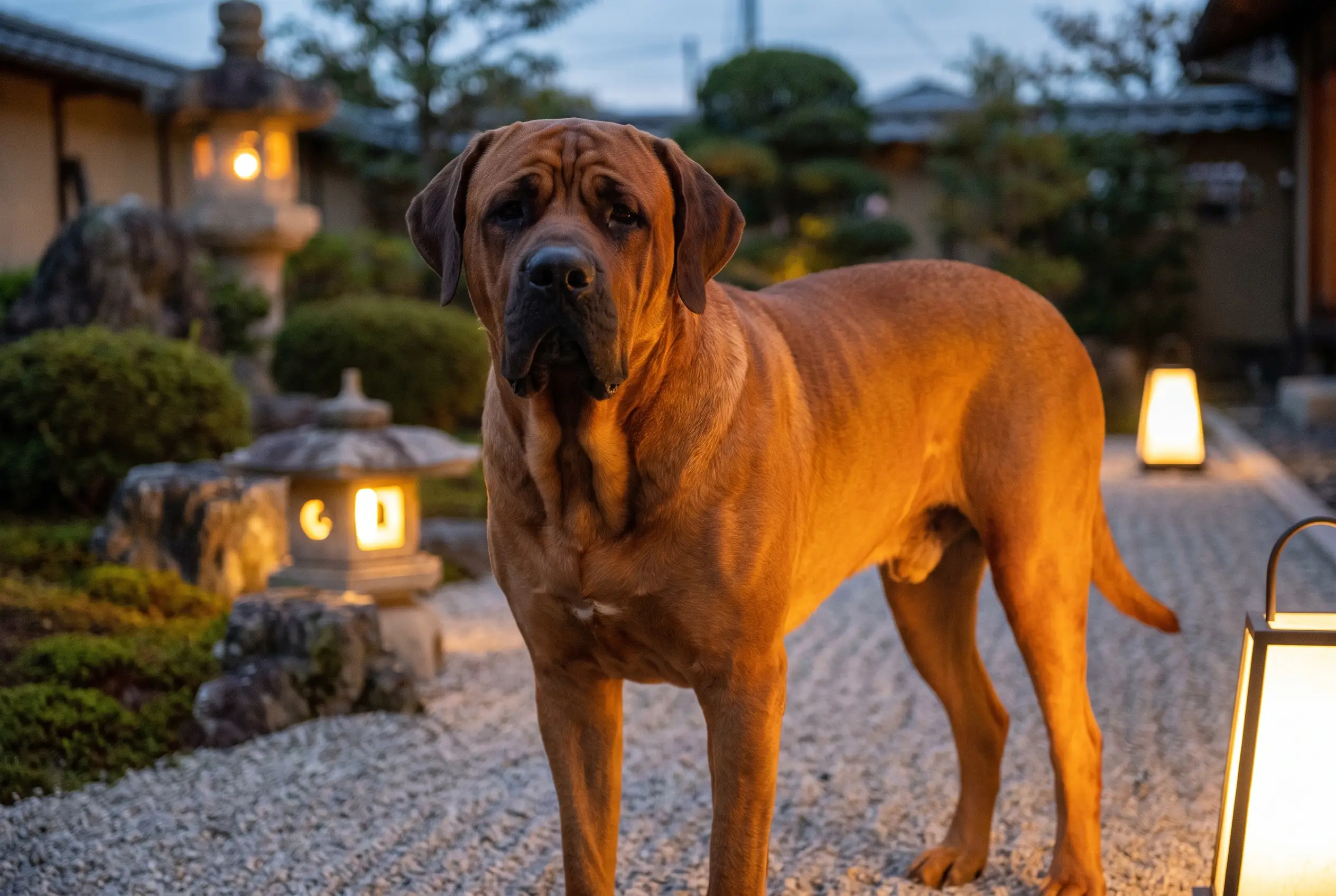
Tosa
Japan's mastiff: huge, composed, and almost silent.
Vital stats
| Size | Giant · min 60 cm (males) / 55 cm (females) |
| Weight | 36–61 kg — Japanese lines lighter, Western-bred often heavier |
| Life expectancy | 10–12 years |
| Energy | Moderate — steady daily walks, not a running partner |
| Shedding | Moderate — a weekly brush keeps up |
| Coat | Short and dense · red, fawn, apricot, brindle or black |
| Group | Working · Molossoid (FCI №260, Group 2) |
| Origin | Japan (former Tosa province, Shikoku) |
| FCI group | 2 — Pinscher and Schnauzer, Molossoid and Swiss Mountain Dogs · FCI 260 |
Breed traits
Friendliness
Care
Mind
The Tosa by the numbers
The Tosa facts owners search for most — price, lifespan, weight, shedding and colours, in one place.
Less common, so expect a waitlist and some travel to a reputable breeder — which pushes the price up. Ongoing costs run high — more food, bigger doses at the vet, and pricier insurance.
We don't quote a single figure: the real price swings with breeder, region, bloodline and health testing — and a rescue costs a fraction of a breeder's litter. Adopting is almost always the cheapest route.
Temperament
Around its family the Tosa is quiet, patient and steady — a dog that watches more than it moves and hardly ever uses its voice. The old wrestling rules disqualified dogs that growled or cried out, so generations were selected for composure under pressure, and it shows in the living room. That calm ends where strange dogs begin: tolerance for other dogs is low, especially between males, and the guarding instinct is real. It needs an experienced, even-tempered handler, wide socialisation from puppyhood, and boundaries held consistently without harshness. A Tosa answers a calm hand far better than a loud one.
Habits & quirks
The silent type
It almost never barks. Old fighting rules disqualified dogs that made noise, and the quiet stuck — expect a guardian that watches instead of warning.
Moves like it has all day
No zoomies. A Tosa crosses a room deliberately, then parks itself where it can see both you and the door.
Affection by body weight
Its love language is the lean — fifty-odd kilos settling slowly against your leg, which roughly translates as stay put.
Loose lips
The jowls are generous and the drool is real, especially around food and water. Keep a towel near the bowl.
Care
| Exercise | Two steady walks a day suit it better than jogging or fetch marathons. Keep exercise gentle through the long puppyhood — a giant's joints take up to two years to finish growing. |
| Training & socialisation | Start young, stay calm, and expose it to as much of the world as local rules allow. Handled with patience and consistency it is biddable; raised without boundaries it is unmanageable at 60 kg. |
| Feeding | Deep-chested giants are prone to bloat. Split food into two or more meals, skip exercise right after eating, and learn the signs — a swollen, restless dog is a veterinary emergency. |
| Health | Screen breeding stock for hip and elbow dysplasia and heart disease. Well cared for, a Tosa lives 10–12 years. |
Life expectancy
This breed has a typical life expectancy of 10–12 years.
Similar breeds
Breeds with a similar build and background — worth a look if this one isn't quite the fit.
Breeds that look like this
Common questions
Is it legal to own a Tosa?
Not everywhere. Ownership is banned or restricted in several countries — the UK, Ireland, Australia and Norway among them — and some places add permit, muzzle or insurance requirements instead of a ban. Check the law where you live, and anywhere you plan to travel with the dog, before you go any further.
Is a Tosa a good family dog?
With the right family, yes. In an experienced home it is calm, patient and gentle with its own people, including children it grows up with. It is not a first dog: the size, the guarding instinct and the low tolerance for other dogs all demand an owner who is confident, consistent and unhurried.
Why is the Tosa called a fighting dog?
Because it was bred for one: tōken, Japan's traditional dog wrestling — a ceremonial sport with referees and strict rules, where dogs won by pinning rather than injuring and barking meant disqualification. The sport shaped the breed's silence and composure, and it still takes place in parts of Japan. It also left instincts that a modern owner has to manage, not deny — which is exactly why several countries regulate the breed.
Does the Tosa shed a lot?
Moderately. The Tosa sheds a fair amount, steadily through the year with heavier seasonal patches. A weekly brush keeps most of the loose hair off your floors and clothes.
Is the Tosa hypoallergenic?
Not really. No dog is truly hypoallergenic, and the Tosa's shedding coat releases plenty of the dander that sets off allergies. If someone at home is allergic, this isn't the easiest breed to live with — spend time around one first.
Is the Tosa easy to train?
Reasonably. The Tosa is trainable with consistency and rewards, though it isn't the quickest study. Keep sessions short and positive, and be patient with the basics like recall.