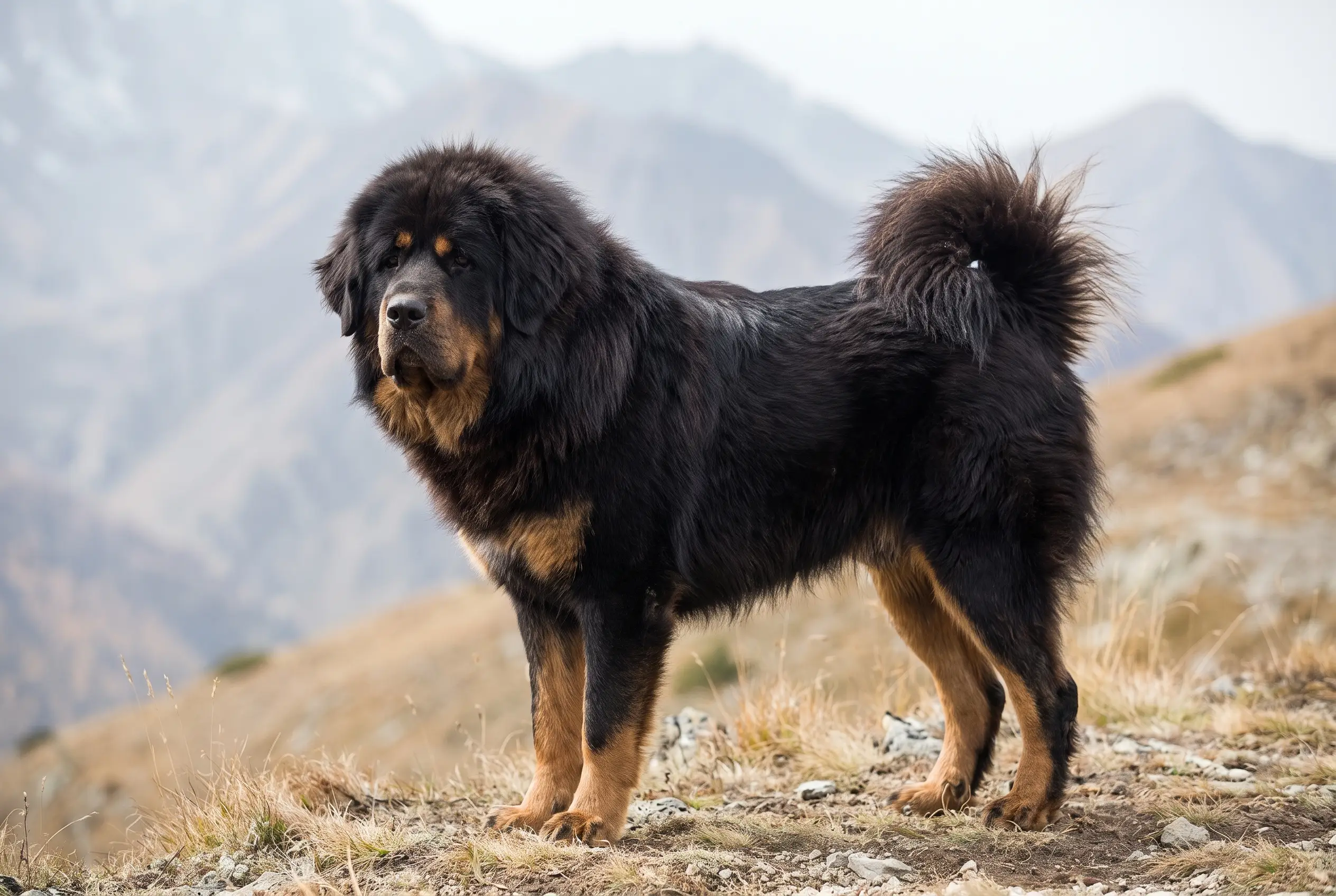
Tibetan Mastiff
The mountain's answer to the lion — an ancient guardian that keeps its own counsel.
Vital stats
| Size | Giant · 61–66+ cm |
| Weight | 34–68 kg |
| Life expectancy | 10–12 years |
| Energy | Moderate — patrols, not fetch |
| Shedding | Low most of the year · one huge blow |
| Coat | Heavy double coat with mane · black, tan, gold, blue-grey |
| Group | Working · FCI №230 / AKC |
| Origin | Tibetan Plateau, Himalayas |
| FCI group | 2 — Pinscher and Schnauzer, Molossoid and Swiss Mountain Dogs · FCI 230 |
Breed traits
Friendliness
Care
Mind
The Tibetan Mastiff by the numbers
The Tibetan Mastiff facts owners search for most — price, lifespan, weight, shedding and colours, in one place.
Less common, so expect a waitlist and some travel to a reputable breeder — which pushes the price up. Ongoing costs run high — more food, bigger doses at the vet, and pricier insurance. Its coat also needs a professional groom every few weeks — a real line in the budget.
We don't quote a single figure: the real price swings with breeder, region, bloodline and health testing — and a rescue costs a fraction of a breeder's litter. Adopting is almost always the cheapest route.
Temperament
Bred for millennia to guard flocks and monasteries alone at altitude, the Tibetan Mastiff makes its own decisions and sees no reason to stop now. At home it is calm, devoted to its family and coolly suspicious of everyone else — a watchful presence that patrols the garden at night and treats commands as suggestions worth considering.
Habits & quirks
Night watch
Ancestors guarded camps after dark, and the instinct to patrol and bark at night runs deep.
The perimeter walk
Fence lines get inspected daily; the property is its responsibility, not yours.
Selective hearing
It heard you perfectly — it's simply weighing whether your request makes sense.
Reserved royalty
Affection is real but understated; expect a lean against your leg, not a lap dog.
Care
| Containment | A tall, secure fence is non-negotiable — this is a territorial breed that will expand its patrol if allowed. |
| Socialisation | Extensive early exposure to people and dogs is essential to keep the guarding instinct discerning rather than indiscriminate. |
| Grooming | Weekly brushing most of the year, then daily sessions during the dramatic annual coat blow. |
| Training | Use patient, consistent leadership from puppyhood — force gets you nowhere with a dog bred to think alone. |
Life expectancy
This breed has a typical life expectancy of 10–12 years.
Similar breeds
Breeds with a similar build and background — worth a look if this one isn't quite the fit.
Breeds that look like this
Common questions
Are Tibetan Mastiffs good family dogs?
With their own family they're calm, gentle and loyal, including with children they've grown up with. They need experienced owners, though — this is a guardian, not a beginner's companion.
Do Tibetan Mastiffs bark a lot?
At night, yes — nocturnal alarm barking is hardwired from centuries of camp guarding. Bringing the dog indoors overnight is the usual solution.
Why are Tibetan Mastiffs so expensive?
Rarity, small gene pools outside Asia, and a 2010s status boom in China that saw one puppy reportedly sell for nearly two million dollars. Well-bred pets cost far less, but still command premium prices.
Does the Tibetan Mastiff shed a lot?
Not much. The Tibetan Mastiff is a low-shedding breed, so loose hair around the home stays minimal. It still needs regular grooming, but you won't be fighting drifts of fur.
Is the Tibetan Mastiff hypoallergenic?
No dog is truly hypoallergenic, but the Tibetan Mastiff comes closer than most: its low-shedding coat releases less of the dander that triggers allergies. Many allergy sufferers manage well with this breed, but spend time around one before committing.
Is the Tibetan Mastiff easy to train?
They can be a challenge. The Tibetan Mastiff is intelligent but independent, and would rather make its own decisions than take orders. Reward-based training and patience work best; expect recall in particular to take time.