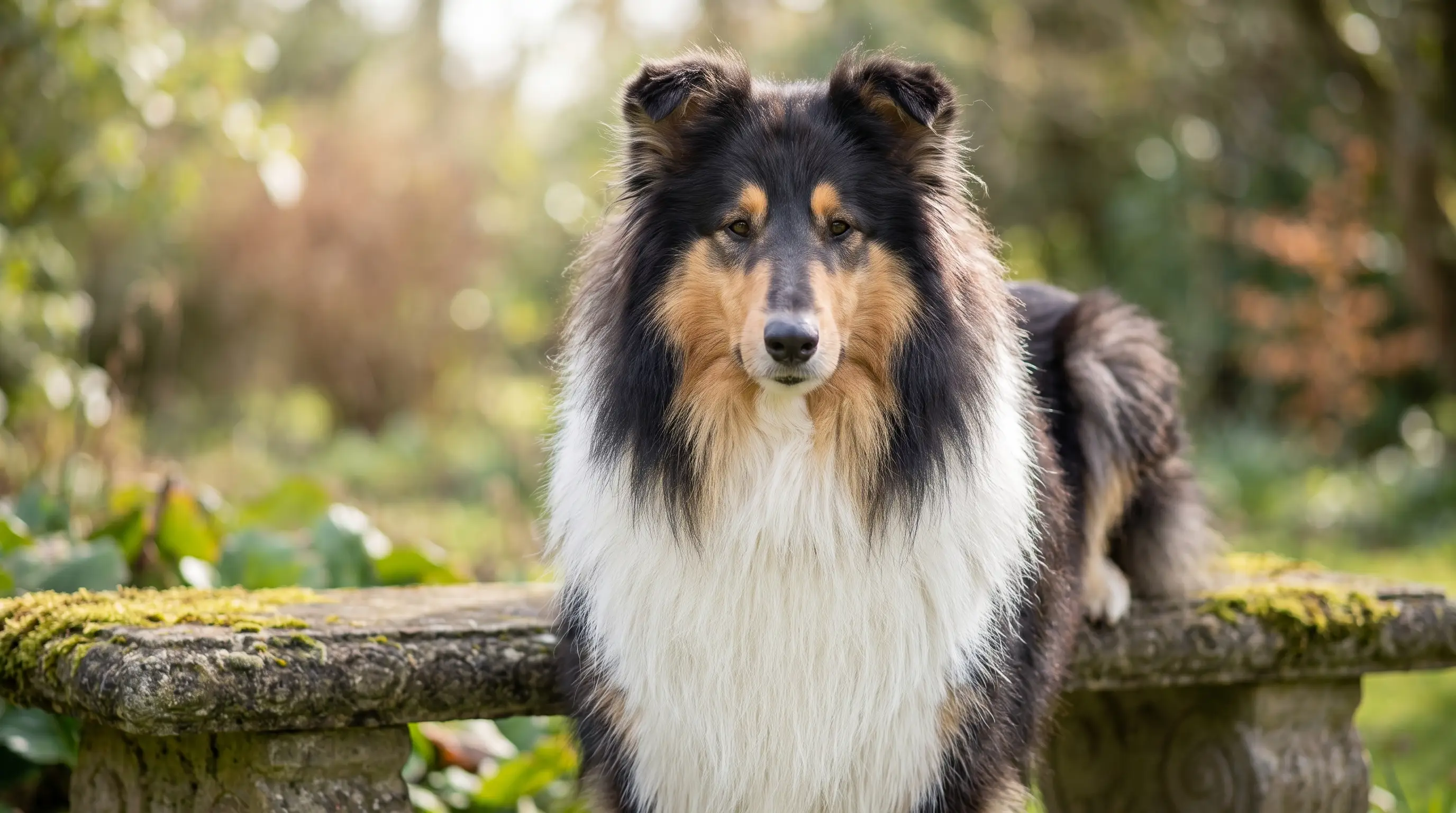
Collie
The storybook shepherd — grace, brains, and a heart tuned to children.
On these lists: Dogs for first-time owners · Family dogs · Service dogs · Dogs for anxiety
Vital stats
| Size | Large · 51–61 cm |
| Weight | 20–34 kg |
| Life expectancy | 12–14 years |
| Energy | Moderate-high — 60 min/day |
| Shedding | Heavy, seasonal |
| Coat | Rough (long) or smooth double coat · sable, tricolour, blue merle |
| Group | Herding · FCI №156 / AKC |
| Origin | Scotland |
| FCI group | 1 — Sheepdogs and Cattledogs · FCI 156 |
Breed traits
Friendliness
Care
Mind
The Collie by the numbers
The Collie facts owners search for most — price, lifespan, weight, shedding and colours, in one place.
Widely bred, so you can usually find a litter from a registered breeder without a long wait. Ongoing costs run high — more food, bigger doses at the vet, and pricier insurance. Its coat also needs a professional groom every few weeks — a real line in the budget.
We don't quote a single figure: the real price swings with breeder, region, bloodline and health testing — and a rescue costs a fraction of a breeder's litter. Adopting is almost always the cheapest route.
Temperament
Generations of Scottish hill work bred a shepherd that thinks ahead of its sheep — and its people. The modern Collie reads household moods with uncanny accuracy, learns routines after one showing, and appoints itself guardian of the children. It's soft-tempered and eager to cooperate, but it has opinions and a voice, and it uses both.
Habits & quirks
The nanny patrol
It counts its flock — and in a house, the children are the flock, headed off gently at every gate.
The announcer
Doorbell, squirrel, unusual hat: a Collie believes news should be shared, at volume.
One-take learner
Show it a trick or a routine once or twice and it's filed away for life.
The gentle lean
Affection arrives as a full-body lean against your legs, timed for when you're holding something.
Health
The Collie is a generally sound, long-lived breed with two well-known genetic points worth knowing before you bring one home. Many Collies carry the MDR1 mutation, which makes certain routine drugs — including some wormers — dangerous; a simple DNA test tells you your dog's status, and you pass that on to your vet. Collie eye anomaly is the other, also testable and common in the breed, so ask breeders about both. Beyond that it's a robust dog that stays well on a lean weight and normal care.
Nutrition
| Grooming | Line-brush the rough coat thoroughly once a week — more during the big seasonal moults; smooths are far quicker. |
| Exercise | An hour daily plus mental work; a Collie without a job writes its own, usually vocal, job description. |
| Health | Ask breeders about MDR1 drug sensitivity and Collie eye anomaly — both are testable and common in the breed. |
| Training | Reward-based and varied; it learns fast, bores fast, and never forgives shouting. |
A Collie is a big, active dog, so feed for its size and workload and adjust as the seasons and exercise change, but always keep it lean — a herding breed carries extra weight badly and it shows on the joints. Measure the meals rather than leaving food down, and go easy on the treats, especially on the quieter days.
Puppy guide
A Collie puppy learns at a startling pace, so make the early lessons count: socialise it widely, start gentle reward-based training straight away, and never shout — this is a soft-tempered breed that a raised voice sets back for weeks. Get it used to weekly line-brushing while young so the big coat is never a fight, and give the quick mind real work. The herding instinct shows early as chasing and gathering, so redirect it onto toys and games rather than heels and children.
Training
Collies are among the most trainable dogs there are — they learn fast, bore fast, and never forgive shouting. Keep it reward-based, varied and short, give the dog a real job to do, and it will meet you more than halfway. Two things need managing: the barking, which is how a herding dog reports and directs, and the herding instinct itself, both of which respond to training and enough mental work.
Life expectancy
Collies live 12–14 years. Collies are long-lived for a large breed, and steady care keeps them there: a lean weight that protects the joints, weekly coat care, and enough physical and mental work to keep an active mind content. Know your dog's MDR1 status so routine medicines stay safe, keep up regular vet checks, and a Collie stays busy and involved well into old age.
Similar breeds
Breeds with a similar build and background — worth a look if this one isn't quite the fit.
Breeds that look like this
Common questions
Are Collies good with children?
Famously so — they're gentle, patient and protective, and many quietly shepherd the family's youngest members. As with any breed, supervise and teach mutual respect.
Do Collies bark a lot?
They tend to — barking is how a herding dog reports and directs, and Collies are diligent reporters. Training and enough mental exercise keep it to useful announcements.
What is MDR1 and should I worry?
It's a gene mutation, common in Collies, that makes certain routine drugs (like some wormers) dangerous. A simple DNA test tells you your dog's status — do it, and tell your vet.
Does the Collie shed a lot?
Yes — the Collie is a heavy shedder, dropping hair year-round or in big seasonal moults. Brush it several times a week and expect regular vacuuming; it isn't the coat for you if loose fur is a dealbreaker.
Is the Collie hypoallergenic?
Not really. No dog is truly hypoallergenic, and the Collie's shedding coat releases plenty of the dander that sets off allergies. If someone at home is allergic, this isn't the easiest breed to live with — spend time around one first.
Is the Collie easy to train?
Yes. The Collie is one of the more trainable breeds — quick to learn and keen to work with you, which makes reward-based training straightforward. Start early, keep it positive, and it picks things up fast.