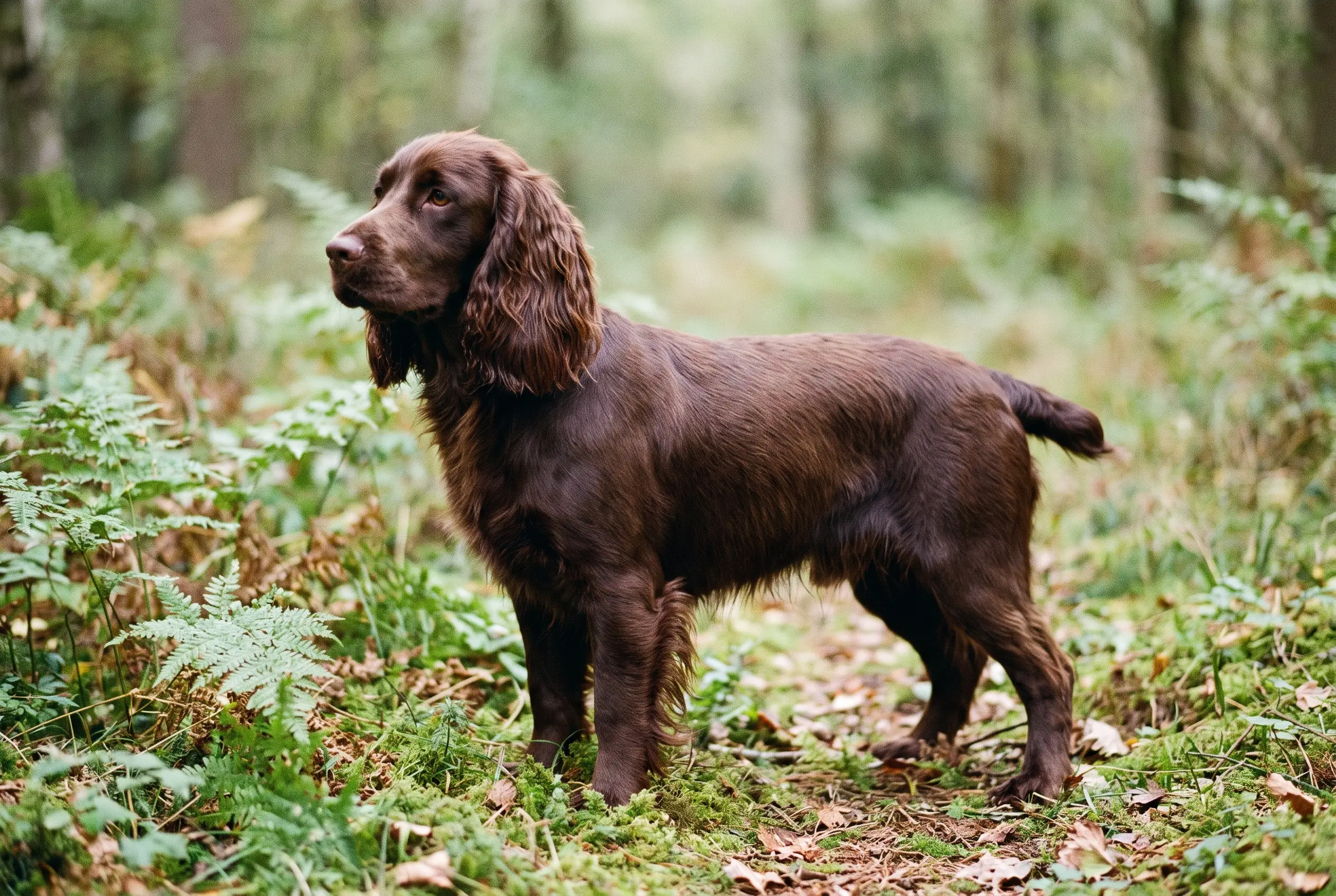
Field Spaniel
The spaniel the world forgot — glossy, gentle, and quietly excellent.
Vital stats
| Size | Medium · 43–46 cm |
| Weight | 18–25 kg |
| Life expectancy | 12–13 years |
| Energy | Moderate–high — 60 min/day |
| Shedding | Moderate, year-round |
| Coat | Silky, feathered · liver, black or roan |
| Group | Sporting · FCI №123 / AKC |
| Origin | England |
| FCI group | 8 — Retrievers, Flushing Dogs and Water Dogs · FCI 123 |
Breed traits
Friendliness
Care
Mind
The Field Spaniel by the numbers
The Field Spaniel facts owners search for most — price, lifespan, weight, shedding and colours, in one place.
Less common, so expect a waitlist and some travel to a reputable breeder — which pushes the price up. Plan for steady ongoing costs — mid-range food, routine vet care and insurance.
We don't quote a single figure: the real price swings with breeder, region, bloodline and health testing — and a rescue costs a fraction of a breeder's litter. Adopting is almost always the cheapest route.
Temperament
Bred as an all-round flushing dog and then nearly lost to fashion, the Field Spaniel kept the working nose and shed the mania. It is docile, observant and a touch reserved with strangers — a spaniel that thinks before it launches. At home expect steady devotion, soft manners and real hurt feelings if you raise your voice.
Habits & quirks
The thoughtful pause
Where a springer leaps, a Field Spaniel assesses — then commits with quiet style.
Nose diary
Every walk is a scent inventory; allow extra time for thorough hedgerow journalism.
Shadow at ankle height
It keeps loose, easy contact with its person rather than orbiting at speed.
The gentle greeting
Visitors get a wagging, slightly formal welcome — exuberance is saved for family.
Health
The Field Spaniel is a generally sound breed, and a good breeder is still worth seeking out: ask about hip scores and eye testing before anything else. The everyday care that matters most is the ears. Those long, low-set, feathered ears trap warmth and moisture, so make an ear check a weekly habit — clean and dry them after wet or muddy walks — to head off the classic spaniel ear trouble before it starts. Keep him fit and lean, and this is an easy breed to keep well.
Nutrition
| Exercise | An hour daily with off-lead sniffing and retrieving games; it enjoys work without demanding a marathon. |
| Grooming | Brush the silky feathering weekly and keep ears clean and dry — classic spaniel ear plumbing applies. |
| Training | Highly biddable with reward-based methods; harshness or shouting sets this sensitive breed back weeks. |
| Health | A generally sound breed — ask breeders about hip scores and eye testing all the same. |
A Field Spaniel needs moderate daily fuel — around an hour of exercise a day, not a sled dog's ration. Feed to that real activity, weigh the meals, and count retrieving-game treats into the total. Keep him lean: the silky, feathered coat can disguise a thickening waistline, and lean weight protects the joints and keeps a middle-aged spaniel moving like a young one.
Puppy guide
A Field Spaniel puppy is biddable and soft-hearted, which is a gift as long as you never trade on it harshly. Build manners with reward-based training from the start, because shouting or rough handling sets this sensitive breed back weeks rather than days. Socialise him broadly so his slight reserve with strangers stays polite rather than wary, get him used to weekly ear and coat handling early, and keep hard exercise sensible while the joints are still growing.
Training
This is a highly biddable breed that wants to work with you — and a genuinely sensitive one, so the method is everything. Reward-based training gets you a soft, willing partner fast; harshness or shouting genuinely wounds a Field Spaniel and can undo weeks of progress. Keep the tone light and encouraging, put that excellent nose to work with scent and retrieving games, and you'll rarely need to raise your voice at all.
Life expectancy
Field Spaniels live 12–13 years. The Field Spaniel is a generally sound, fairly long-lived breed, and you keep one thriving the simple way: lean weight, an hour of real daily exercise, weekly ear checks to stave off the classic spaniel ear trouble, and parents you've asked about for hip scores and eye testing. There's no exotic care here — a fit, well-bred Field Spaniel from tested lines is a remarkably easy dog to keep well for a long life.
Similar breeds
Breeds with a similar build and background — worth a look if this one isn't quite the fit.
Breeds that look like this
Common questions
Is a Field Spaniel a good family dog?
Yes — gentle, patient and devoted, with less chaos than many spaniels. It still needs daily exercise and inclusion in family life to be at its best.
How rare are Field Spaniels?
Genuinely rare: the breed sits on the UK Kennel Club's Vulnerable Native Breeds list, and finding a litter usually means a waiting list. Good breeders are worth the patience.
How does a Field Spaniel differ from a Cocker Spaniel?
It's bigger, longer-bodied and calmer, with a more measured, thoughtful temperament. Same wonderful nose, noticeably lower throttle.
Does the Field Spaniel shed a lot?
Moderately. The Field Spaniel sheds a fair amount, steadily through the year with heavier seasonal patches. A weekly brush keeps most of the loose hair off your floors and clothes.
Is the Field Spaniel hypoallergenic?
Not really. No dog is truly hypoallergenic, and the Field Spaniel's shedding coat releases plenty of the dander that sets off allergies. If someone at home is allergic, this isn't the easiest breed to live with — spend time around one first.
Is the Field Spaniel easy to train?
Yes. The Field Spaniel is one of the more trainable breeds — quick to learn and keen to work with you, which makes reward-based training straightforward. Start early, keep it positive, and it picks things up fast.