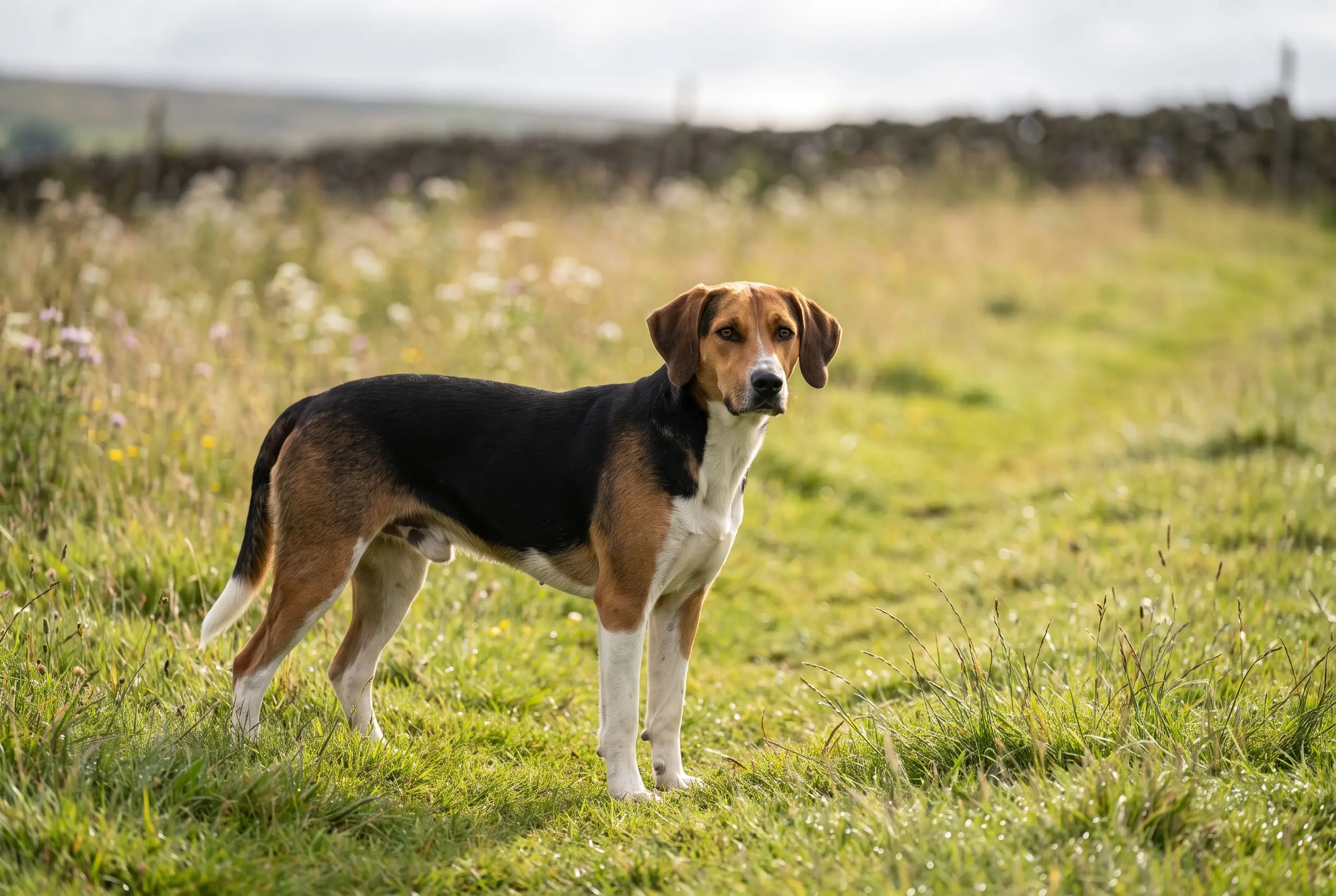
Harrier
The hound history forgot — a Beagle's charm with a Foxhound's engine.
Vital stats
| Size | Medium · 48–55 cm |
| Weight | 20–27 kg |
| Life expectancy | 12–15 years |
| Energy | High — 60+ min/day |
| Shedding | Moderate, year-round |
| Coat | Short dense coat · tricolour and hound colours |
| Group | Hound · FCI №295 / AKC |
| Origin | England |
| FCI group | 6 — Scent hounds and related breeds · FCI 295 |
Breed traits
Friendliness
Care
Mind
The Harrier by the numbers
The Harrier facts owners search for most — price, lifespan, weight, shedding and colours, in one place.
Less common, so expect a waitlist and some travel to a reputable breeder — which pushes the price up. Plan for steady ongoing costs — mid-range food, routine vet care and insurance.
We don't quote a single figure: the real price swings with breeder, region, bloodline and health testing — and a rescue costs a fraction of a breeder's litter. Adopting is almost always the cheapest route.
Temperament
Bred to run down hare in packs across English countryside, the Harrier pairs relentless stamina with genuine pack sociability. At home that means a merry, tolerant companion who adores company — canine or human — and a nose that will happily lead the whole household on an unscheduled cross-country expedition.
Habits & quirks
Nose-first navigation
Ground scent outranks your voice, your treats, and occasionally gravity.
The pack singalong
A melodious hound voice, deployed generously when excitement or loneliness strikes.
Trail stamina
Bred to run all day — a Harrier finishes your hike wondering when the real one starts.
Everyone's friend
Centuries of pack living made a dog that genuinely dislikes being alone.
Health
The Harrier is a sturdy, generally healthy pack hound with no long list of breed-specific problems to worry about. The sensible checks are the ones that suit any active, drop-eared hound: look under those ears regularly, since they hang close and trap moisture, and keep the dog lean, because a classic hound appetite plus a soft sofa turns a trim athlete round in a hurry. Buy from someone who health-tests their line and you have covered the bases.
Nutrition
| Exercise | An hour or more of real activity daily — leashed running, hiking or scent games, not just a garden potter. |
| Containment | A determined scent-follower needs tall, secure fencing; an open gate is an invitation. |
| Feeding | Classic hound appetite — measure meals or the trim athlete thickens fast. |
| Company | Pack hounds fray when left alone for long days; a second dog or busy household helps enormously. |
A Harrier has the classic hound appetite — it will hoover up whatever is going and look round for more — so measure every meal and count treats into the day's total. Aim for ribs you can feel but not see; the trim, all-day athlete thickens fast when the food outpaces the miles. Feed to how much real running the dog actually gets, not to the pleading eyes.
Puppy guide
A Harrier puppy is merry, sociable and hard-wired for company, which makes early socialising a pleasure rather than a chore. Start recall and a solid "leave it" straight away, because the nose gets more persuasive every week, and get the garden fencing sorted before the puppy is fast enough to test it. Keep exercise sensible while it is growing, and teach it early to cope with short spells alone — a pack hound that never learns to settle solo struggles with it for life.
Training
Harriers are bright and willing, but a working nose outranks your voice the moment a scent crosses the path, so train with that in mind. Keep sessions upbeat and reward-based, drill recall relentlessly, and never fully trust it off-lead near livestock or a road — the hound follows the line first and thinks about you later. The pack sociability is the gift here: this is a dog that genuinely wants to be with you and works well for the company as much as the treat.
Life expectancy
Harriers live 12–15 years. The Harrier is a robust, long-lived breed, and the levers are simple: keep it lean, keep those ears clean, and give it the daily running and company a pack hound is built for. A fit Harrier that isn't left alone for long empty days is a sound, cheerful dog well into old age.
Similar breeds
Breeds with a similar build and background — worth a look if this one isn't quite the fit.
Breeds that look like this
Common questions
Is a Harrier just a big Beagle?
They look related and share hare-hunting history, but the Harrier is a distinct, older-established breed — taller, faster, and with even more stamina.
Why are Harriers so rare?
They stayed working pack hounds rather than becoming fashionable pets, so few were ever registered. Finding a puppy usually means a waiting list.
Are Harriers good family dogs?
Very — merry, sturdy and patient with children. They just need real daily exercise and secure fencing, or that nose makes its own plans.
Does the Harrier shed a lot?
Moderately. The Harrier sheds a fair amount, steadily through the year with heavier seasonal patches. A weekly brush keeps most of the loose hair off your floors and clothes.
Is the Harrier hypoallergenic?
Not really. No dog is truly hypoallergenic, and the Harrier's shedding coat releases plenty of the dander that sets off allergies. If someone at home is allergic, this isn't the easiest breed to live with — spend time around one first.
Is the Harrier easy to train?
Reasonably. The Harrier is trainable with consistency and rewards, though it isn't the quickest study. Keep sessions short and positive, and be patient with the basics like recall.