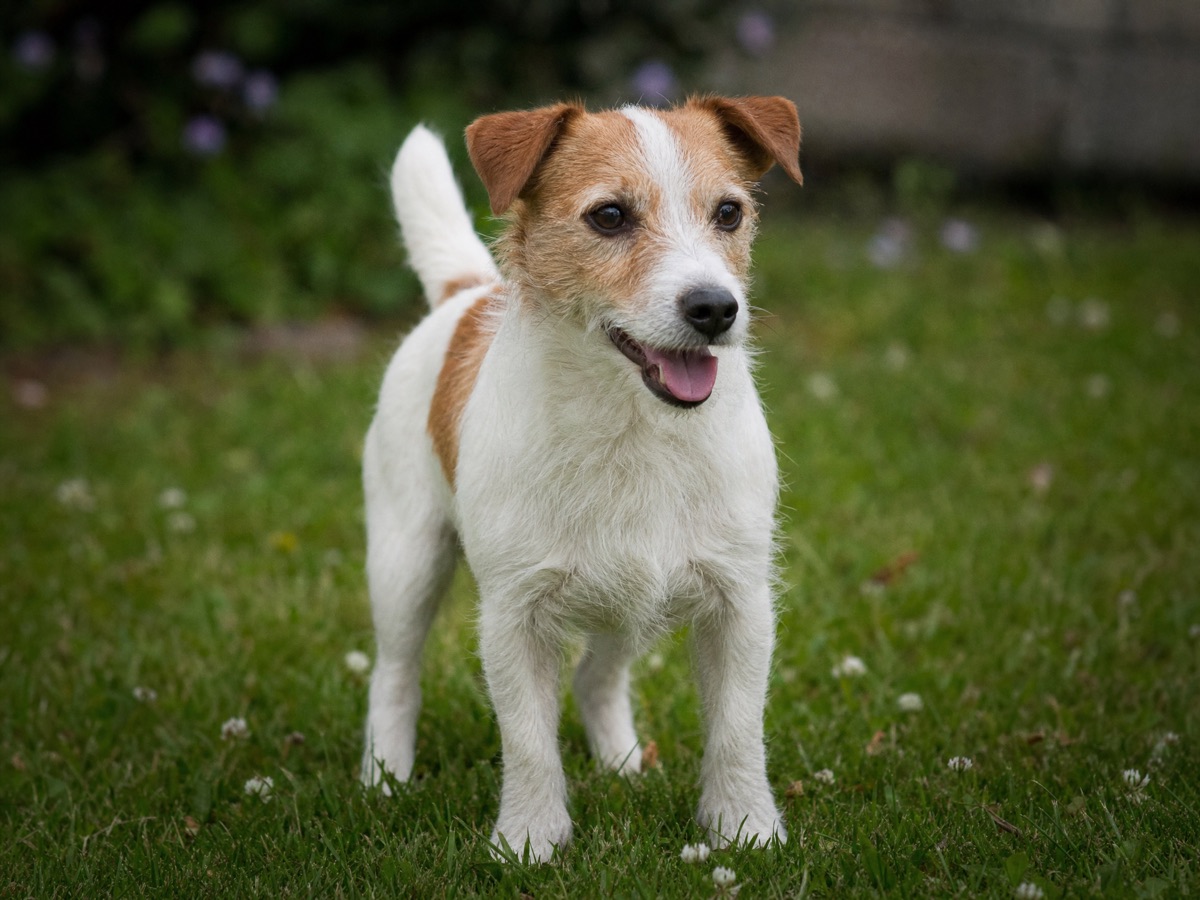
Jack Russell Terrier
A big dog in a small body — fearless, tireless and endlessly busy.
Vital stats
| Size | Small · 25–30 cm |
| Weight | 5–6 kg |
| Life expectancy | 13–16 years |
| Energy | Very high — 90+ min/day |
| Shedding | Moderate, year-round |
| Coat | Smooth, broken or rough · mostly white with tan or black |
| Group | Terrier · FCI №345 / AKC |
| Origin | Devon, England |
| FCI group | 3 — Terriers · FCI 345 |
Breed traits
Friendliness
Care
Mind
The Jack Russell Terrier by the numbers
The Jack Russell Terrier facts owners search for most — price, lifespan, weight, shedding and colours, in one place.
Widely bred, so you can usually find a litter from a registered breeder without a long wait. Ongoing costs stay modest — it eats little and routine vet care sits at the lower end.
We don't quote a single figure: the real price swings with breeder, region, bloodline and health testing — and a rescue costs a fraction of a breeder's litter. Adopting is almost always the cheapest route.
Temperament
Bred to run with hounds all day and then go underground after the fox, the Jack Russell is wired for work: bold, quick-thinking and endlessly persistent. At home that reads as a hilarious, affectionate live wire that chases anything that moves and treats every stationary object as something to dig under, bark at, or dismantle.
Habits & quirks
Excavation projects
Digging is hardwired — offer a sandpit or lose the flowerbeds.
The vertical leap
A Jack Russell can spring several times its own height from a standstill, usually at your face, joyfully.
Squirrel patrol
Windows, fences and walks are all surveillance duty; anything furry triggers full alert.
Toy surgery
Squeakers are removed with clinical precision — it's the terrier version of dispatching prey.
Health
The Jack Russell is one of the toughest, longest-lived dogs you can own — a robust little terrier that routinely reaches its mid-teens. There's no single fragile spot to watch here; the honest health advice is the ordinary kind. Keep him lean, keep the teeth clean, keep vaccinations and parasite control current, and buy from a breeder who health-tests their line. The bigger risk with this breed isn't a physical one — it's a Jack Russell that doesn't get the exercise and mental work it needs, because a bored, under-employed terrier is where the real problems start.
Nutrition
| Exercise | Ninety minutes minimum, ideally with running, fetching and nose work — a walked-only Jack Russell is an under-employed one. |
| Training | Sharp and fast-learning but easily bored; keep sessions short, rewarding and one step ahead of it. |
| Containment | A determined digger and jumper — fences need depth below and height above. |
| Prey drive | Cats, rodents and wildlife are targets by design; manage introductions and keep leads on near roads. |
For such a small dog the Jack Russell burns a lot of fuel, but it's easy to overfeed a terrier this size — a few too many treats show up fast on a 5-6 kg frame. Weigh the meals, count training treats into the daily total, and keep him lean and hard-muscled rather than round. A trim Jack Russell moves the way it's meant to and stays sound for its long life; a heavy one loses the very athleticism that makes the breed what it is.
Puppy guide
A Jack Russell puppy arrives at full power and never really powers down, so the first year is about channelling that drive before it channels itself. Start short, fun training early, give it safe outlets for digging and chasing — a sandpit, a flirt pole, retrieve games — and socialize it widely so the sharp prey drive doesn't harden into trouble with cats or small pets. Secure the garden now, because a terrier puppy quickly becomes a talented digger and jumper. Teach it that good things come from working with you, and you'll shape the clever, funny adult rather than the frustrated one.
Training
The Jack Russell is sharp and learns fast, but it bores just as fast and has a strong independent streak, so the trick is to stay one step ahead of it. Keep sessions short, rewarding and varied, finish before it loses interest, and make the fun stuff — chasing, tugging, digging in the right place — part of the reward rather than the thing you're fighting. This is a working terrier with real drive; give that drive a job through training and games and you get a brilliant companion, ignore it and the dog invents its own work, usually involving your garden and your neighbours' patience.
Known health issues
No breed is problem-free. These are the conditions most worth knowing about for this breed — with what a good breeder screens for and what an owner watches. General guidance, not a substitute for your vet.
Slipping kneecap
A kneecap that slips out of place, common in small breeds and usually manageable. Good breeders screen: Vet-checked knees on the parents. Watch for: An occasional skip or hop on a back leg.
Inherited eye disease
Progressive retinal atrophy and cataracts run in several breeds and can dim or take sight over time. Good breeders screen: Eye-tested parents and, where available, a DNA test for PRA. Watch for: Night-time bumping, cloudy eyes, or hesitation in dim light.
Congenital deafness
Some mostly-white and merle breeds are born deaf in one or both ears, tied to coat-colour genetics. Good breeders screen: BAER-tested puppies; avoid merle-to-merle matings. Watch for: A pup that doesn't startle at sound or is hard to wake.
Worried about a symptom right now? Snake bites in dogs: first aid, symptoms and prevention
Life expectancy
Jack Russell Terriers live 13–16 years. The Jack Russell is among the longest-lived breeds there is, commonly reaching its mid-teens with plenty of energy still in the tank. Keeping it there is mostly the simple stuff: a lean weight, clean teeth, current vaccinations and parasite control, and a breeder who health-tests. Just as important is a life with enough exercise and mental work in it — a Jack Russell kept fit in body and busy in mind stays a bright, bouncy companion long into old age.
Popular Jack mixes
Jackapoo
A lively, clever cross bred for a lower-shedding coat and a friendly nature. Coat varies pup to pup; expect a busy little dog that needs real exercise and training, not a lapdog.
Jack Chi
A small, bold, high-energy cross with a big personality and a loud opinion. Needs training and exercise to match the terrier drive; not as delicate as its size suggests.
Jackshund
A short-legged, long-bodied cross with a double dose of hunting instinct — keen to dig, chase and bark. Fun and characterful, but watch the back and keep it lean.
Jackabee
A scent-driven, energetic cross that follows its nose everywhere. Friendly and hardy, but needs secure fencing and plenty of exercise to stay out of mischief.
Jug
A compact, affectionate cross with the Pug's love of company and the terrier's spark. Watch the weight, and check for the flat-faced breathing traits a Pug can pass on.
Similar breeds
Breeds with a similar build and background — worth a look if this one isn't quite the fit.
Breeds that look like this
Common questions
Are Jack Russells good family dogs?
For active families, yes — but their energy and prey drive suit older children and homes that can give them a real job and hours of exercise.
Do Jack Russells bark and dig a lot?
Yes — both are hardwired hunting behaviours. Plenty of exercise, training and enrichment channel it; boredom makes it much worse.
How long do Jack Russells live?
They're among the longest-lived breeds, commonly reaching 13–16 years. Expect the energy to last well into double digits too.
Does the Jack Russell Terrier shed a lot?
Moderately. The Jack Russell Terrier sheds a fair amount, steadily through the year with heavier seasonal patches. A weekly brush keeps most of the loose hair off your floors and clothes.
Is the Jack Russell Terrier hypoallergenic?
Not really. No dog is truly hypoallergenic, and the Jack Russell Terrier's shedding coat releases plenty of the dander that sets off allergies. If someone at home is allergic, this isn't the easiest breed to live with — spend time around one first.
Is the Jack Russell Terrier easy to train?
Reasonably. The Jack Russell Terrier is trainable with consistency and rewards, though it isn't the quickest study. Keep sessions short and positive, and be patient with the basics like recall.
Stories featuring this breed
All stories →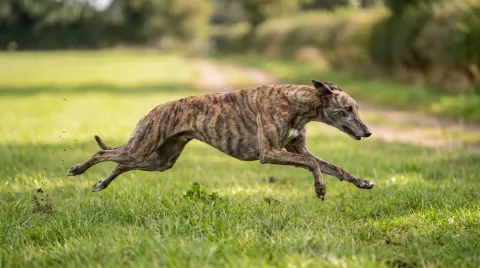
The fastest dog breeds, and how fast they really go
The Greyhound hits about 72 km/h — second only to the cheetah, and the winner over any real distance. Honest top speeds for the sighthounds and the surprises, plus how fast a Dobermann actually is.

Snake bites in dogs: first aid, symptoms and prevention
A calm, fast response is what actually saves a bitten dog. What to do in the first minutes, the myths that cost time, and which snakes matter across Europe.