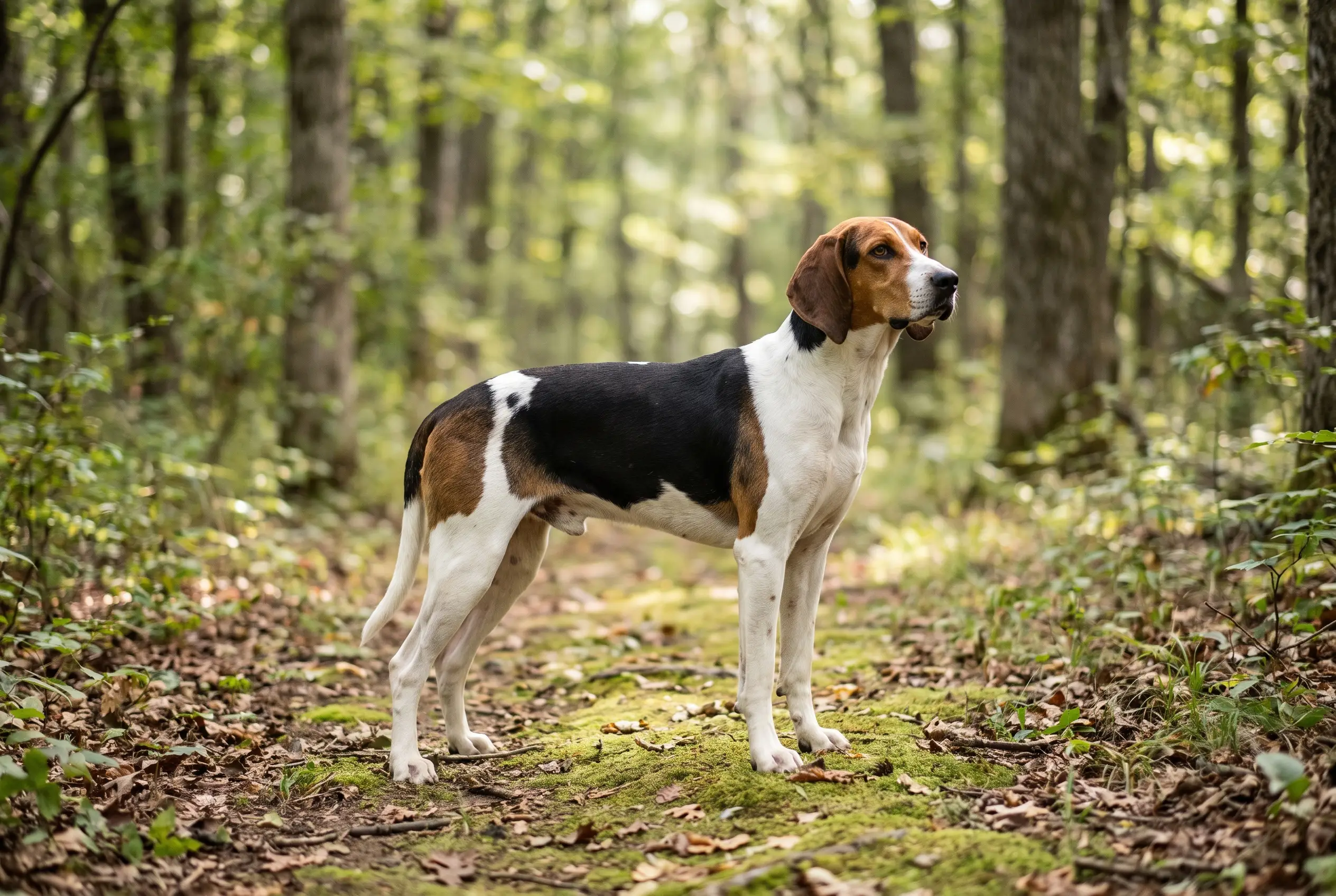
Treeing Walker Coonhound
The people's coonhound — all-night stamina with a voice you can navigate by.
Vital stats
| Size | Large · 51–69 cm |
| Weight | 23–32 kg |
| Life expectancy | 12–13 years |
| Energy | Very high — bred to run all night |
| Shedding | Moderate |
| Coat | Smooth tricolour · white, black, tan |
| Group | Hound · AKC |
| Origin | Kentucky and Virginia, United States |
Breed traits
Friendliness
Care
Mind
The Treeing Walker Coonhound by the numbers
The Treeing Walker Coonhound facts owners search for most — price, lifespan, weight, shedding and colours, in one place.
Widely bred, so you can usually find a litter from a registered breeder without a long wait. Ongoing costs run high — more food, bigger doses at the vet, and pricier insurance.
We don't quote a single figure: the real price swings with breeder, region, bloodline and health testing — and a rescue costs a fraction of a breeder's litter. Adopting is almost always the cheapest route.
Temperament
Bred to trail raccoons at speed through the dark and hold them treed with a rolling bawl until the hunters arrived, the Walker is driven, independent on scent and cheerfully sociable off it. At home that means an affectionate, easy-going companion with other dogs and people — and a selective deafness the instant its nose finds something interesting.
Habits & quirks
The tree salute
Anything chased upward — cat, squirrel, drone — gets announced from the trunk, at length.
Nose-first navigation
Walks are conducted entirely through the nostrils; the eyes are decorative.
The hound bawl
A voice bred to carry across valleys, deployed with pride in suburban gardens.
Pack-sofa protocol
Bred to live in packs, it sees no reason your sofa shouldn't hold everyone at once.
Health
The Treeing Walker Coonhound is a hardy, working-bred hound with few inherited problems, so most of its care is practical rather than medical. The one part that needs a routine is the ears: long, low-hanging drop ears trap moisture and warmth, so check and clean them weekly to head off infections. Beyond that, keep the dog genuinely well-exercised — an under-run coonhound gets loud, restless and destructive — buy from a breeder who health-tests, and stay on top of the usual parasite and dental care.
Nutrition
| Exercise | At least ninety minutes daily — running, hiking or scent sports; an under-exercised Walker becomes a loud escape project. |
| Containment | A high, secure fence and a lead near roads — no recall reliably survives a hot scent. |
| Training | Patient, reward-based work pays off, but accept that the nose outvotes you outdoors. |
| Ears | The long drop ears need weekly checks and cleaning to head off infections. |
A Treeing Walker is built to run all night, so feed enough to match a hard-working dog while keeping it lean and athletic — you want ribs you can feel and a dog that stays racy, not blocky. Weigh the meals, count treats into the daily total (a food-motivated hound will happily talk you into more), and adjust with the seasons and the dog's real workload rather than filling the bowl by habit.
Puppy guide
A Treeing Walker puppy is sweet, sociable and already a nose on legs, so the early work is as much about management as manners. Start recall the day he arrives and never fully trust it outdoors — the nose wins once a scent is hot — so pair it with a secure, fenced garden and a lead near roads. Socialise widely, get the ears into a weekly cleaning routine early, and give a growing hound plenty of sniffy, low-impact exercise while the joints form.
Training
Treeing Walkers are bright but bred to work a trail alone for hours without checking in, so they're independent by design and 'come' competes with every interesting smell. Patient, upbeat, reward-based work does pay off, but train with the grain of the breed: keep sessions fun, make yourself more interesting than the ground, and accept that outdoors the nose often outvotes you. A high, secure fence and a long line save far more grief than drilling ever will. And the voice is part of the package — this is a hound bred to bawl and bay, and no training removes it entirely.
Life expectancy
Treeing Walker Coonhounds live 12–13 years. The Treeing Walker is a healthy, long-lived hound, and keeping one that way is mostly about the basics done well: plenty of real exercise, a lean weight, clean and dry ears, and routine vet care. A coonhound that's properly run and kept dry tends to stay sound and sociable for years.
Similar breeds
Breeds with a similar build and background — worth a look if this one isn't quite the fit.
Breeds that look like this
Common questions
Are Treeing Walker Coonhounds good family pets?
Yes, in active homes — they're gentle, sociable and great with children and other dogs. They're a poor fit for flats or noise-sensitive neighbours.
Do Treeing Walker Coonhounds bark a lot?
They bawl, bay and 'sing' — it's what they were bred for, and no training removes it entirely. Plenty of exercise and company keeps it to a minimum.
Can a Treeing Walker Coonhound be let off lead?
Only in securely fenced areas. Once the nose locks onto a trail, even a well-trained Walker may be half a county away before it hears you.
Does the Treeing Walker Coonhound shed a lot?
Moderately. The Treeing Walker Coonhound sheds a fair amount, steadily through the year with heavier seasonal patches. A weekly brush keeps most of the loose hair off your floors and clothes.
Is the Treeing Walker Coonhound hypoallergenic?
Not really. No dog is truly hypoallergenic, and the Treeing Walker Coonhound's shedding coat releases plenty of the dander that sets off allergies. If someone at home is allergic, this isn't the easiest breed to live with — spend time around one first.
Is the Treeing Walker Coonhound easy to train?
Reasonably. The Treeing Walker Coonhound is trainable with consistency and rewards, though it isn't the quickest study. Keep sessions short and positive, and be patient with the basics like recall.