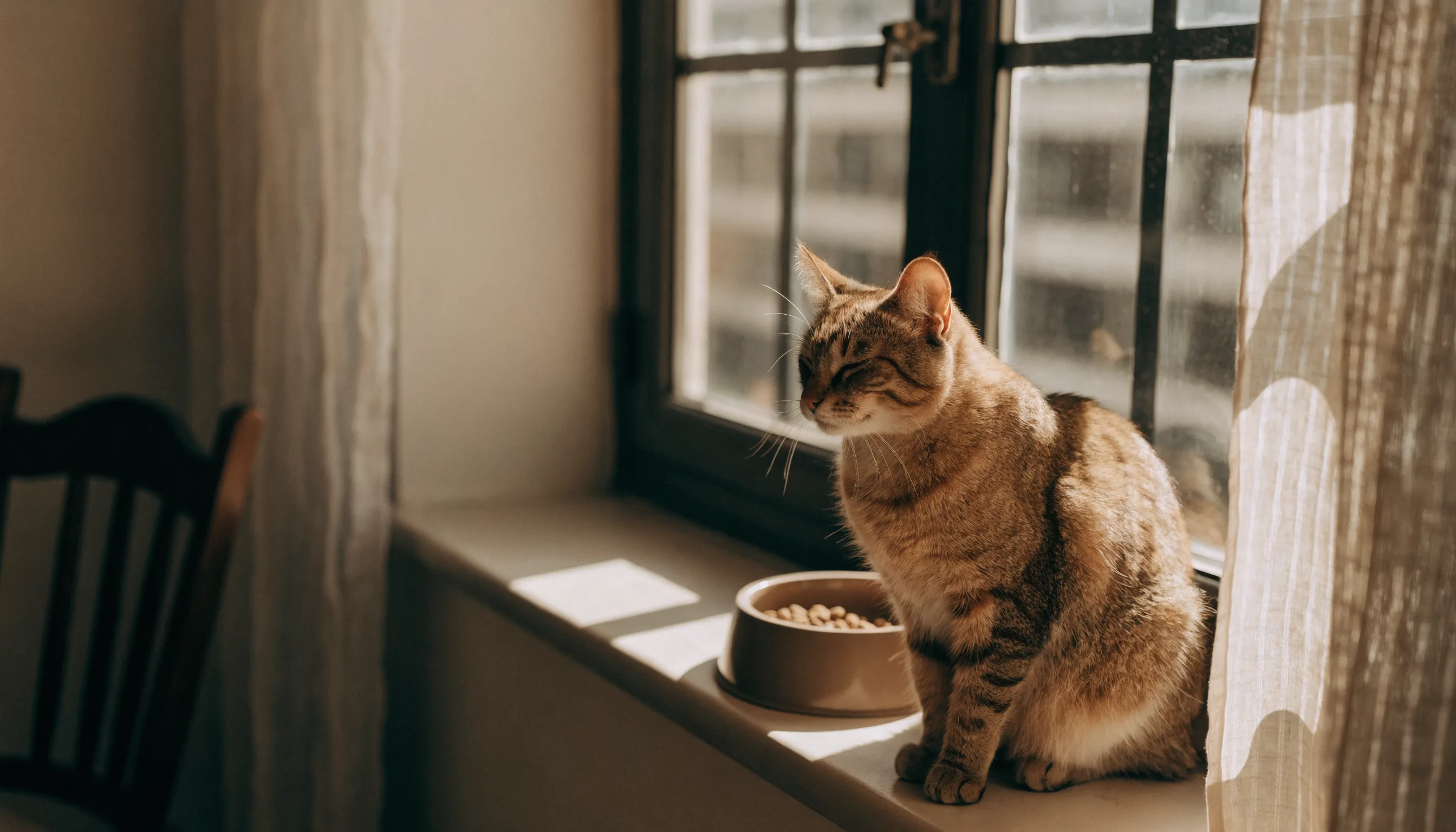
Why is my cat not eating? Causes and when to see a vet
A cat that stops eating needs closer attention, and sooner, than a dog that does the same. Cats hide illness well, and a cat that goes without food for even a day or two — especially an overweight one — risks a serious liver problem on top of whatever stopped it eating. Loss of appetite is one of the clearest signals a cat gives that something is wrong, so it is worth acting on rather than waiting out.
Why a cat not eating is urgent
There is a specific reason not to let this drift. When a cat, particularly an overweight one, stops eating, its body starts breaking down fat for energy faster than the liver can process, and fat builds up in the liver — a dangerous condition called hepatic lipidosis, or fatty liver. It can develop within a couple of days of not eating and makes a cat much sicker. This is why "we'll see if it eats tomorrow" is riskier in cats than in dogs, and why a cat that has refused food for more than about 24 hours should be discussed with a vet.
The likely causes
Cats go off food for many reasons. Common ones are dental pain, nausea, and a blocked nose from cat flu — a cat that cannot smell its food often will not eat it. Stress and change unsettle cats easily: a new pet, a house move, a different food, even a moved bowl. Underlying illnesses that reduce appetite include kidney disease, an overactive thyroid, pancreatitis and dental disease; long-haired breeds such as the Persian are prone to kidney problems in particular. Because a cat cannot tell you it feels sick, a genuine change in appetite is treated as a health sign, not fussiness.
What you can safely do at home
For a cat that has skipped a meal but is otherwise bright, a few gentle steps can help. Warm the food slightly to lift its smell, offer a strong-smelling favourite such as a little plain cooked fish or a familiar wet food, and serve it in a clean, wide bowl away from the litter tray and from other cats. Reduce obvious stress and keep fresh water available. What matters is not to let it go on: if your cat still will not eat within about a day, or is also hiding, flat or being sick, that is the point to call the vet rather than keep experimenting with flavours.
See a vet now if you notice any of these
Contact your vet if your cat: has not eaten for more than about 24 hours, and urgently if it is overweight, because of the fatty-liver risk; is off its food and also hiding, flat, weak or being sick; has yellow-tinged gums, eyes or skin (jaundice); is drooling, pawing at its mouth, or approaching food then backing away (mouth pain or something stuck); is straining in the litter tray (a possible blockage, which is an emergency); or is losing weight. A kitten that will not eat needs to be seen quickly, as they have very little in reserve.
Common questions
How long can a cat go without eating before it is dangerous?
Not long — much less than people assume. A cat that hasn't eaten for more than about 24 hours should be discussed with a vet, and sooner if it's overweight, a kitten, or also unwell. Going without food for even a day or two can trigger a serious liver problem called hepatic lipidosis, so it's not something to wait out.
Why is my cat not eating but drinking water?
Still drinking is a little reassuring, but a cat that has stopped eating while continuing to drink can be nauseous or unwell, and increased drinking alongside not eating can point to kidney disease, an overactive thyroid or diabetes. Because cats hide illness and risk fatty liver when they don't eat, a cat that's off its food for more than about a day needs a vet check.
What can I do to get my sick cat to eat?
Warm the food to boost its smell, offer a strong-smelling favourite like plain cooked fish or a familiar wet food, use a clean wide bowl away from the litter tray, and reduce stress. If your cat still won't eat within about a day, don't keep experimenting — see your vet, who can find the cause and, if needed, provide appetite support safely.
Is it an emergency if my cat won't eat?
It becomes urgent quickly. See a vet without delay if a cat hasn't eaten for more than a day (sooner if overweight or a kitten), or if not eating comes with hiding, lethargy, vomiting, jaundice, drooling, weight loss, or straining in the litter tray. A cat straining to urinate and producing little is a life-threatening emergency in its own right.
My cat stopped eating after I changed its food — what should I do?
Cats are often wary of a new food, so go back to the old food if you still have it and introduce any change gradually over a week or more, mixing increasing amounts of the new into the old. If your cat won't eat even its usual food, or the refusal lasts beyond about a day, treat it as a health sign and call your vet rather than a simple preference.
More in Cats
Why is my cat pooping outside the litter box? Causes and fixes
Poop on the floor has a different list of suspects than pee on the wall — urgency, pain, an unreachable tray, or (rarely) an actual message. Here's the order to check them in.
A litter box routine that actually works
Daily, weekly and monthly, plus the placement and the n+1 rule. How to keep a box a cat will keep using, and get rid of the smell without scented litter.

Autumn dangers for dogs: acorns, conkers and mushrooms
Autumn puts three scavenging hazards on the ground — acorns, conkers and wild mushrooms — plus rat bait and fermenting fruit. What's toxic, what the warning signs are, and when to call the vet.

Winter pet dangers: antifreeze, road salt and chocolate season
Antifreeze is the winter emergency — sweet, deadly and quick. Plus gritted-salt paws, the festive-food gauntlet and cats sheltering in warm car engines. What to watch and when it's urgent.
The pet danger calendar: what to watch, month by month
Most pet hazards are seasonal and many are regional. Here's the year mapped out — when heatstroke, grass seeds, processionary caterpillars, antifreeze and the rest actually peak, and which ones your area even has.

Snake bites in dogs: first aid, symptoms and prevention
A calm, fast response is what actually saves a bitten dog. What to do in the first minutes, the myths that cost time, and which snakes matter across Europe.