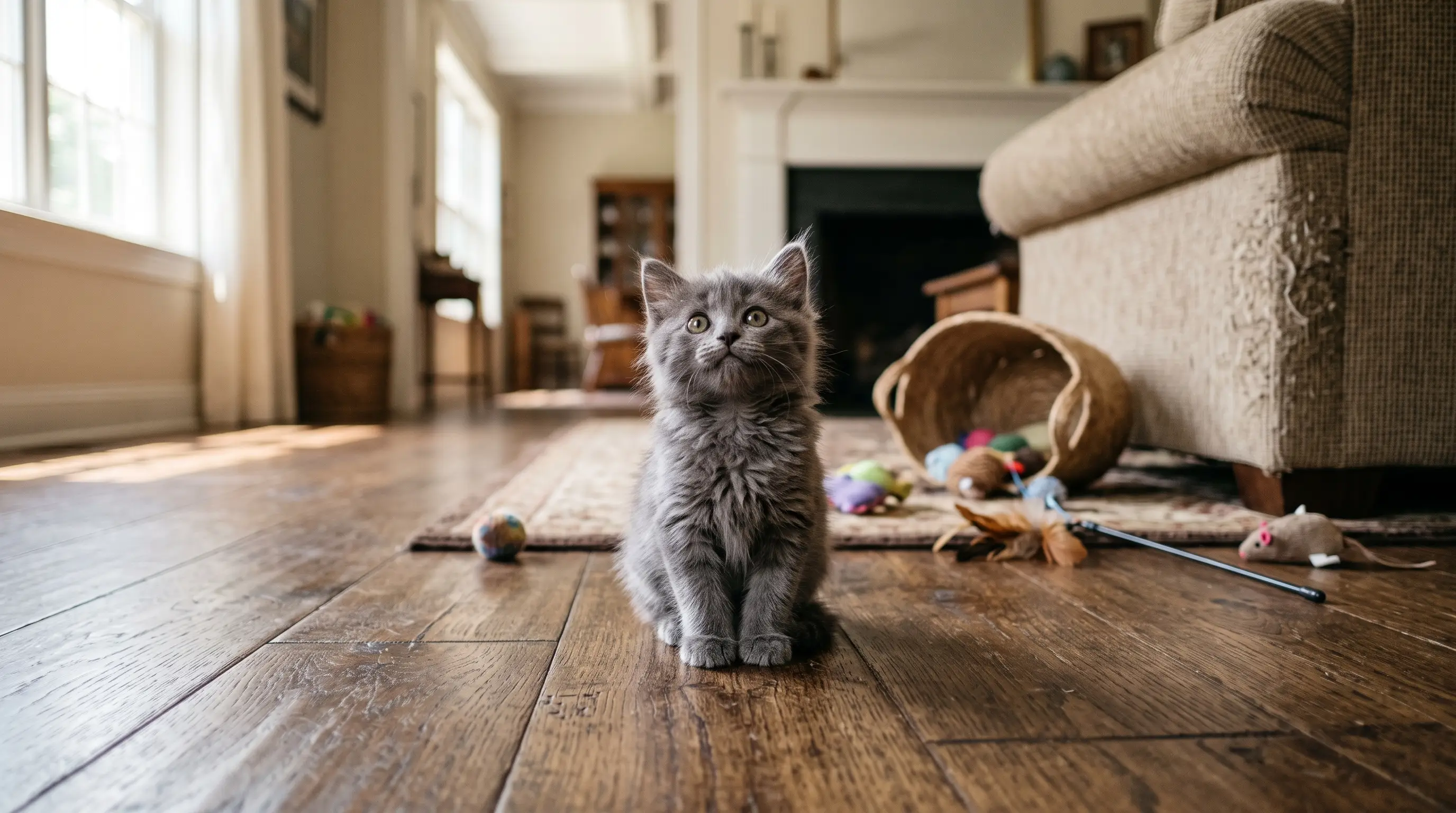
Single kitten syndrome: real, overstated, or both?
Ask a rescue about adopting one kitten and you may hit a wall: many insist on pairs, citing "single kitten syndrome" — a package of biting, night yowling, destructiveness and neediness said to afflict kittens raised alone. Ask a veterinary behaviourist and you'll get a longer pause: the syndrome isn't a recognised diagnosis, the evidence behind the branding is thin, and plenty of single kittens grow into unremarkable adults. Both camps are holding a piece of something true. Here's the honest sort-out — what's solid, what's folklore, and what to actually do whether you take home one kitten or two.
The claim, and where it came from
The package attributed to single kittens runs: hard biting and grabby play that never softens, destructiveness, over-attachment to the owner, night crying, and sometimes litter box trouble — collectively branded single kitten syndrome, and taken seriously enough that many rescues in several countries now adopt young kittens out only in pairs. The idea's engine room is real observation: shelter workers see returned single kittens with exactly this profile often enough to have named the pattern.
What the branding skips is that a syndrome, medically, is a recognised cluster with evidence behind it — and this one isn't in the diagnostic manuals. There's no controlled study comparing singles and pairs into adulthood, and behaviourists point out that the returned-kitten sample is exactly the population where every behaviour problem is overrepresented. The honest statement: it's a plausible pattern named by people who see a biased sample, not an established condition. Which doesn't make it nothing.
The part that is absolutely real
Strip the branding and one mechanism underneath is solid, boring developmental science: bite inhibition is learned from littermates, mostly between roughly week three and week nine. Kitten play-fighting runs on feedback — bite too hard and your sibling shrieks, quits the game, maybe bites back harder. Dozens of repetitions a day, for weeks, teach a kitten exactly how much jaw is compatible with the game continuing. The mother polices the worst of it. No sibling, no feedback loop — and a kitten that leaves the litter too early, or never had one, does its learning on the only playmates left: your hands, your ankles, your sleep.
This is why the age of separation matters more than singleness itself. A kitten that stayed with its litter to twelve or thirteen weeks — the timing behaviourists and good breeders converge on — arrives with the curriculum completed, and being an only cat afterwards costs it little. A hand-reared orphan or an eight-week single arrives mid-course. The same window drives the socialisation effects we've covered in how cats choose their favourite person and the kitten timeline in kitten development week by week.
So: one kitten or two?
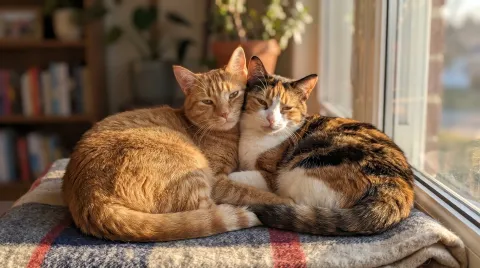
Two kittens genuinely solve some problems. They finish each other's bite-inhibition course, burn play energy on each other at 3am instead of on you, and keep each other company through work days. If you were leaning toward two anyway — and can afford double food, vet bills and litter logistics for fifteen-plus years — a bonded pair is a lovely setup, and everything about keeping one is in bonded pairs.
But the pair prescription isn't free, and it isn't automatic. Two eight-week singles adopted together still bite you; they just also wrestle each other. Two kittens can bond to each other and stay politely indifferent to their humans. And an ill-matched pair is its own project — the reads in playing or fighting exist because two cats is not automatically twice as nice. The defensible advice: a single kitten separated at twelve-plus weeks, in a home with time and a play plan, is a perfectly good life. A kitten separated early does best with a playmate — or an owner willing to be a very disciplined substitute. What no kitten does well with is an empty flat, nine workday hours, and hands for toys.
Raising a good single
If it's one kitten, you inherit the sibling's job, and the job has rules. Hands are never toys — not once, not adorably, not while it's small; every game runs through a wand toy or a kickable that can absorb the full bunny-kick repertoire. Teach the shriek: when teeth land on skin, a sharp "ow", the game dies instantly, you disengage — exactly the feedback a littermate gives, minus the fur. Resume a minute later with the toy. Consistency does in weeks what a litter does in a season.
Then run the energy budget deliberately: two or three hunt-catch-"kill"-eat play sessions a day, the last one before bed, per the mechanics in the zoomies guide; food puzzles and window traffic for the hours you're gone; and a predictable routine, because a kitten that can forecast its day cries less about it. Watch for the flags that say this isn't just youth — biting that escalates past four or five months instead of softening, or the withdrawal-and-overgrooming patterns in the stress signs owners miss — and recruit a behaviourist early rather than late. And if the maths ever says the kitten needs a colleague, adding a second cat later is entirely doable; it just requires the slow protocol in introducing cats rather than a surprise.
Common questions
What is single kitten syndrome?
The name rescues use for a pattern seen in kittens raised without littermates: hard biting, rough play, destructiveness, night crying and clinginess. It isn't a recognised veterinary diagnosis and controlled evidence is lacking — but the core mechanism underneath it, littermate-taught bite inhibition, is real developmental science.
Is single kitten syndrome real?
Partly. The 'syndrome' branding overstates the evidence — there's no controlled research, and the pattern was named from a biased sample of returned kittens. What is solid: kittens learn bite inhibition from littermates between about three and nine weeks, and singles separated early miss that lesson and practise on human hands instead.
Should I get one kitten or two?
Two kittens solve real problems — they teach each other bite limits and absorb each other's energy — but pairs cost double and can bond mainly to each other. A single separated at twelve-plus weeks, with daily play and no hands-as-toys, does perfectly well. A kitten separated early does best with a playmate or a very disciplined owner.
Why does my single kitten bite so much?
Probably because its bite-inhibition course was cut short. Kittens learn jaw control from littermates who shriek and quit the game when bitten too hard; a kitten separated early practises on you instead. Replicate the feedback: a sharp 'ow', instant end of the game, resume with a toy — and never use hands as toys.
At what age should a kitten leave its mother?
Twelve to thirteen weeks is the timing behaviourists and good breeders converge on — late enough to complete socialisation and littermate-taught bite inhibition. Eight weeks, still common in casual rehoming, cuts the curriculum short and is a bigger risk factor for later biting than being an only kitten is.
Can I add a second kitten later?
Yes — a second cat can be added at any point, but through the staged, scent-first introduction protocol rather than a surprise meeting. If the resident kitten is still young, matching energy levels matters more than matching ages exactly. Two cats need parallel resources: bowls, trays, beds and perches, one each plus a spare.
See also
More in Cats
How to introduce a new cat to your resident cat
The scent-swap protocol that actually works, step by step — with realistic timelines and the signs that mean you moved too fast.
The new-cat checklist: what to set up first
The five essentials, one safe room and a cat-proofed home to set up before adoption day, so your new cat has somewhere calm to land from hour one.
Helping a shy rescue cat settle in
A shy rescue cat hiding for days is normal, not rejection. One quiet room, a hiding spot and patience settle almost any scared cat. Here is how.

Adopting a senior dog or cat
What to expect when you adopt an older dog or cat: the calm, the fast bond, the vet planning, and the honest trade-off of less time.
Adopting a bonded pair of cats
A bonded pair of cats is often easier than a single cat. Here's why two settle faster, keep each other company, and rarely mean double the work.

How to adopt a dog or cat from a shelter
A calm, step-by-step guide to adopting a dog or cat from a shelter or rescue, from where to search to the screening, the fee and the first days home.