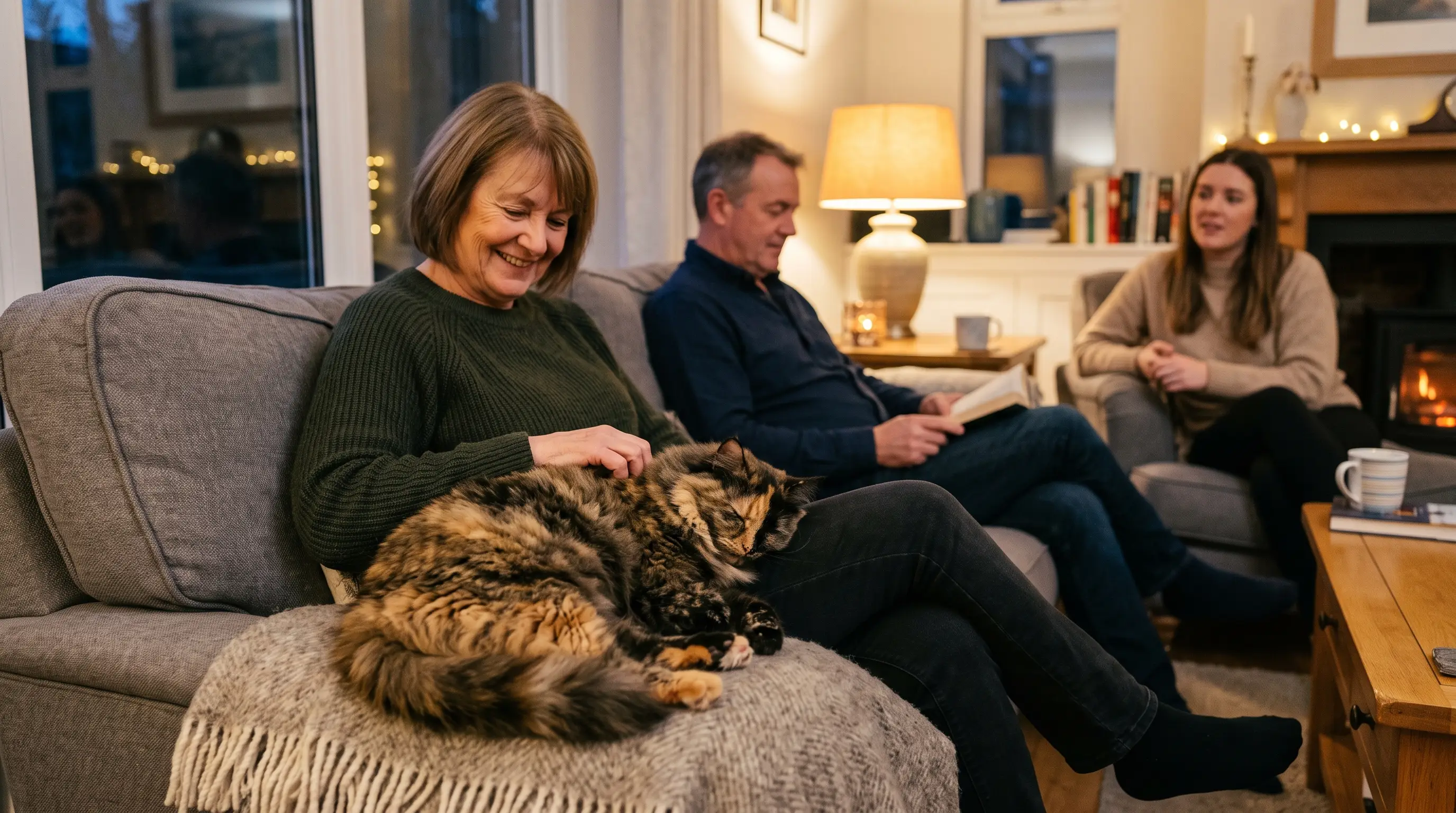
How cats choose their favourite person
Cats pick favourites, and the pick can sting: the person who feeds, brushes and adores the cat watches it drape itself over someone who barely acknowledges its existence. There's a mechanism behind that injustice, and it was measured in Swiss living rooms decades ago. The short version: cats favour the person who lets them run the conversation. Here is how the choice works, what actually weighs in it, and how to move yourself up the list without embarrassing anybody.
The choosing starts before you ever met
Some of your cat's verdict was in before you had a say. Kittens handled gently by people between roughly two and seven weeks of age grow into adults that seek human company; kittens that meet nobody in that window stay wary for life, however kindly they're treated later — the classic handling experiments of the 1980s, much of them by Eileen Karsh, mapped this socialisation window in detail. Boldness also runs in the blood: work at Cambridge in the 1990s found that friendliness towards people tracks the father's temperament, even when the kittens never meet him.
So a cat arrives with a ceiling and a floor already set. What the household decides is where between them the cat lands — and who inside the household gets the best of it. That second contest is the one you can still win.
The Swiss living-room study
In the late 1980s, Dennis Turner and Claudia Mertens did something unusual for cat science: instead of a lab, they sat in ordinary Swiss homes and logged hundreds of everyday human–cat interactions as they happened. The finding that survived every follow-up since is beautifully simple. When the human starts the interaction, it stays short. When the cat starts it, it lasts longer — and households that let the cat do the opening end up with more total contact, not less.
That one result explains most favourite-person mysteries. The keen owner who scoops the cat up on sight is running maximum initiations with minimum response rate; the indifferent partner who never reaches out is, from the cat's side, the only person in the house who reliably respects the protocol. The cat isn't perverse. It's keeping score on a rule nobody told the humans about.
Why the cat person loses to the cat avoider
The same logic runs through body language. A person who loves cats greets one the way primates greet: approach, lean in, eye contact, hands out. Every element of that is threat display in cat. The guest who dislikes cats sits still, angles away and refuses eye contact — which reads, in cat, as impeccable manners. Then the cat jumps on the one lap in the room that didn't want it, and everyone laughs at the mystery. There is no mystery. One person spoke cat by accident.
Feeding, for the record, matters less than everyone assumes. It buys presence and positive associations — the person who feeds is worth monitoring closely at 7am — but the choice experiments covered in do cats love their owners found half of cats picking human interaction over food outright. A bowl gets you an audience. It doesn't get you the vote.
The tiebreakers: sex, breed and voice
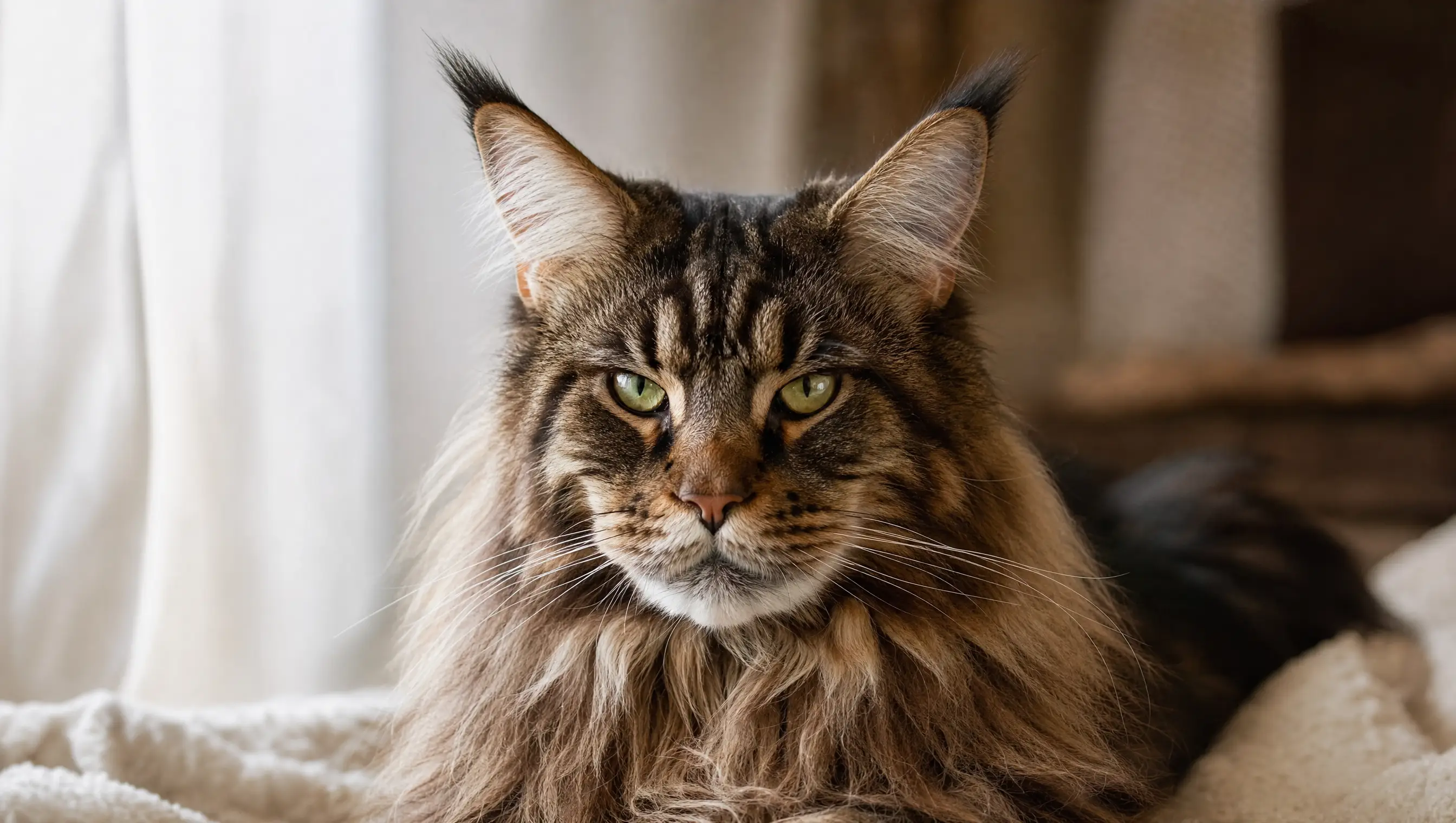
Owners swap theories about which cats love harder — males, females, gingers — and the honest answer is that the evidence for sex differences is thin. Neutering status, early handling and the individual cat swamp whatever small effect sex has. Breed genuinely moves the needle: people-oriented lines like the Siamese, the Ragdoll and the Maine Coon hand out affection more freely, and we've profiled the shortlist in the most affectionate cat breeds.
Voice is a quieter tiebreaker. Cats know exactly who is speaking: Charlotte de Mouzon's studies found they respond to their own person's voice and largely ignore a stranger saying the same words — and they respond most to the high sing-song register people fall into with animals. Talking to your cat is not eccentric. It's campaigning.
How to move up the list
The programme follows from the evidence, and it is mostly restraint. Initiate less, respond more: when the cat comes to you, pay out — attention, a cheek rub, a lap that stays still — and when it leaves, let it leave. Sit at its level and offer a loose hand rather than reaching. Blink slowly; cats read the slow blink as friendly and often return it, and the full signal dictionary is in cat body language. Add the two levers that reliably build value: a daily wand-toy session that ends in a catch, and treats that come from your hand, not the floor.
Give it weeks, not days — you're revising a ledger, not flipping a switch. And accept the two honest outcomes: in some households the cat simply loves someone else, and in some the cat is a committee of one with no favourite at all. A cat that keeps modest distance from everyone isn't broken; if the distance comes with hiding or flinching, though, read the stress signs owners miss before taking it personally.
Common questions
How do cats choose their favorite person?
Mostly on interaction style, not food. Home-observation research by Dennis Turner and Claudia Mertens found cat-initiated interactions last longer, and people who let the cat start and end contact get more total contact. Early socialisation and temperament set the range; the favourite is usually whoever best respects the cat's protocol.
Why does my cat prefer someone who ignores it?
Because ignoring a cat accidentally matches cat etiquette. No approach, no stare, no grabbing — to a cat that reads as perfect manners, while an enthusiastic cat lover's greeting reads as threat display. The cat picks the lap that didn't lobby for it.
Are male cats more affectionate than female cats?
The evidence for a real sex difference is thin. Neutering status, early handling in the two-to-seven-week window and individual temperament matter far more than whether the cat is male or female. Breed is a stronger predictor than sex.
Do cats have a favourite person in the family?
Often, yes — many cats direct clearly more greeting, following and lap time at one household member. The favourite is usually the person whose interaction style suits the cat, which is why it isn't always the person who feeds it.
Do cats like it when you talk to them?
Generally yes, from the right person. Cats respond to their own owner's voice and largely ignore strangers saying the same words, and they respond most to the soft, high, sing-song register people naturally use with animals. Your voice is part of how your cat recognises and values you.
How do I become my cat's favourite person?
Initiate less and respond more: reward every approach the cat makes, let it end contact, sit at its level, offer a hand instead of reaching, and blink slowly. Add a daily play session that ends in a catch and treats from your hand. Expect progress over weeks — and accept that some cats crown nobody.
More in Cats
Do cats love their owners? The kidnap experiment says yes
Science ran the same attachment test on cats that it runs on human infants, and 64% passed. What the secure-base test found, why one earlier study disagreed, and how a cat actually says it.
Do cats miss their owners? They even track the clock
Cats greet you harder after four hours away than after thirty minutes — they know how long you were gone. What missing looks like in a cat, when it tips into separation anxiety, and how to leave well.
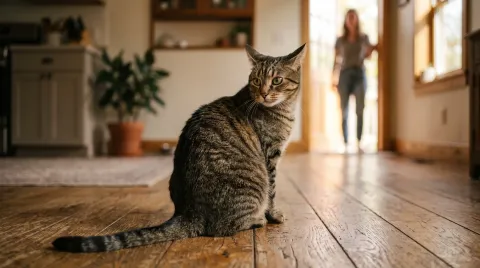
Cats know their names. They've decided not to answer
A Tokyo lab proved cats pick their own name out of a string of similar words — even from a stranger's mouth. What cats actually understand of what you say, and why the response is optional.
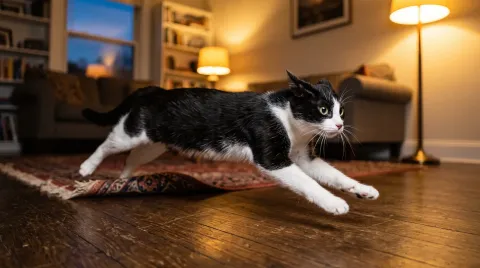
Zoomies: why your cat sprints through the house at 3am
The wall-of-death lap around the living room has a name, a mechanism, and a fix for the 3am edition. Why a predator that sleeps sixteen hours a day sometimes has to spend the surplus all at once.
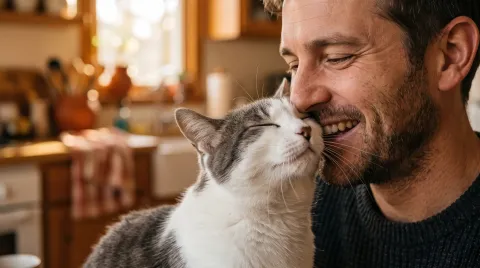
Headbutts and ankle rubs: what your cat marks you with
The forehead slam is called bunting, it comes with a chemical payload, and it's one of the biggest compliments a cat pays. What the glands are doing, what the group scent means, and when a rub is really an invoice.
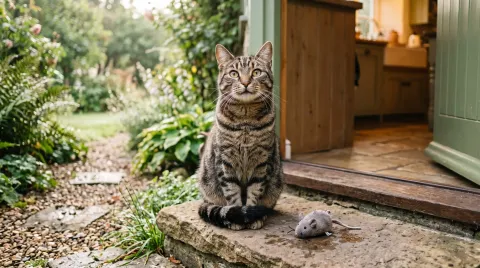
Why cats bring you dead animals
The mouse on the doormat is not a gift in any human sense, and the two leading theories disagree about what it is. What the delivery means, how to respond, and the honest arithmetic of what outdoor cats do to gardens.