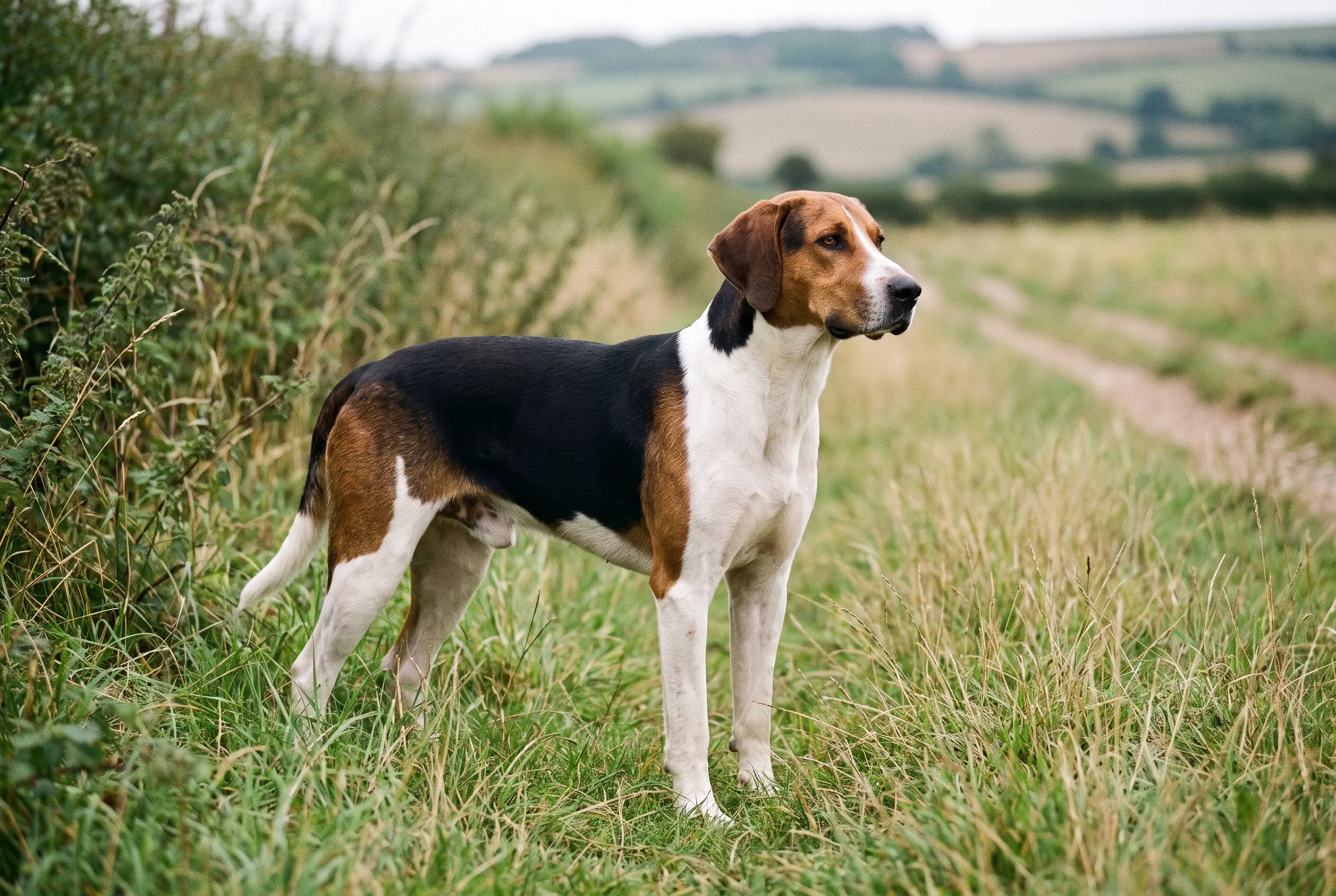
English Foxhound
The pack hound of the shires — built to run from breakfast to dusk.
Vital stats
| Size | Large · 58–64 cm |
| Weight | 27–34 kg |
| Life expectancy | 10–13 years |
| Energy | Very high — 2+ hours/day |
| Shedding | Moderate, year-round |
| Coat | Short, dense · tricolour, tan & white, lemon & white |
| Group | Hound · FCI №159 / AKC |
| Origin | England |
| FCI group | 6 — Scent hounds and related breeds · FCI 159 |
Breed traits
Friendliness
Care
Mind
The English Foxhound by the numbers
The English Foxhound facts owners search for most — price, lifespan, weight, shedding and colours, in one place.
Less common, so expect a waitlist and some travel to a reputable breeder — which pushes the price up. Ongoing costs run high — more food, bigger doses at the vet, and pricier insurance.
We don't quote a single figure: the real price swings with breeder, region, bloodline and health testing — and a rescue costs a fraction of a breeder's litter. Adopting is almost always the cheapest route.
Temperament
Centuries of pack life shaped a hound that is gentle, gregarious and genuinely happier in company — canine or human — than alone. Indoors it is easy-going to the point of laziness; outdoors a fresh scent flips a switch, and the melodious voice that carried across valleys carries just as well across your neighbourhood.
Habits & quirks
Nose down, ears off
Once a trail is found, your voice becomes background music — keep the lead on.
The chorus
A foxhound doesn't bark so much as sing, and it was bred to be heard a valley away.
Pack manners
Raised to share kennels and dinner with dozens, it is famously polite with other dogs.
The endless trot
Its natural pace is an all-day jog; a stroll round the block barely registers.
Health
Centuries of hard pack breeding left the English Foxhound a genuinely sound dog, and there's no long screening checklist attached to it the way there is to many pedigree breeds. The care that keeps one healthy is mostly about matching the life to the dog: hours of real running, a lean frame, and company. Keep him lean — an idle, overfed foxhound is an unhappy one — and check the long drop ears after runs through cover, since low-hanging ears trap damp and debris. Buy from someone who works or runs their hounds and knows the line.
Nutrition
| Exercise | Two hours or more daily — running, hiking or trotting beside a bike; a tired foxhound is the only calm foxhound. |
| Containment | A high, secure fence is non-negotiable; a scent trail beats an open gate every time. |
| Training | Work recall early and often, and accept it may never be scent-proof — long lines are your friend. |
| Company | Bred for pack life, it does poorly left alone for long days; a second dog genuinely helps. |
A foxhound was built to run from breakfast to dusk, and it eats to match — but only if it's actually working. Feed to the real workload: a hound in full daily exercise and one having a quiet spell don't need the same bowl. Weigh meals, count treats in the day's total, and aim for ribs you can feel under the short coat. Lean is the whole point on a dog whose job is stamina.
Puppy guide
A Foxhound puppy is bred for the pack, so company and manners around other dogs come first — it does badly raised in isolation. Socialize him widely and early, keep the serious running light while a big frame is still growing, and start recall the moment he arrives, because once the nose takes over your voice is background noise. Accept now that recall around wildlife may never be perfect, and you'll train with the right expectations.
Training
House manners come easily; off-lead obedience is the hard part. This is a hound bred to follow a scent independently for hours, so recall around wildlife is never guaranteed — work it early and often, and keep long lines to hand for anywhere unfenced. It thrives on company and does its best learning as part of the household rather than left alone, and a tired foxhound is a far more cooperative student than a fresh one.
Life expectancy
English Foxhounds live 10–13 years. The English Foxhound is a hardy, hard-working breed with a long history of sound stock behind it. You keep it at the top of its range the obvious way: a lean weight, the real daily miles it was built for, and the company of its people or another dog. A foxhound with a job and a run in it stays well.
Similar breeds
Breeds with a similar build and background — worth a look if this one isn't quite the fit.
Breeds that look like this
Common questions
Are English Foxhounds good family pets?
They're gentle, sociable and good with children, but few are kept as pets — their exercise needs and pack instincts suit rural, very active homes best.
Can an English Foxhound live in an apartment?
Realistically, no. The breed needs hours of daily running and has a carrying voice that neighbours will come to know well.
Are English Foxhounds easy to train?
House manners come easily; obedience off-lead does not. They were bred to follow scent independently, so recall around wildlife is never guaranteed.
Does the English Foxhound shed a lot?
Moderately. The English Foxhound sheds a fair amount, steadily through the year with heavier seasonal patches. A weekly brush keeps most of the loose hair off your floors and clothes.
Is the English Foxhound hypoallergenic?
Not really. No dog is truly hypoallergenic, and the English Foxhound's shedding coat releases plenty of the dander that sets off allergies. If someone at home is allergic, this isn't the easiest breed to live with — spend time around one first.