English Pointer
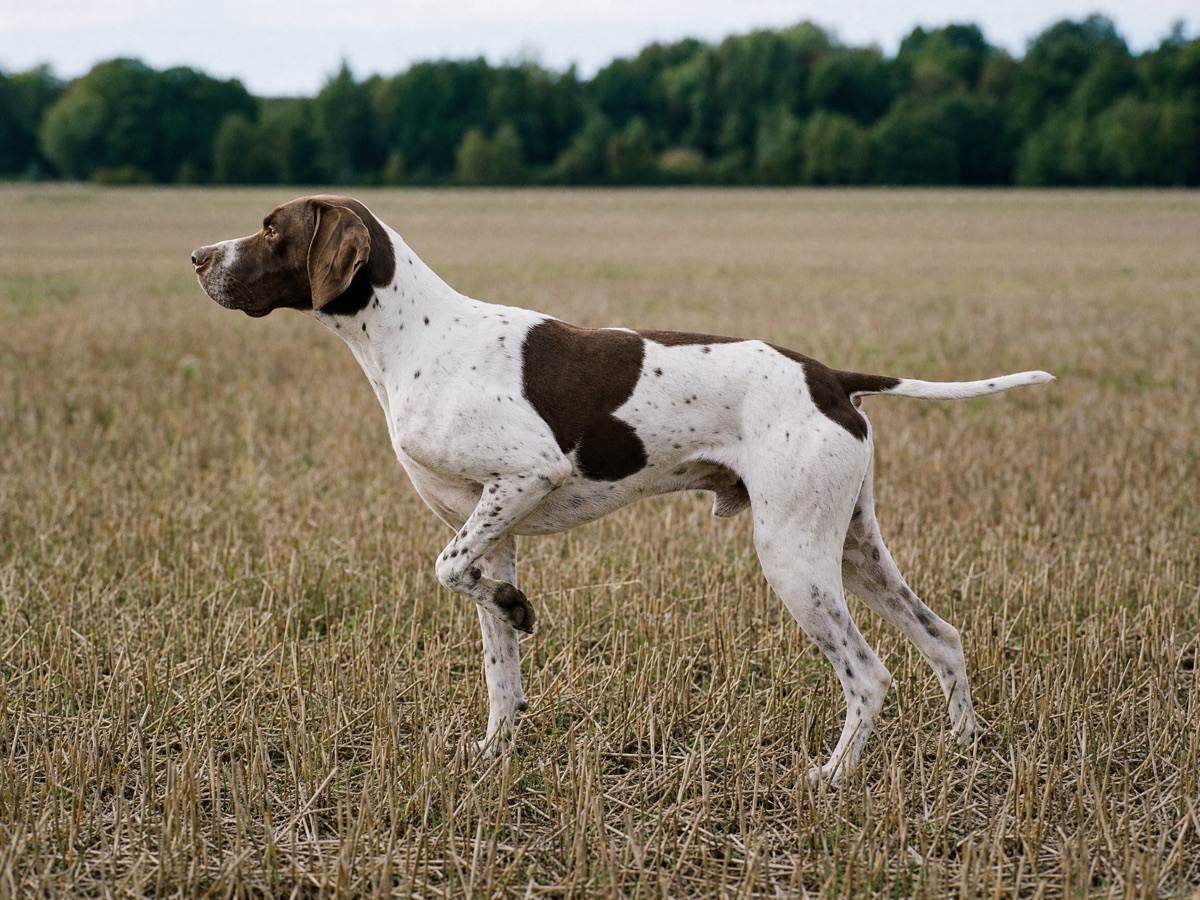
Bred to find birds and freeze — pure athletic focus in a sleek frame.
On these lists: Dogs for runners · Dogs for hunting
Vital stats
| Size | Large · 61–69 cm |
| Weight | 20–34 kg |
| Life expectancy | 12–14 years |
| Energy | Very high — 2+ hours/day |
| Shedding | Light, year-round |
| Coat | Short, smooth · liver, lemon, orange or black, often with white |
| Group | Sporting · FCI №1 / AKC |
| Origin | England |
| FCI group | 7 — Pointing Dogs · FCI 1 |
Breed traits
Friendliness
Care
Mind
The English Pointer by the numbers
The English Pointer facts owners search for most — price, lifespan, weight, shedding and colours, in one place.
Less common, so expect a waitlist and some travel to a reputable breeder — which pushes the price up. Ongoing costs run high — more food, bigger doses at the vet, and pricier insurance.
We don't quote a single figure: the real price swings with breeder, region, bloodline and health testing — and a rescue costs a fraction of a breeder's litter. Adopting is almost always the cheapest route.
Temperament
Bred to quarter open country at a gallop and then hold perfectly still, the Pointer swings between full throttle and statue with little in between. Give it real exercise and it settles into a sweet, even-tempered housemate; skip a day and that engine finds its own projects. Birds overhead will always outrank you for a moment.
Habits & quirks
The freeze
Mid-walk, mid-play, mid-anything — one whiff of bird and the whole dog stops, one paw raised.
Sky watcher
Pigeons, sparrows, a drifting leaf: anything airborne is professionally interesting.
The evening fold
After a proper run it collapses into furniture like a deflating balloon, ideally on you.
Distance runner
Its natural range is measured in fields, not gardens — it will always check the far hedge first.
Health
The Pointer is a fit, athletic gundog, and a well-bred one is generally sound — the biggest health question is simply whether it gets the exercise it needs, because a Pointer that doesn't run isn't a calm dog, it's a frustrated one. Two sensible cautions come with the build: it's deep-chested, so feed smaller meals and let the big run settle rather than exercising hard on a full stomach, and the coat is thin, so a cold, wet day is a day for a jacket. Keep it lean and let it run, and the rest mostly looks after itself.
Nutrition
| Exercise | Two hours daily of genuine running — canicross, cycling or free-running in safe open space suits it best. |
| Containment | A tall, secure fence matters; a Pointer in pursuit doesn't do risk assessment. |
| Training | Biddable but easily distracted by scent and wing — short, upbeat sessions and rock-solid recall work pay off. |
| Grooming | Practically nil: a weekly rubber-mitt wipe and the occasional bath; thin coat means a jacket in cold rain. |
A working Pointer runs on a lot of fuel, so feed to what the dog actually does and keep it lean — extra weight is dead weight on an athlete this fast. Weigh the meals, count training treats in the day's total, and because the chest is deep, split the food into smaller meals and keep the hardest running clear of a full stomach. Ribs you can feel under that sleek coat are the target.
Puppy guide
A Pointer puppy arrives with the engine already running and the instinct already installed — many freeze on their first butterfly at a few weeks old, so pointing is nothing you have to teach. What the first year needs is careful joint work: keep the flat-out running light while a big frame is still growing, and build steadily rather than all at once. Start recall early and make it rewarding, socialize widely, and give that drive somewhere to go so it doesn't invent its own projects.
Training
A Pointer is biddable and quick to learn, but scent and anything on the wing will always compete for its attention. Keep sessions short and upbeat, reward generously, and put real work into recall — a solid recall is what lets a dog this fast earn its off-lead freedom safely. Pointing itself is instinct, so training refines it rather than creates it; the job is channelling the drive, not manufacturing it.
Life expectancy
Pointers live 12–14 years. The Pointer is a long-lived athlete for its size, and the way you keep one at the top of the range is the way you keep it happy: a lean weight, and the real daily running the breed was built for. Meet the exercise honestly and a Pointer stays sound and even-tempered well into its senior years.
Similar breeds
Breeds with a similar build and background — worth a look if this one isn't quite the fit.
Breeds that look like this
Common questions
Are English Pointers good pets?
Yes for very active homes — gentle and friendly indoors, but they need long daily runs and a securely fenced space.
Do Pointers make good first dogs?
Only for owners ready to meet high exercise needs; their energy and drive can overwhelm a sedentary household.
Do Pointers point without being trained?
Yes — pointing is instinct, and puppies often freeze on butterflies at a few weeks old. Training refines the behaviour; it doesn't create it.
Does the English Pointer shed a lot?
Not much. The English Pointer is a low-shedding breed, so loose hair around the home stays minimal. It still needs regular grooming, but you won't be fighting drifts of fur.
Is the English Pointer hypoallergenic?
No dog is truly hypoallergenic, but the English Pointer comes closer than most: its low-shedding coat releases less of the dander that triggers allergies. Many allergy sufferers manage well with this breed, but spend time around one before committing.
Is the English Pointer good with children?
Generally yes. The English Pointer is a friendly, people-loving breed that usually does well with children when raised and socialised well. As with any dog, teach children to be gentle and supervise around toddlers.