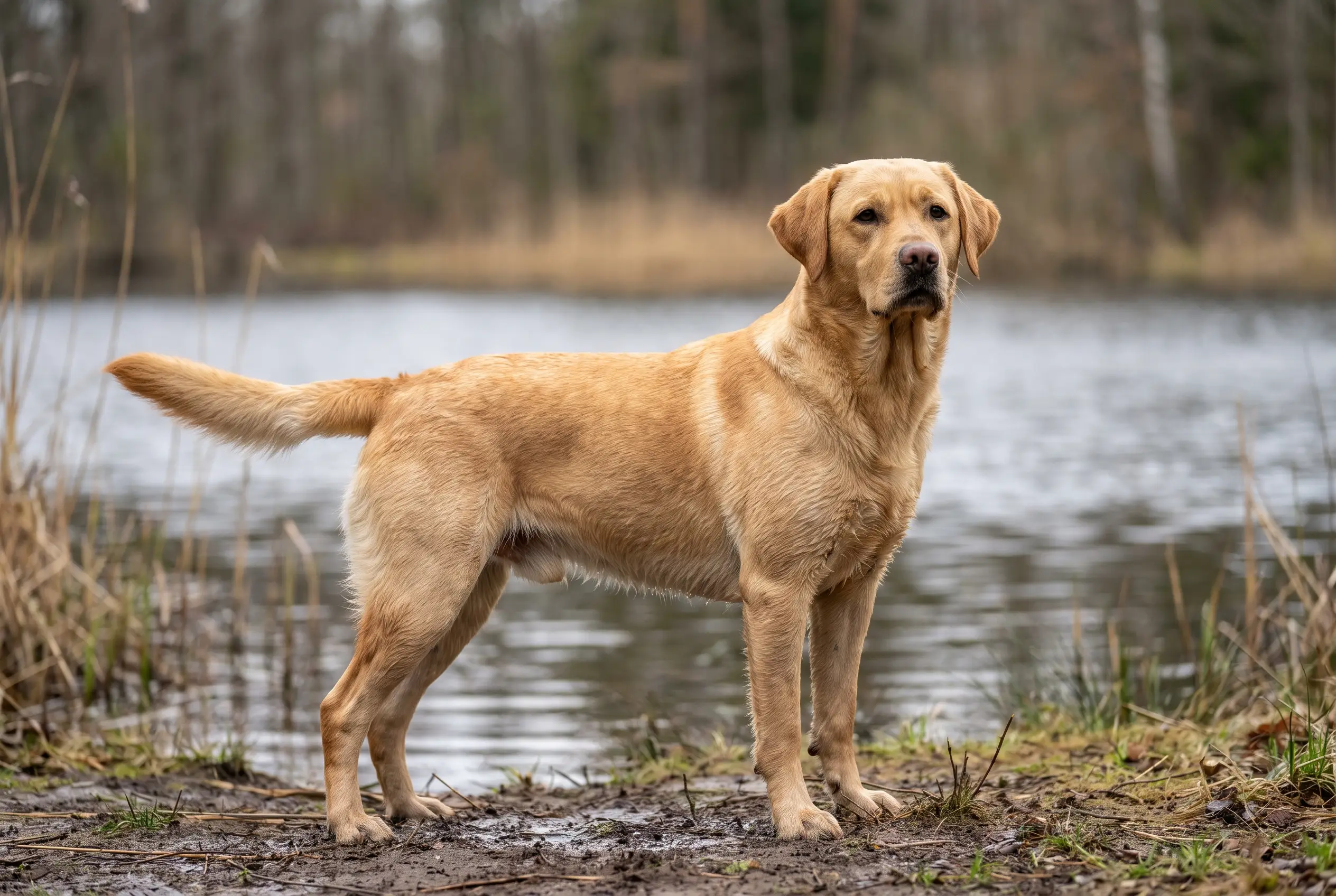
Labrador Retriever
The world's favourite family dog — sporting, sweet, and endlessly food-motivated.
On these lists: Dogs for first-time owners · Family dogs · Dogs for hunting · Truffle-hunting dogs · Therapy dogs · Service dogs
Vital stats
| Size | Medium-large · 55–62 cm |
| Weight | 25–36 kg |
| Life expectancy | 10–12 years |
| Energy | High — 60–90 min/day |
| Shedding | Moderate, year-round |
| Coat | Short double coat · black, yellow, chocolate |
| Group | Sporting · AKC / FCI №122 |
| Origin | Newfoundland, Canada |
| FCI group | 8 — Retrievers, Flushing Dogs and Water Dogs · FCI 122 |
Breed traits
Friendliness
Care
Mind
The Labrador Retriever by the numbers
The Labrador Retriever facts owners search for most — price, lifespan, weight, shedding and colours, in one place.
Widely bred, so you can usually find a litter from a registered breeder without a long wait. Ongoing costs run high — more food, bigger doses at the vet, and pricier insurance.
We don't quote a single figure: the real price swings with breeder, region, bloodline and health testing — and a rescue costs a fraction of a breeder's litter. Adopting is almost always the cheapest route.
Temperament
Bred to retrieve waterfowl all day without complaint, the Labrador is patient, biddable, and desperate to please — which makes it wonderfully easy to train and wonderfully easy to overfeed. Expect a dog that wants to be with you, in water, ideally carrying something.
Habits & quirks
Mouthy by nature
A retriever needs to carry things — give it a toy or it'll pick its own.
Water magnet
There is no puddle it will not find, and no lake it will not enter.
Eternal puppy
Labs mature slowly; expect adolescent energy until nearly three.
Counter-surfer
Food left at nose height is, in the Labrador's view, a gift.
Health
The Labrador is a sturdy dog, and most live a full, active life. Three things do the most damage: the hips and elbows can develop dysplasia, and the breed's famous appetite pushes a lot of Labs into obesity, which then wears the joints faster. Pick a breeder who hip- and elbow-scores their dogs, keep your Lab lean, and you have headed off most of the risk before it starts.
Nutrition
| Exercise | 60–90 min/day — fetch, swim, and sniff work; a bored Lab is a destructive Lab |
| Feeding | Measure every meal — the breed gains weight faster than almost any other |
| Grooming | Weekly brush, more in the two annual sheds |
| Training | Easy and rewarding — start early to manage the size and enthusiasm |
A Labrador will eat whatever you put down and then ask for more, so measure every meal and count treats into the day's total. Aim for ribs you can feel but not see. For the first year, feed a large-breed puppy formula so the dog grows slowly, which is what protects the developing joints.
Puppy guide
A Labrador puppy is friendly, food-driven and growing fast, and those three facts shape the whole first year. Keep exercise short and gentle while the joints are still forming, roughly five minutes of walk per month of age, and go easy on stairs and long runs. Socialise early, because a well-met Lab stays easy for life. And watch the weight from the start: a chubby puppy is not a healthy one, it is a joint problem in waiting.
Training
Labradors are one of the easiest breeds to train, which is why they fill the guide-dog and gundog ranks. They are bright, willing, and happy to work all day for a piece of kibble, so reward-based training clicks quickly. The catch is energy and mouth: a bored Lab chews, and a young one grabs everything in reach. Give it a job and something to carry, and drill recall and a solid 'leave it' before anything else.
Known health issues
No breed is problem-free. These are the conditions most worth knowing about for this breed — with what a good breeder screens for and what an owner watches. General guidance, not a substitute for your vet.
Hip dysplasia
A poorly fitting hip joint that wears early and can cause pain and arthritis, most common in larger breeds. Good breeders screen: Hip-scored parents (BVA/OFA/FCI). Watch for: Stiffness, a bunny-hop run, or reluctance on stairs.
Elbow dysplasia
A developmental fault in the elbow that leads to lameness and arthritis, seen in fast-growing large breeds. Good breeders screen: Elbow-scored parents. Watch for: Front-leg limping that worsens after exercise.
Inherited eye disease
Progressive retinal atrophy and cataracts run in several breeds and can dim or take sight over time. Good breeders screen: Eye-tested parents and, where available, a DNA test for PRA. Watch for: Night-time bumping, cloudy eyes, or hesitation in dim light.
Tends to gain weight
A hearty appetite and easy weight gain that quietly shortens life and worsens joints if unchecked. Good breeders screen: Not a genetic test — a management point to plan for. Watch for: Keep ribs easy to feel; measure meals and go easy on treats.
Worried about a symptom right now? Why is my dog limping? Causes and when to see a vet
Life expectancy
Labradors live 10–12 years. The biggest single lever on that number is weight. A 14-year study that followed Labradors from the same litters found the lean dogs lived close to two years longer than their overweight siblings. Keep your Lab slim, stay ahead of the hips and joints, and the top of that range is a realistic goal.
Popular Labrador mixes
Labradoodle
The original doodle, bred for a coat that sheds less. Coat and temperament vary a lot from pup to pup, even inside one litter.
Goldador
Two easy family dogs in one: gentle, people-focused and very trainable. Expect the shedding of both parents.
Borador
Labrador friendliness with Border Collie drive and brains. Sharp, athletic, and unhappy without a job to do.
Sheprador
A protective streak on a Labrador base. Big and active, and it needs early socialising and steady work.
Labmaraner
A lean, high-energy gundog cross for an active home. Bonds hard and hates being left alone.
Similar breeds
If it's the Labrador's mix of size, easy training and love of water that appeals, these gundog cousins share the profile.
Compare this breed
Breeds that look like this
Common questions
Are Labradors good family dogs?
Yes — arguably the benchmark. Gentle, patient and sturdy, they suit families with children of any age.
Do Labradors shed a lot?
Moderately, all year, with two heavier seasonal blows. Weekly brushing keeps it manageable.
How much exercise does a Labrador need?
60–90 minutes of real activity daily. Under-exercised Labs get bored and chew.
Is the Labrador Retriever hypoallergenic?
Not really. No dog is truly hypoallergenic, and the Labrador Retriever's shedding coat releases plenty of the dander that sets off allergies. If someone at home is allergic, this isn't the easiest breed to live with — spend time around one first.
Is the Labrador Retriever easy to train?
Yes. The Labrador Retriever is one of the more trainable breeds — quick to learn and keen to work with you, which makes reward-based training straightforward. Start early, keep it positive, and it picks things up fast.
Stories featuring this breed
All stories →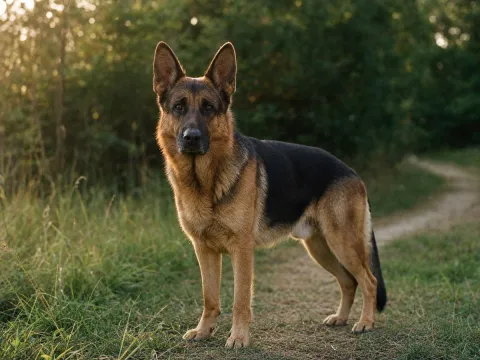
PAW Patrol breeds: every pup's real dog, from Chase to Tracker
Chase is a German Shepherd, Zuma is a Chocolate Labrador, and Skye's Cockapoo isn't a registered breed at all. The honest, canon breed behind every PAW Patrol pup.

What selective breeding actually does to an animal
Choosing which animals have babies is the most powerful force in a pet’s biology. A Soviet fox experiment shows how fast it works — and how much it costs.

Are dogs and wolves the same species?
Technically yes — a dog is a subspecies of grey wolf, and the two make fertile pups. But a dog is not a tame wolf, and the differences run deeper than looks.