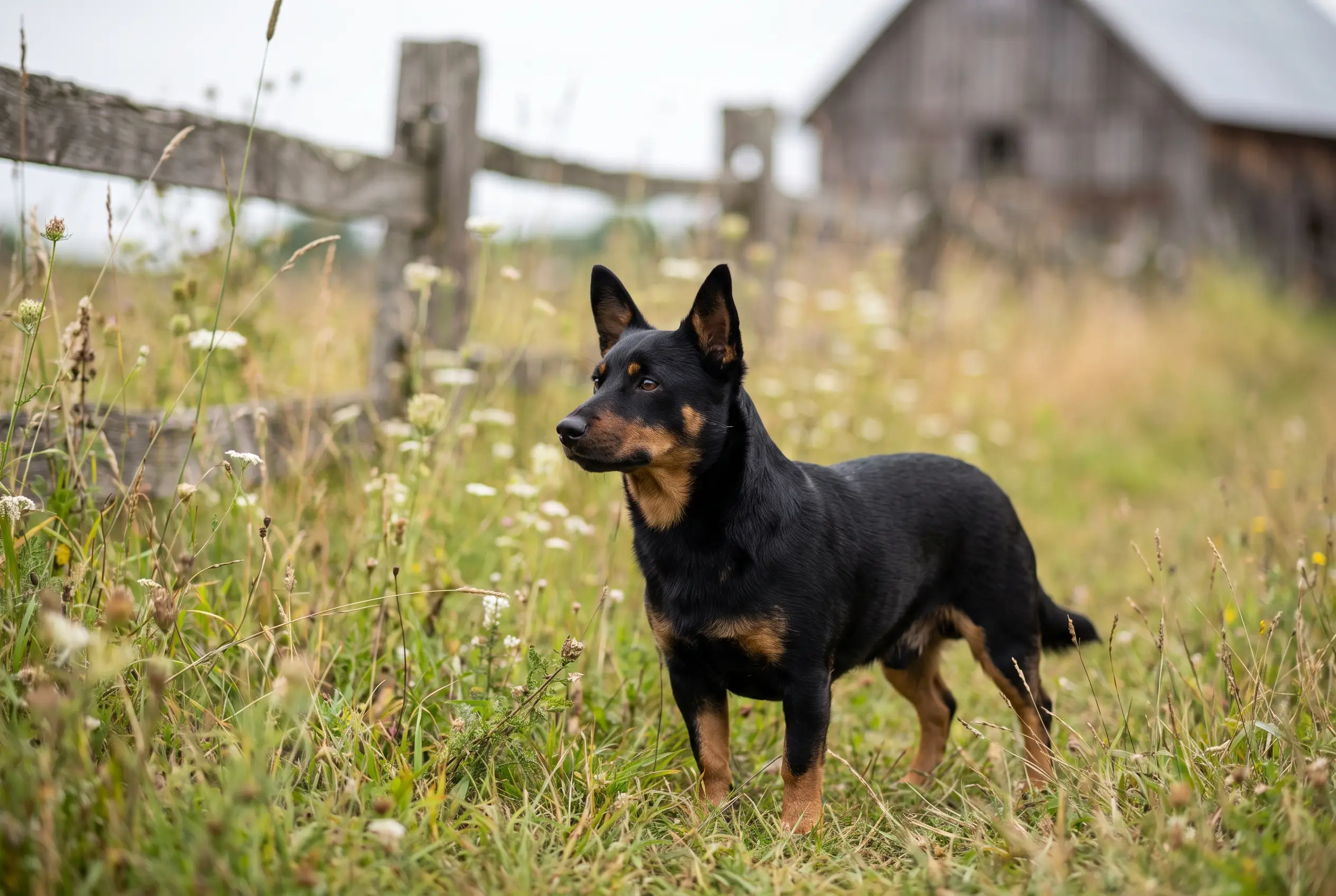
Lancashire Heeler
England's smallest herder — a pocket cattle dog with a famous smile.
Vital stats
| Size | Small · 25–31 cm |
| Weight | 6–8 kg |
| Life expectancy | 12–15 years |
| Energy | Moderate-high — 45–60 min/day |
| Shedding | Moderate, seasonal |
| Coat | Short, weatherproof double coat · black & tan, liver & tan |
| Group | Herding · FCI №360 / AKC |
| Origin | Lancashire, England |
| FCI group | 1 — Sheepdogs and Cattledogs · FCI 360 |
Breed traits
Friendliness
Care
Mind
The Lancashire Heeler by the numbers
The Lancashire Heeler facts owners search for most — price, lifespan, weight, shedding and colours, in one place.
Less common, so expect a waitlist and some travel to a reputable breeder — which pushes the price up. Ongoing costs stay modest — it eats little and routine vet care sits at the lower end.
We don't quote a single figure: the real price swings with breeder, region, bloodline and health testing — and a rescue costs a fraction of a breeder's litter. Adopting is almost always the cheapest route.
Temperament
Bred to trot cattle to market by nipping at their heels, then clear the farmyard of rats, the Heeler packed two jobs into one small dog. At home that history shows as brightness, bustle and a watchful bark — plus an occasional urge to tidy up running children by the ankles.
Habits & quirks
The Heeler smile
A happy Heeler literally grins at you — lips back, eyes bright, tail going.
Ankle management
Old droving wiring: fast-moving feet may get a gentle herding nudge.
Rat radar
Rustling in the hedge? Already investigating. The ratting half of the CV never retired.
Big-dog announcements
Small frame, full-sized watchdog voice — visitors are always declared.
Care
| Exercise | A brisk 45–60 minutes daily plus games — this is a worker, not an ornament. |
| Training | Quick and willing; channel the heel-nipping into tricks and toys early. |
| Health | Ask breeders for eye tests — primary lens luxation and Collie eye anomaly occur in the breed. |
| Grooming | A weekly brush does it; the weatherproof coat sheds a little more in season. |
Life expectancy
This breed has a typical life expectancy of 12–15 years.
Similar breeds
Breeds with a similar build and background — worth a look if this one isn't quite the fit.
Breeds that look like this
Common questions
Is the Lancashire Heeler rare?
Yes — it sits on The Kennel Club's list of vulnerable native breeds, with small registration numbers even in Britain. Expect a waiting list for a well-bred puppy.
Are Lancashire Heelers good family dogs?
Very good with respectful children: affectionate, playful and sturdy for their size. Teach kids not to run squealing, or ankles may be gently herded.
Is the Lancashire Heeler related to the Corgi?
Almost certainly — Welsh Corgi-type heelers travelling with cattle drovers into Lancashire are thought to be behind the breed, later mixed with Manchester Terrier blood, which explains the black-and-tan coat.
Does the Lancashire Heeler shed a lot?
Moderately. The Lancashire Heeler sheds a fair amount, steadily through the year with heavier seasonal patches. A weekly brush keeps most of the loose hair off your floors and clothes.
Is the Lancashire Heeler hypoallergenic?
Not really. No dog is truly hypoallergenic, and the Lancashire Heeler's shedding coat releases plenty of the dander that sets off allergies. If someone at home is allergic, this isn't the easiest breed to live with — spend time around one first.
Is the Lancashire Heeler easy to train?
Reasonably. The Lancashire Heeler is trainable with consistency and rewards, though it isn't the quickest study. Keep sessions short and positive, and be patient with the basics like recall.