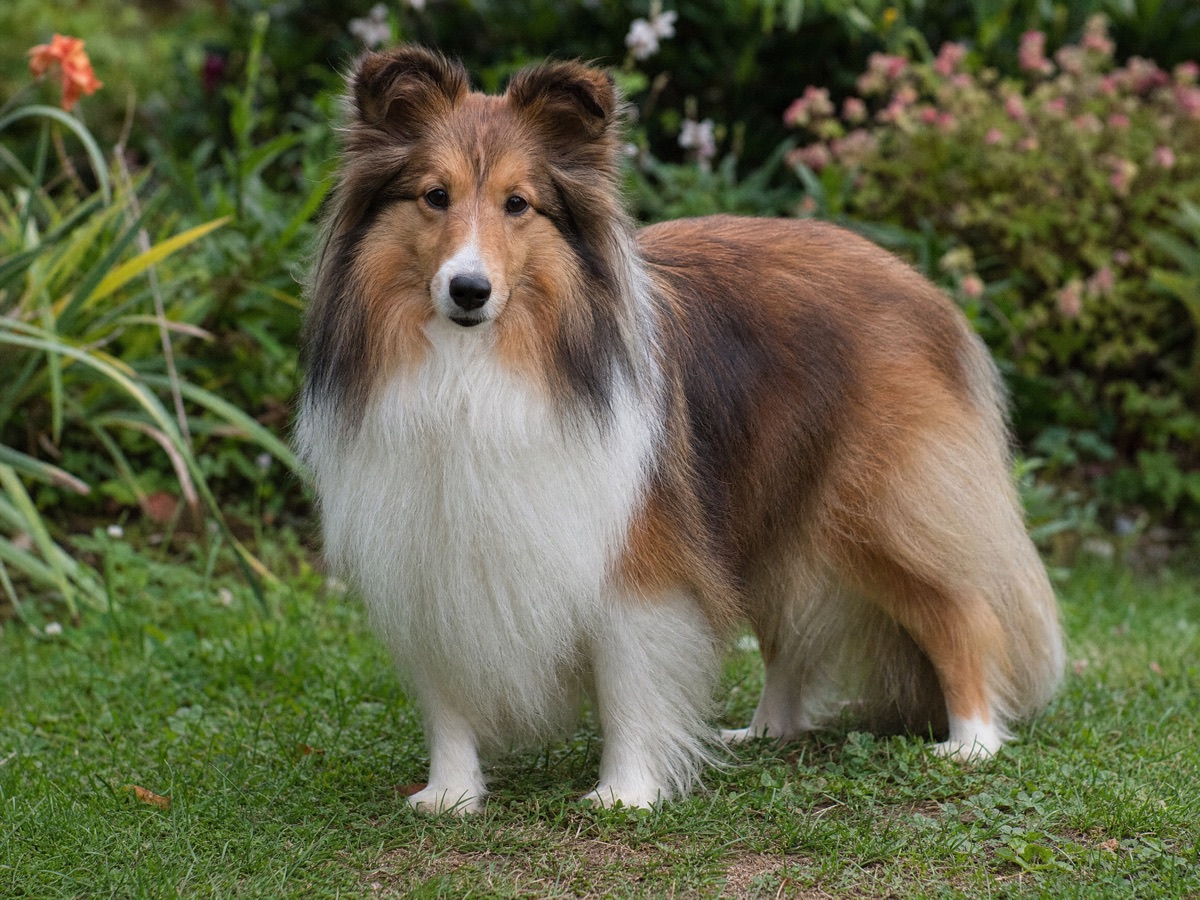
Shetland Sheepdog
A pint-sized, sensitive herder with a heart made for family life.
Vital stats
| Size | Small · 33–41 cm |
| Weight | 6–12 kg |
| Life expectancy | 12–14 years |
| Energy | Moderate-high — 60 min/day plus mental work |
| Shedding | Heavy, seasonal |
| Coat | Long rough double coat · sable, tricolour, blue merle |
| Group | Herding · FCI №88 / AKC |
| Origin | Shetland Islands, Scotland |
| FCI group | 1 — Sheepdogs and Cattledogs · FCI 88 |
Breed traits
Friendliness
Care
Mind
The Shetland Sheepdog by the numbers
The Shetland Sheepdog facts owners search for most — price, lifespan, weight, shedding and colours, in one place.
Widely bred, so you can usually find a litter from a registered breeder without a long wait. Ongoing costs stay modest — it eats little and routine vet care sits at the lower end. Its coat also needs a professional groom every few weeks — a real line in the budget.
We don't quote a single figure: the real price swings with breeder, region, bloodline and health testing — and a rescue costs a fraction of a breeder's litter. Adopting is almost always the cheapest route.
Temperament
Crofters needed a small dog that could herd sheep and ponies, warn of visitors and survive on little — the Sheltie answered with brains, sensitivity and devotion. It reads its people constantly, learns almost anything in a handful of repetitions, announces the world's events, and wilts under harsh words; kindness is the only training language it needs.
Habits & quirks
The Sheltie spin
Joy is expressed in tight, delighted circles at dinner time and doorways.
Herds the household
Children, cats and slow guests may be gently gathered and steered.
The town crier
Doorbells, delivery vans and distant leaves are all announced with conviction.
Heel shadow
Settles wherever it can keep every family member in view at once.
Care
| Grooming | Line-brush the double coat weekly, more during seasonal moults; never shave it. |
| Exercise | An hour a day plus a job — agility, obedience and trick training were practically invented for Shelties. |
| Training | Teach a 'quiet' cue early and use only gentle methods; this is a soft, sensitive breed. |
| Health | Buy from breeders who test eyes and ask your vet about MDR1 drug sensitivity, both known in the breed. |
Known health issues
No breed is problem-free. These are the conditions most worth knowing about for this breed — with what a good breeder screens for and what an owner watches. General guidance, not a substitute for your vet.
Inherited eye disease
Progressive retinal atrophy and cataracts run in several breeds and can dim or take sight over time. Good breeders screen: Eye-tested parents and, where available, a DNA test for PRA. Watch for: Night-time bumping, cloudy eyes, or hesitation in dim light.
Hip dysplasia
A poorly fitting hip joint that wears early and can cause pain and arthritis, most common in larger breeds. Good breeders screen: Hip-scored parents (BVA/OFA/FCI). Watch for: Stiffness, a bunny-hop run, or reluctance on stairs.
Bleeding disorder (von Willebrand)
A missing clotting protein that makes bleeding hard to stop, the most common inherited bleeding disorder in dogs and especially common in the Doberman. Good breeders screen: A DNA or blood clotting test on breeding stock. Watch for: Bleeding that won't stop from a small cut, nosebleeds, or bleeding gums — tell your vet before any surgery.
Life expectancy
This breed has a typical life expectancy of 12–14 years.
Similar breeds
Breeds with a similar build and background — worth a look if this one isn't quite the fit.
Breeds that look like this
Common questions
Do Shelties bark a lot?
Yes — they're alert, vocal watchdogs by nature. Early training to a 'quiet' cue keeps the barking in check.
Are Shetland Sheepdogs good family dogs?
Very — gentle, trainable and devoted, they suit families who can offer companionship, exercise and regular brushing.
Are Shelties easy to train?
Among the easiest of all breeds — sensitive, quick and eager to please, they thrive on praise and learn in a handful of repetitions. Harsh corrections are never needed and only frighten them.
Does the Shetland Sheepdog shed a lot?
Yes — the Shetland Sheepdog is a heavy shedder, dropping hair year-round or in big seasonal moults. Brush it several times a week and expect regular vacuuming; it isn't the coat for you if loose fur is a dealbreaker.
Is the Shetland Sheepdog hypoallergenic?
Not really. No dog is truly hypoallergenic, and the Shetland Sheepdog's shedding coat releases plenty of the dander that sets off allergies. If someone at home is allergic, this isn't the easiest breed to live with — spend time around one first.