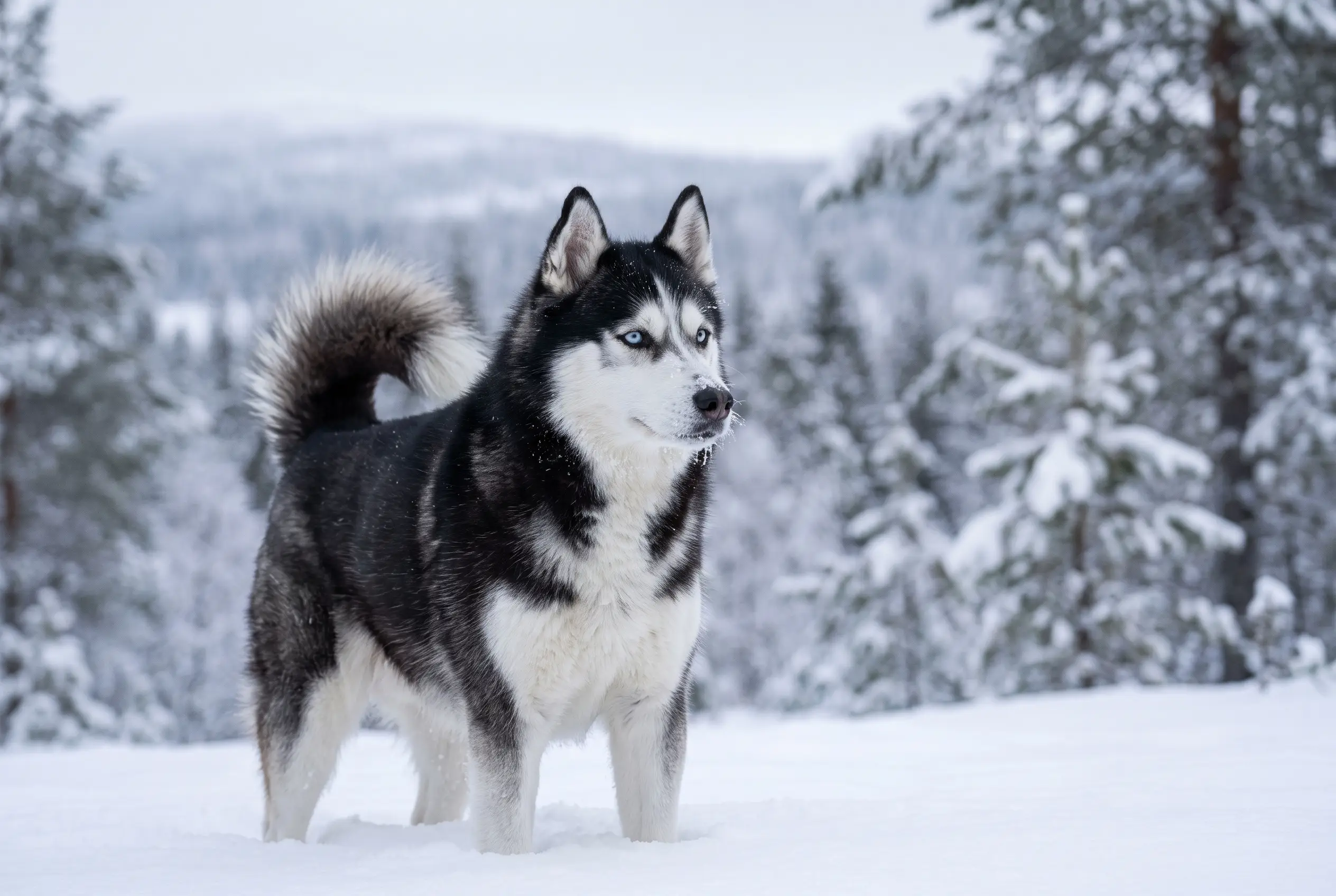
Siberian Husky
Born to run 100 km a day. Talkative, striking, and gloriously stubborn.
On these lists: Dogs for runners · Dogs for cold climates · Dogs for hiking
Vital stats
| Size | Medium · 50–60 cm |
| Weight | 16–27 kg |
| Life expectancy | 12–15 years |
| Energy | Very high — 2+ hrs/day |
| Shedding | Heavy, twice a year |
| Coat | Thick double coat · many colours, blue or brown eyes |
| Group | Working · AKC / FCI №270 |
| Origin | Northeast Siberia |
| FCI group | 5 — Spitz and primitive types · FCI 270 |
Breed traits
Friendliness
Care
Mind
The Siberian Husky by the numbers
The Siberian Husky facts owners search for most — price, lifespan, weight, shedding and colours, in one place.
Widely bred, so you can usually find a litter from a registered breeder without a long wait. Plan for steady ongoing costs — mid-range food, routine vet care and insurance. Its coat also needs a professional groom every few weeks — a real line in the budget.
We don't quote a single figure: the real price swings with breeder, region, bloodline and health testing — and a rescue costs a fraction of a breeder's litter. Adopting is almost always the cheapest route.
Temperament
Bred to pull light loads over vast frozen distances, the Husky is sociable but self-directed — it will hear your recall, consider it, and keep running. Affectionate and rarely aggressive, it makes a poor guard dog and an outstanding escape artist.
Habits & quirks
The Husky "talk"
Howls, woos and full operatic arguments — this breed does not do quiet.
Escape genius
Diggers, climbers and gap-finders; fences need height, depth and a lid.
Zero recall
A running Husky is a gone Husky — leash or securely fenced only.
Coat-blows twice a year
For two weeks each, the undercoat comes out in drifts.
Health
The Siberian Husky is a genuinely hardy breed with a short list of worries, but two are worth raising with a breeder: the eyes and the thyroid. Progressive retinal atrophy (PRA) and other eye conditions run in some lines, and hypothyroidism turns up often enough that careful breeders screen for it. Buy from someone who tests, keep your Husky lean and properly exercised, and you have handled most of the risk — because the thing that undoes a Husky is boredom, not bad genes.
Nutrition
| Exercise | 2+ hours daily of hard running — a tired Husky is the only calm Husky |
| Containment | Fully fenced, dig-proof yard; never trusted off-leash in the open |
| Grooming | Weekly, daily during the two dramatic seasonal blows — never shave |
| Climate | Thrives in cold, struggles in heat — walk early and late in summer |
A Husky was built to travel far on modest rations, and his food needs swing hard with his workload and the season — a dog running in the cold burns through far more than the same dog dozing through summer. Feed the dog in front of you, not the chart on the bag, weigh the meals, and keep the ribs easy to feel. And don't mistake that restless energy for a dog who needs feeding up: a lean Husky is a healthy Husky.
Puppy guide
A Husky puppy is friendly, busy, and born to run, and the running is the part to plan for. Keep exercise light while the joints are still forming, then build it up as he grows, and start recall the day he comes home — this is a breed that will bolt after a scent and keep going, so a fenced, dig-proof yard is not optional. Socialize him early, get him used to weekly brushing before the first big coat blow, and teach him that the fun happens with you, not over the horizon.
Training
Huskies are clever, but they were bred to run for hours and make their own decisions out on the trail, so they train nothing like a retriever. Recall is the hard one — a Husky in full flight has switched you off — so keep him on a long line in open ground and make yourself more interesting than the whole wide world. Work in short, upbeat sessions, reward well, and pick your battles: you are raising a partner, not programming a robot. What he really needs is a job and a serious daily run, because a tired Husky is the only calm Husky.
Known health issues
No breed is problem-free. These are the conditions most worth knowing about for this breed — with what a good breeder screens for and what an owner watches. General guidance, not a substitute for your vet.
Inherited eye disease
Progressive retinal atrophy and cataracts run in several breeds and can dim or take sight over time. Good breeders screen: Eye-tested parents and, where available, a DNA test for PRA. Watch for: Night-time bumping, cloudy eyes, or hesitation in dim light.
Underactive thyroid
A slowed thyroid that saps energy and coat, common in mid-size and large breeds and easily treated. Good breeders screen: Ask about thyroid testing in the line. Watch for: Weight gain, low energy, and thinning coat — a simple blood test confirms it.
Life expectancy
Siberian Huskies live 12–15 years. For their size Huskies are long-lived and robust, and the levers on that number are simple: keep him lean, give him the hard daily exercise he was built for, and buy from lines that screen the eyes and the thyroid. A well-run, well-fed, well-bred Husky spends very little of its life at the vet.
Popular Siberian mixes
Pomsky
A pocket-sized Husky with the same big voice and stubborn streak; coat and size vary wildly from pup to pup.
Alusky
Two northern sled breeds doubled up: big, powerful, heavy-shedding, and hungry for miles.
Gerberian Shepsky
A striking, high-drive cross with the Shepherd's brains and the Husky's energy; needs a job and early rules.
Huskita
A big, aloof, strong-willed dog that bonds hard to its family; not one for a first-time owner.
Horgi
Husky markings and mischief on short Corgi legs; lively, vocal, and a heavier shedder than the size suggests.
Similar breeds
Breeds with a similar build and background — worth a look if this one isn't quite the fit.
Compare this breed
Breeds that look like this
Common questions
Can you let a Husky off the leash?
Rarely safely — the breed's prey drive and independence mean recall is unreliable. Use long lines or secure fields.
Do Huskies shed a lot?
Enormously — a heavy year-round shed plus two intense seasonal coat-blows. Never shave the double coat.
Are Huskies good apartment dogs?
Only with 2+ hours of daily exercise and enrichment; under-worked Huskies are destructive and very loud.
Is the Siberian Husky hypoallergenic?
Not really. No dog is truly hypoallergenic, and the Siberian Husky's shedding coat releases plenty of the dander that sets off allergies. If someone at home is allergic, this isn't the easiest breed to live with — spend time around one first.
Is the Siberian Husky good with children?
They can be. The Siberian Husky is reasonably sociable and can be good with children in the right home, especially when socialised early. Supervise around young kids and teach dog and child to respect each other.
Is the Siberian Husky easy to train?
Reasonably. The Siberian Husky is trainable with consistency and rewards, though it isn't the quickest study. Keep sessions short and positive, and be patient with the basics like recall.
Stories featuring this breed
All stories →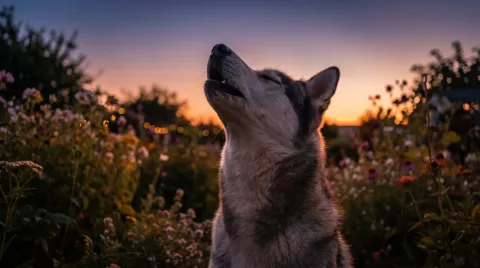
Why do dogs howl? Sirens, solitude and the wolf inside
The howl is long-distance radio inherited from wolves — and no, the siren isn't hurting your dog's ears. What each howl broadcasts, and the one kind that's a message for you.
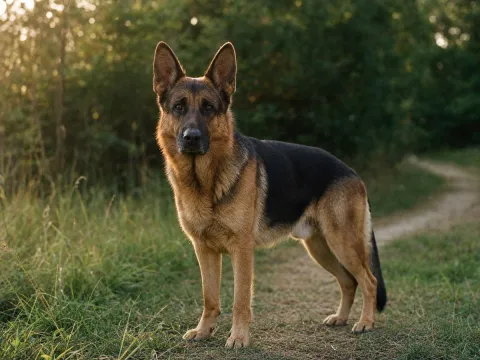
PAW Patrol breeds: every pup's real dog, from Chase to Tracker
Chase is a German Shepherd, Zuma is a Chocolate Labrador, and Skye's Cockapoo isn't a registered breed at all. The honest, canon breed behind every PAW Patrol pup.

Leash training a puppy, from first steps to real walks
A puppy's first collar and lead should feel like nothing at all. The gentle, reward-based route from wearing the gear indoors to a calm walk outside, and what to do differently for a natural puller.