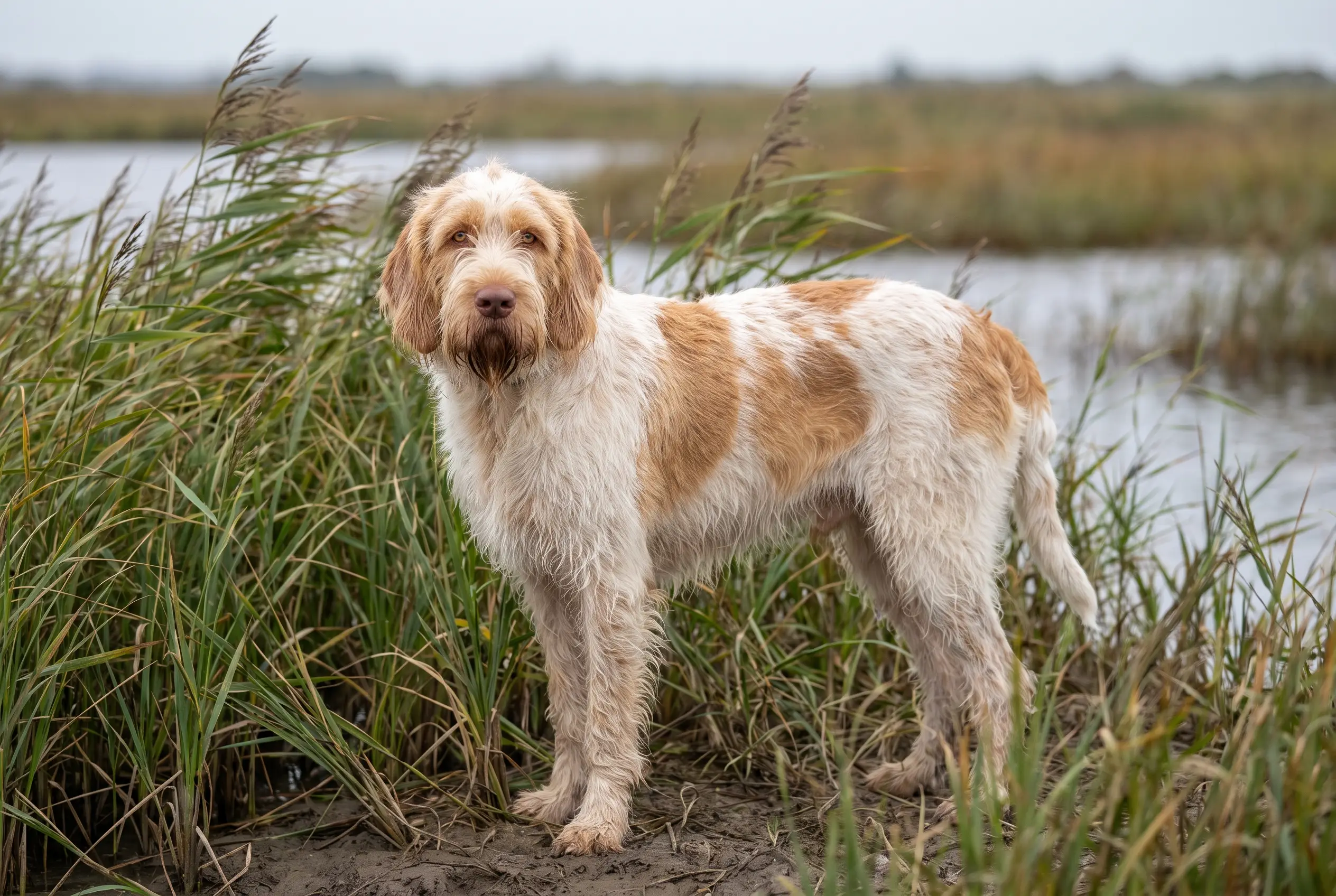
Spinone Italiano
The philosopher of gundogs — bearded, unhurried, impossible not to love.
Vital stats
| Size | Large · 58–70 cm |
| Weight | 28–39 kg |
| Life expectancy | 10–12 years |
| Energy | Moderate–high — 60 min/day |
| Shedding | Moderate |
| Coat | Dense, wiry single coat · white, white-orange, roan |
| Group | Sporting · FCI №165 / AKC |
| Origin | Piedmont, Italy |
| FCI group | 7 — Pointing Dogs · FCI 165 |
Breed traits
Friendliness
Care
Mind
The Spinone Italiano by the numbers
The Spinone Italiano facts owners search for most — price, lifespan, weight, shedding and colours, in one place.
Widely bred, so you can usually find a litter from a registered breeder without a long wait. Ongoing costs run high — more food, bigger doses at the vet, and pricier insurance.
We don't quote a single figure: the real price swings with breeder, region, bloodline and health testing — and a rescue costs a fraction of a breeder's litter. Adopting is almost always the cheapest route.
Temperament
An ancient Italian pointing griffon built for patient, methodical work in rough cover, the Spinone brings that same unhurried steadiness home. It is docile, deeply affectionate and famously good with children — a large dog with a soft mouth and a softer heart, whose stubborn streak surfaces only when rushed.
Habits & quirks
The beard delivery
Fresh from the water bowl, straight to your lap — a gift.
Eyebrow semaphore
Those expressive brows conduct entire conversations without a sound.
The thoughtful pause
Commands are received, considered, and executed in due course.
Leaning in
Thirty-odd kilograms of dog gently redistributed against your leg.
Care
| Exercise | An hour of steady daily activity — long sniffy walks and a chance to trot suit it better than sprints. |
| Grooming | Weekly brushing plus occasional hand-stripping; keep the beard and ear passages clean and dry. |
| Training | Gentle, patient and consistent — this soft breed sulks under pressure and shines with praise. |
| Health | Keep it lean for joints and check ears weekly; ask breeders about hip scores. |
Life expectancy
This breed has a typical life expectancy of 10–12 years.
Similar breeds
Breeds with a similar build and background — worth a look if this one isn't quite the fit.
Breeds that look like this
Common questions
Are Spinoni good family dogs?
Among the best of the large gundogs — patient, gentle and tolerant with children. They do want company, and mope if routinely left out of family life.
Do Spinoni drool?
More than average, especially after drinking — the beard collects water and shares it generously. Keep a towel by the bowl and your dignity elsewhere.
Are Spinoni easy to train?
They're willing but deliberate — expect thoughtful compliance rather than flashy obedience. Kind, consistent methods work; harshness simply shuts them down.
Does the Spinone Italiano shed a lot?
Moderately. The Spinone Italiano sheds a fair amount, steadily through the year with heavier seasonal patches. A weekly brush keeps most of the loose hair off your floors and clothes.
Is the Spinone Italiano hypoallergenic?
Not really. No dog is truly hypoallergenic, and the Spinone Italiano's shedding coat releases plenty of the dander that sets off allergies. If someone at home is allergic, this isn't the easiest breed to live with — spend time around one first.