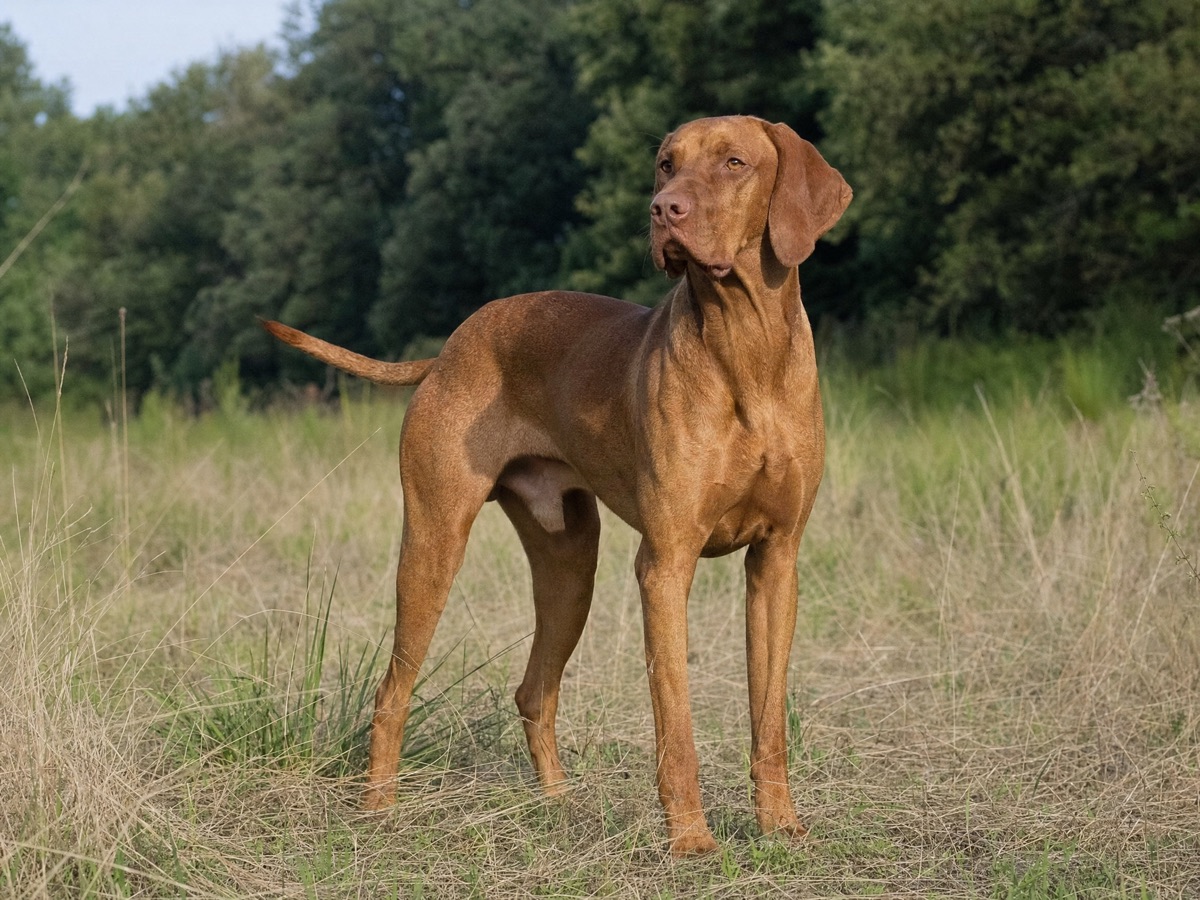
Vizsla
The golden 'velcro' gundog — elegant, affectionate, always touching you.
On these lists: Dogs for runners · Dogs for hunting · Dogs for hot weather · Dogs for hiking
Vital stats
| Size | Medium-large · 54–64 cm |
| Weight | 20–30 kg |
| Life expectancy | 12–14 years |
| Energy | Very high — 1–2 h/day |
| Shedding | Low-moderate, short hairs |
| Coat | Short smooth coat · golden rust |
| Group | Sporting · FCI №57 / AKC |
| Origin | Hungary |
| FCI group | 7 — Pointing Dogs · FCI 57 |
Breed traits
Friendliness
Care
Mind
The Vizsla by the numbers
The Vizsla facts owners search for most — price, lifespan, weight, shedding and colours, in one place.
Less common, so expect a waitlist and some travel to a reputable breeder — which pushes the price up. Ongoing costs run high — more food, bigger doses at the vet, and pricier insurance.
We don't quote a single figure: the real price swings with breeder, region, bloodline and health testing — and a rescue costs a fraction of a breeder's litter. Adopting is almost always the cheapest route.
Temperament
Bred by Hungarian nobility to point, track and retrieve while working within arm's reach of the hunter, the Vizsla fused athlete and companion into one dog. That wiring shows at home as boundless energy, rapid learning, a sensitive soul that wilts under harsh words — and an absolute requirement to be in the same room, ideally the same chair, as you.
Habits & quirks
The lean
If it can't be on you, it will be against you — full body weight, total trust.
Chair theft with eye contact
Your seat becomes its seat the moment you stand, and it will watch you notice.
The Vizsla whine
A conversational squeak-and-groan vocabulary reserved for stating needs and opinions.
Blanket engineering
Thin coat, no undercoat — it will tunnel under any blanket within reach.
Health
The Vizsla is a genuinely sound, athletic breed, and its biggest health risk is emotional rather than physical: this is a dog that can fall apart when left alone, so separation anxiety is the thing to plan for. On the body, it's deep-chested, so feed measured meals rather than one big bowl and learn the early signs of bloat. Keep it lean, keep it exercised, keep it company, and most of the risk takes care of itself.
Nutrition
| Exercise | One to two hours of hard running, retrieving or dog sports daily — a walk round the block doesn't register. |
| Company | Build alone-time tolerance gradually from puppyhood; this breed genuinely suffers in isolation. |
| Training | Brilliant and eager, but sensitive — positive methods and variety get world-class results. |
| Warmth | The single short coat gives little insulation; provide a coat in cold weather and soft bedding always. |
A Vizsla is all muscle and motion, so feed a good-quality diet matched to how hard it works and keep the ribs easy to feel — a lean Vizsla moves and ages better. Because the breed is deep-chested, split the day into measured meals rather than one large one, and leave a gap around hard exercise rather than feeding straight before or after a run.
Puppy guide
A Vizsla puppy is friendly, busy and desperate to be near you, and that closeness is the part to get ahead of. Build up alone-time in small, calm doses from the first week so it learns you always come back — this breed suffers genuinely in isolation. Keep exercise gentle while the joints are still forming, socialise early and often, and get it used to a coat and warm bedding, because the thin single coat gives almost no insulation.
Training
Vizslas are bright, eager and quick to learn, which makes training a pleasure — but they're sensitive, and harsh words shut them down fast. Keep it positive, varied and upbeat and you get world-class results; drill it like a drill sergeant and you get a worried dog. Alongside the training it really needs a real job and a hard daily run, because a tired, occupied Vizsla is a calm one.
Known health issues
No breed is problem-free. These are the conditions most worth knowing about for this breed — with what a good breeder screens for and what an owner watches. General guidance, not a substitute for your vet.
Hip dysplasia
A poorly fitting hip joint that wears early and can cause pain and arthritis, most common in larger breeds. Good breeders screen: Hip-scored parents (BVA/OFA/FCI). Watch for: Stiffness, a bunny-hop run, or reluctance on stairs.
Epilepsy
Recurring seizures with no other cause found, usually starting between one and five years old and running in specific lines. Good breeders screen: Avoid breeding a dog that has seizured or has close relatives who have. Watch for: Sudden collapse, jerking or paddling, drooling, and confusion afterward — film it for your vet if it happens.
Inherited eye disease
Progressive retinal atrophy and cataracts run in several breeds and can dim or take sight over time. Good breeders screen: Eye-tested parents and, where available, a DNA test for PRA. Watch for: Night-time bumping, cloudy eyes, or hesitation in dim light.
Life expectancy
Vizslas live 12–14 years. For an athletic dog of its size the Vizsla is hardy and long-lived, and the levers are simple: keep it lean, give it the hard daily exercise it was built for, and meet its need for company so stress doesn't wear it down. Feed measured meals with a deep chest in mind, buy from a breeder who health-tests, and a Vizsla spends very little of its life at the vet.
Popular Vizsla mixes
Vizsladoodle
A high-energy cross bred for a coat that sheds less. Expect the Vizsla's velcro affection and real exercise needs; coat type varies a lot from pup to pup.
Similar breeds
Breeds with a similar build and background — worth a look if this one isn't quite the fit.
Breeds that look like this
Common questions
Can Vizslas be left alone?
Not for long — they're prone to separation anxiety. They do best with company, a tired body, and gradual alone-time training.
How much exercise does a Vizsla need?
At least one to two hours of vigorous daily activity — running, retrieving or dog sports. A walk around the block won't be enough.
Are Vizslas good family dogs?
Outstanding, for active families — they're gentle, patient with children and deeply devoted. The commitment is real, though: this breed needs your time, your exercise hours and your sofa.
Does the Vizsla shed a lot?
Moderately. The Vizsla sheds a fair amount, steadily through the year with heavier seasonal patches. A weekly brush keeps most of the loose hair off your floors and clothes.
Is the Vizsla hypoallergenic?
Not really. No dog is truly hypoallergenic, and the Vizsla's shedding coat releases plenty of the dander that sets off allergies. If someone at home is allergic, this isn't the easiest breed to live with — spend time around one first.
Is the Vizsla easy to train?
Yes. The Vizsla is one of the more trainable breeds — quick to learn and keen to work with you, which makes reward-based training straightforward. Start early, keep it positive, and it picks things up fast.
Stories featuring this breed
All stories →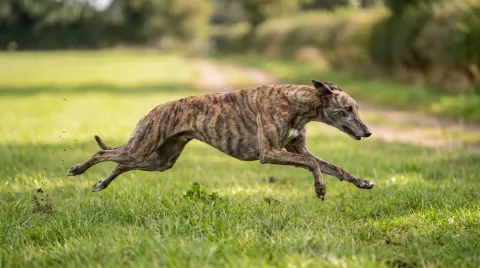
The fastest dog breeds, and how fast they really go
The Greyhound hits about 72 km/h — second only to the cheetah, and the winner over any real distance. Honest top speeds for the sighthounds and the surprises, plus how fast a Dobermann actually is.
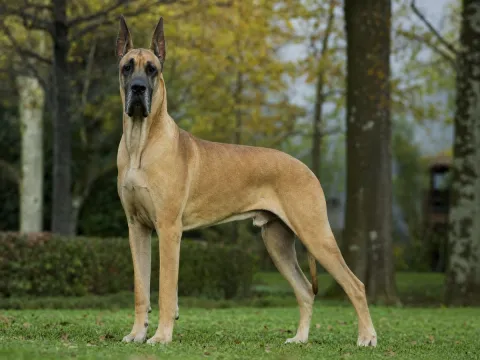
Cartoon dog breeds: what Scooby-Doo, Snoopy and Brian really are
Scooby is a Great Dane and Snoopy is a Beagle, but Clifford and Blue were never given a real breed. The honest, non-Disney roundup.