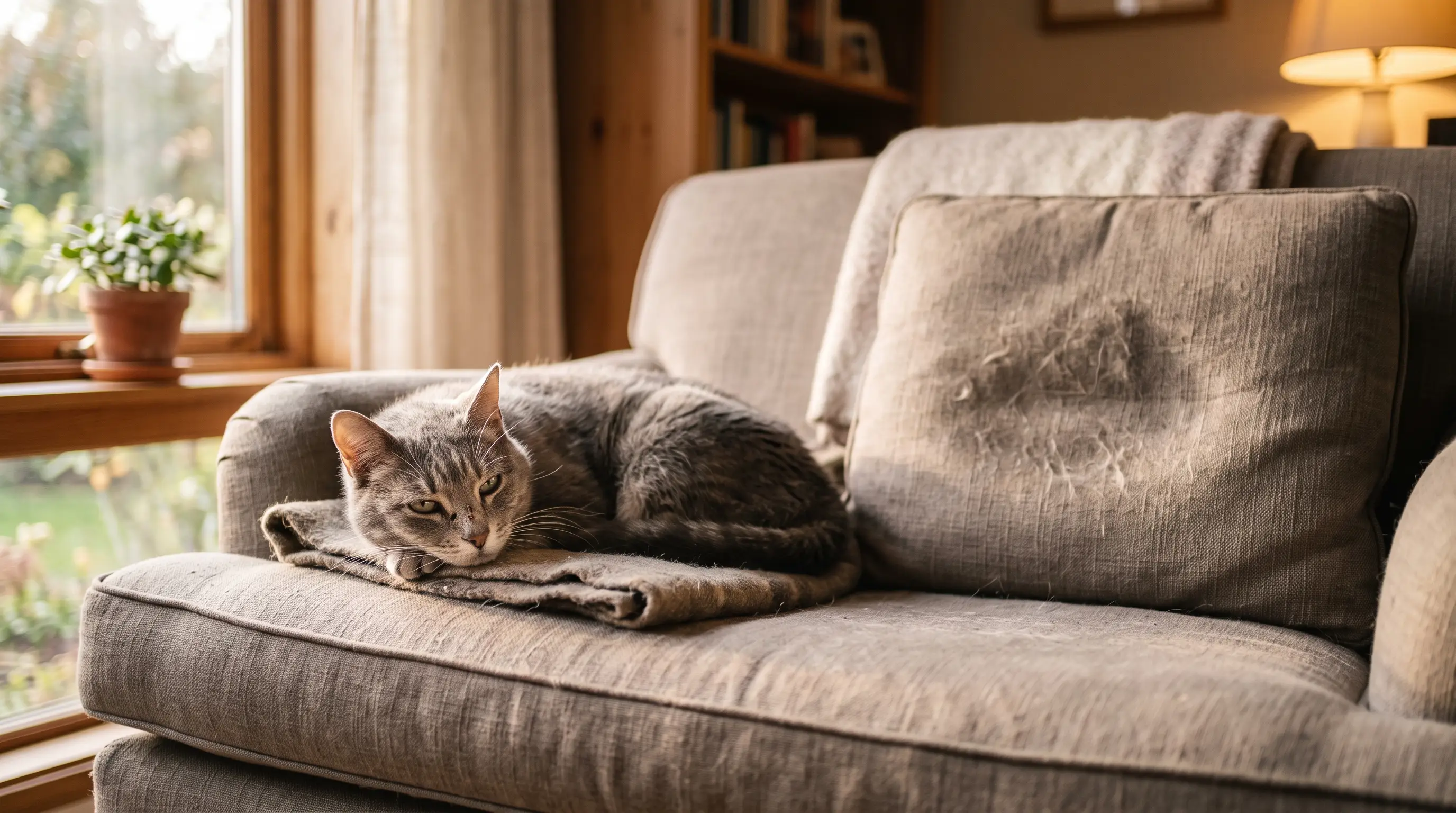
Do cats grieve? What loss looks like in a cat
A cat loses its housemate of ten years, and within days it's eating less, calling through the rooms at night, sleeping in the old spot by the radiator that was never its spot. Is that grief? The careful answer: cats demonstrably respond to loss — with measured changes in eating, sleeping, vocalising and searching — and whether the inner experience matches what we call grief is a question science can't reach. What it can reach is what helps. Here's what the research found, what feline mourning looks like from the outside, and how to steer a grieving household — your own grief included.
What the research actually found
The classic dataset is the ASPCA's Companion Animal Mourning Project from 1996: in households that lost one pet, about two-thirds of the surviving cats showed behaviour changes — most commonly eating less, vocalising more or differently, shifts in sleep location and duration, and increased clinginess or its opposite, withdrawal. Most cats returned to normal within weeks; the study's rule of thumb was that changes generally resolved inside six months. A 2016 study in New Zealand and Australia confirmed the same cluster across cats and dogs: more attention-seeking, more vocalising, checking the deceased companion's favourite places.
In 2024, researchers at Oakland University pushed further and found something the aloof-cat cliché wouldn't predict: cats that had lost a companion animal — including canine housemates — showed grief-adjacent behaviours that scaled with how closely bonded the pair had been. Sleeping more, eating less, seeking more human attention, searching. The honest scientific position stops at the boundary it can't cross: we can measure the behaviour, not the feeling. But the behaviour is real, it tracks the relationship, and it deserves to be taken seriously rather than dismissed as routine disruption.
What feline grief looks like
The signature is change from baseline, in a handful of areas at once. Appetite: eating less is the most common single sign, and the one that can turn dangerous — more on that below. Voice: some cats go quiet; more go loud, with a particular searching call — walking the rooms, calling, pausing, listening — that owners who've heard it don't forget. Territory: sleeping in the departed animal's spots, or avoiding them entirely; waiting at a door at the hour a person used to come home. Attachment: velcro behaviour in a formerly independent cat, or withdrawal in a formerly social one. Grooming can go both ways too — neglected into scruffiness or overdone into thin patches, the same stress signature covered in the stress signs owners miss.
Two honest caveats. First, some of what looks like mourning is disruption: the social map of the house has been redrawn, routines have collapsed, and your own grief is loud in every signal a cat reads — cats are acute readers of their people, as the attachment research shows. Second, in multi-cat homes, the survivor may also be renegotiating territory it used to share, which can look like anything from liberation to anxiety. None of these framings cancel the others. They stack.
What helps — and the one danger
Keep the scaffolding up: feeding times, play times, your own comings and goings, as unchanged as you can manage. Routine is the load-bearing wall of a cat's world, and it holds best when everything else has moved. Offer more contact but let the cat set the dose — sit nearby, be available, don't pursue; the respond-don't-initiate rule matters double now. Gentle play helps when the cat is willing; food can be warmed or hand-offered through the flat patch; and the departed animal's bedding is worth leaving in place for a while rather than laundering away the scent overnight — let the information fade at cat speed, not cleaning speed.
The one danger is anorexia. A grieving cat that stops eating isn't just sad — a cat that goes without food for even a few days can tip into hepatic lipidosis, a liver crisis that turns a behavioural problem into a medical emergency, and overweight cats are at the highest risk. The working rule: partial appetite for a few days, watch closely; forty-eight hours of eating nothing at all, call the vet — and mention the bereavement, because "grieving" and "ill" share a symptom list, and more than one medical problem has hidden under a mourning story. When the low mood itself drags past the weeks the research would predict, that too is a vet conversation.
The goodbye, and what comes after
Owners ask whether the surviving cat should see the body, and the honest answer is that evidence is thin in both directions — but behaviourists increasingly lean toward allowing it when circumstances permit. Cats live by information, and a housemate that vanishes without trace leaves an open file; some cats shown a deceased companion sniff briefly, walk away, and subsequently search less, while others show no interest at all. If it's practical and the death was peaceful, a few quiet minutes costs nothing. If it isn't practical, don't carry guilt — the scent fading from the territory tells the same story more slowly.
Then the question that arrives too early from well-meaning friends: a replacement. Resist the reflex. A grieving cat is the worst possible host for a newcomer — introductions run on confidence and stable territory, exactly what grief has suspended — and a new arrival often adds stress precisely when resilience is lowest. Let the household find its new baseline first, over weeks and sometimes months; if a companion later makes sense for this particular cat, run the full introduction protocol with extra patience. And if the survivor is elderly, factor in what senior cats actually want — which is often calm, warmth and their person, not a bouncing adolescent; the seniors shelf's guide to caring for an older cat covers reading that preference. Grief in a cat is real enough to respect and temporary enough to promise: with routine, patience and food that keeps going in, almost every cat comes back to itself.
Common questions
Do cats grieve when another pet dies?
They respond to loss in measurable ways: the ASPCA's 1996 mourning study found about two-thirds of surviving cats changed behaviour — eating less, vocalising more, sleeping differently, searching — and 2024 research found these changes scale with how bonded the pair was. Whether the inner experience is what humans call grief, science can't say; the behaviour itself is real and worth taking seriously.
How do I know if my cat is grieving?
Look for change from baseline across several areas at once: reduced appetite, a searching call through the rooms, sleeping in or avoiding the departed companion's spots, new clinginess or new withdrawal, and grooming that's neglected or overdone. Most changes ease within weeks; the old rule of thumb is resolution within six months.
How long do cats grieve?
In the ASPCA study, most affected cats returned to normal within weeks, and essentially all within six months. If low mood, poor appetite or withdrawal persist beyond a few weeks — or worsen — involve the vet, because illness and grief share a symptom list.
What can I do to help a grieving cat?
Hold the routine steady — feeding, play and your own schedule are the load-bearing structure. Offer more presence but let the cat set the dose, keep the departed animal's bedding around while the scent fades naturally, tempt appetite with warmed or hand-offered food, and watch eating like a hawk. Time does most of the rest.
Should I let my cat see a deceased companion?
Evidence is thin, but many behaviourists now lean toward allowing it when practical and peaceful: some cats sniff briefly and search less afterwards, others show no interest, and harm hasn't been demonstrated. If it isn't possible, the fading scent tells the cat the same story more slowly — don't carry guilt over it.
Should I get another cat after one dies?
Not right away. A grieving cat has suspended exactly the confidence and territorial stability that introductions depend on, and a newcomer often adds stress at the lowest-resilience moment. Let the household reach its new baseline over weeks or months first — then decide based on this cat, not the empty space, and use the full slow introduction protocol if you proceed.
More in Cats
Why is my cat spraying? What it means and how to stop it
Spraying isn't a litter-box failure — it's a message about territory, written in urine. How to tell it from peeing, what's behind it, and the fixes that hold.
Why is my cat aggressive? Causes and how to calm it
Cat aggression isn't a personality — it's a diagnosis with about six usual suspects, and each one has a different fix. Work through them in order and the biting usually explains itself.
Why do cats hiss? What it means and what to do
A hiss is not an attack — it's the thing a cat does to avoid one. What the sound actually is, what triggers it, and why the polite answer is always to back off.
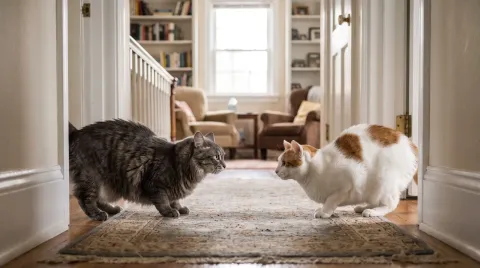
Why are my cats fighting? How to restore the peace
Two cats that shared a bed for years can turn into enemies in an afternoon. What breaks a feline relationship, why 'letting them fight it out' entrenches the war, and the reset that works.
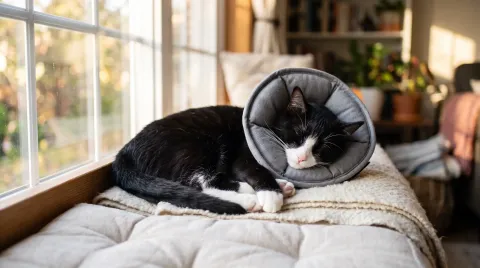
How neutering changes cat behavior — and what it won't fix
Neutering deletes the hormone-driven behaviours — the roaming, the spraying, the 3am opera — and touches almost nothing else. What changes, what doesn't, and when.
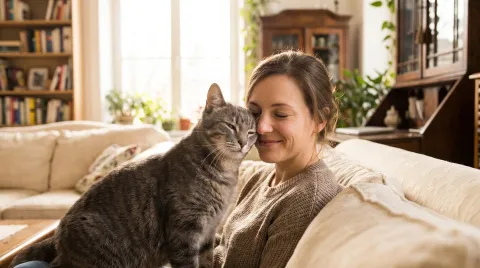
Do cats love their owners? The kidnap experiment says yes
Science ran the same attachment test on cats that it runs on human infants, and 64% passed. What the secure-base test found, why one earlier study disagreed, and how a cat actually says it.