Dog health & safety
Vet-checkable guides to keeping cats and dogs well — litter, parasites, hidden hazards, travel and the warning signs worth knowing.
Articles
Hydration for dogs and cats: why it matters, and why cats barely drink
Cats are built to run a little dry, and it quietly damages their kidneys and bladder. How much water dogs and cats really need, and how to get more into a reluctant drinker.

Flat faces, hard breathing: the truth about brachycephalic dogs
A pug's snore is a warning, not a feature. What BOAS is, which breeds it affects, and what a responsible owner and breeder actually do about it.

Foxtails: the summer grass seed that burrows into pets
Foxtail grass seeds catch in fur and travel one way—inward. Here's how to spot them on a cat or dog, and stop them.
Fleas, ticks and worms: the parasite basics
The parasites every cat and dog owner meets, what they actually do, and why prevention beats treatment every time.
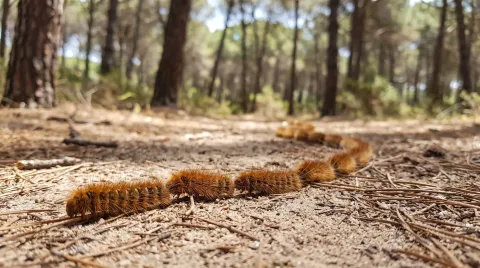
Processionary caterpillars: an emergency for dogs
The caterpillar that can cost a dog part of its tongue, why the first six hours decide the outcome, and how to stay clear of it in season.

Sandflies and leishmaniasis: what protects a dog
The insect you never hear, the disease it carries, and the reason your flea and tick product is probably not covering it.
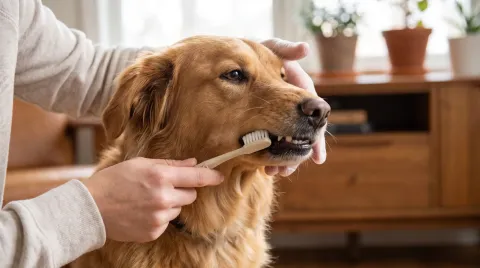
Pet dental care: the health problem owners miss
The most common health problem in adult pets is also the most missed. Here's what dental disease really looks like, and how to actually prevent it.
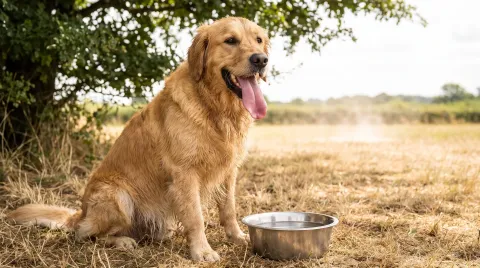
Dog heatstroke: signs, first aid and prevention
Dogs cool themselves by panting, not sweating, so summer heat overwhelms them fast. Here's how to spot heatstroke and act in the minutes that matter.
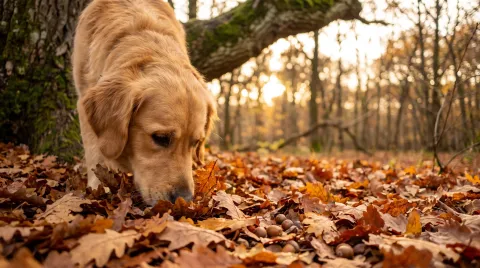
Autumn dangers for dogs: acorns, conkers and mushrooms
Autumn puts three scavenging hazards on the ground — acorns, conkers and wild mushrooms — plus rat bait and fermenting fruit. What's toxic, what the warning signs are, and when to call the vet.

Winter pet dangers: antifreeze, road salt and chocolate season
Antifreeze is the winter emergency — sweet, deadly and quick. Plus gritted-salt paws, the festive-food gauntlet and cats sheltering in warm car engines. What to watch and when it's urgent.
The pet danger calendar: what to watch, month by month
Most pet hazards are seasonal and many are regional. Here's the year mapped out — when heatstroke, grass seeds, processionary caterpillars, antifreeze and the rest actually peak, and which ones your area even has.

Snake bites in dogs: first aid, symptoms and prevention
A calm, fast response is what actually saves a bitten dog. What to do in the first minutes, the myths that cost time, and which snakes matter across Europe.

Why is my dog vomiting? Causes and when to see a vet
The common reasons dogs are sick, what you can safely do at home for a one-off, and the warning signs that mean call the vet now rather than wait.

Why is my dog limping? Causes and when to see a vet
From a stone in the paw to a cruciate injury — the common reasons dogs go lame, what rest can and cannot fix, and the signs that mean see a vet.

Why does my dog have diarrhoea? Causes and when to see a vet
Most dog diarrhoea is a passing upset that settles in a day or two. Here is the safe home approach, and the signs — blood, lethargy, a poorly puppy — that mean call the vet.
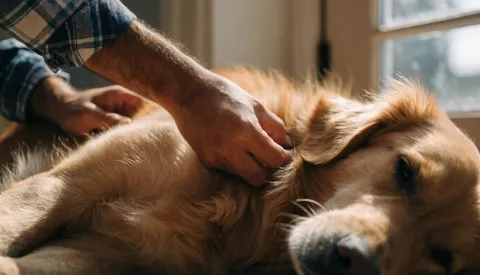
Why is my dog scratching so much? Causes and when to see a vet
Fleas, allergies, mites or dry skin — the common reasons dogs itch, what helps at home, and the point where scratching turns into a problem that needs a vet.

Why is my dog coughing? Causes and when to see a vet
Kennel cough, heart disease, an irritated windpipe — what a dog cough can mean, what helps at home, and the breathing signs that make it an emergency.

Why is my dog shaking or trembling? Causes and when to see a vet
Cold, fear, pain, low blood sugar or poisoning — the reasons dogs shiver and tremble, how to tell a shiver from a seizure, and when trembling is an emergency.
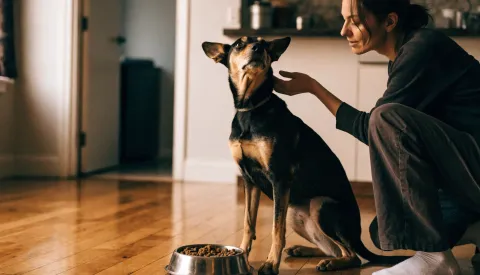
Why is my dog not eating? Causes and when to see a vet
A skipped meal in a happy dog is rarely a worry; a real change in appetite often is. The common reasons dogs go off food, and when a lost appetite needs a vet.
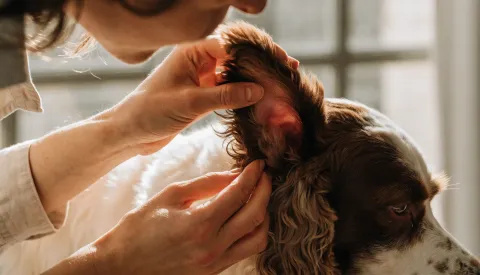
Dog ear infections: signs, causes and when to see a vet
Head-shaking, scratching and a smelly ear usually mean an ear infection. Why they happen, what helps at home, and why the first one always needs a vet.
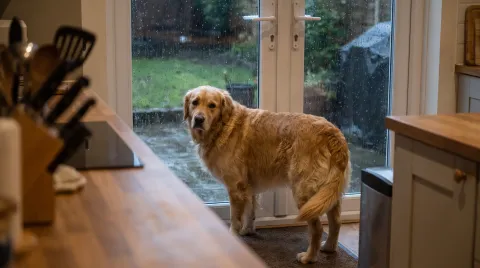
Why is my dog peeing in the house? Causes and how to stop it
An adult dog that starts having accidents isn't being defiant — it's giving you a symptom. The medical checklist, the marking-vs-emptying distinction, and the retraining plan that works.