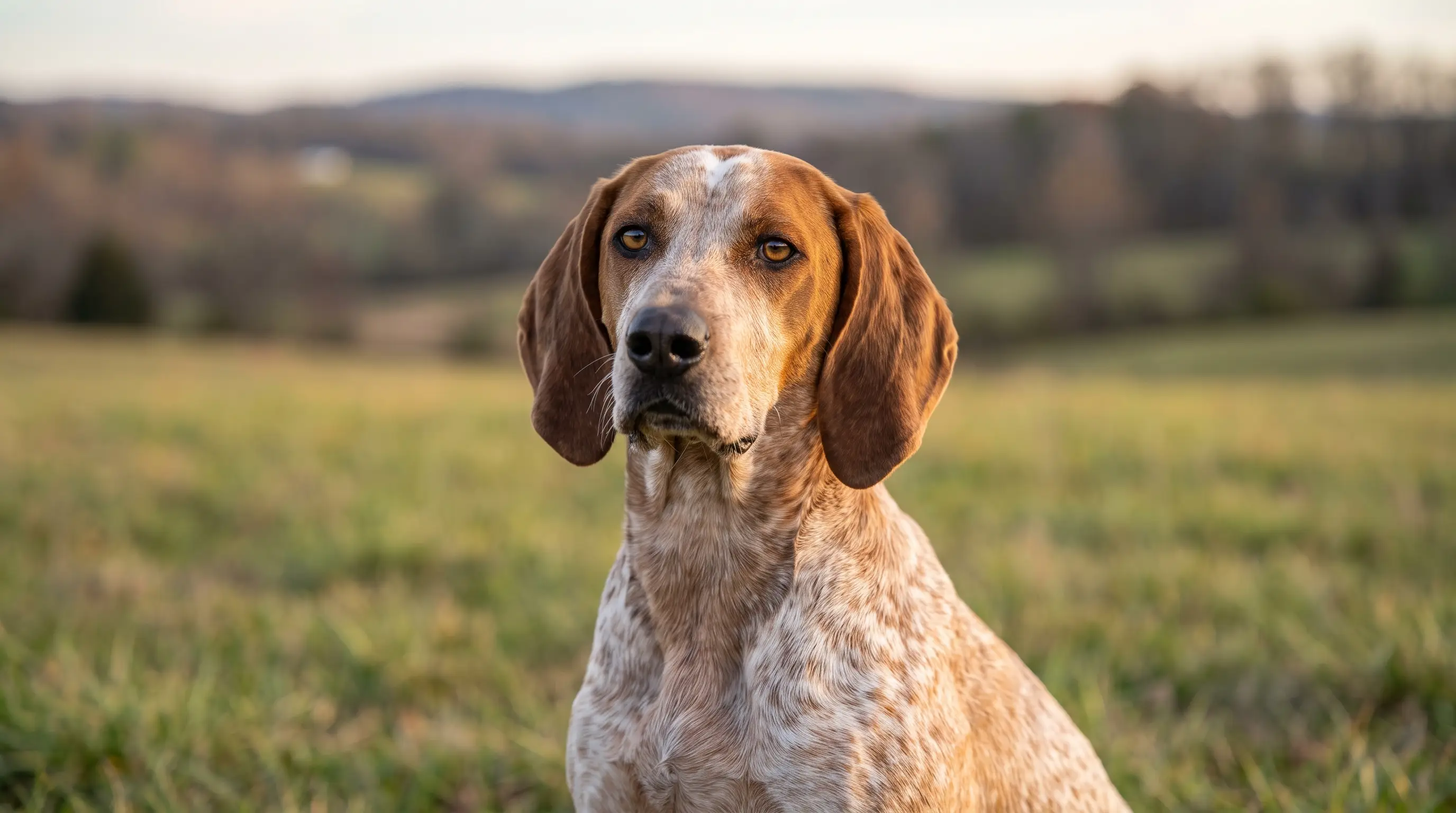
American English Coonhound
The redtick songster — fox by day, raccoon by night.
Vital stats
| Size | Large · 58–66 cm |
| Weight | 20–30 kg |
| Life expectancy | 11–12 years |
| Energy | High — 60–90 min/day |
| Shedding | Moderate, year-round |
| Coat | Short hard coat · redtick, bluetick, tricolour |
| Group | Hound · AKC |
| Origin | Southern United States |
Breed traits
Friendliness
Care
Mind
The American English Coonhound by the numbers
The American English Coonhound facts owners search for most — price, lifespan, weight, shedding and colours, in one place.
Widely bred, so you can usually find a litter from a registered breeder without a long wait. Ongoing costs run high — more food, bigger doses at the vet, and pricier insurance.
We don't quote a single figure: the real price swings with breeder, region, bloodline and health testing — and a rescue costs a fraction of a breeder's litter. Adopting is almost always the cheapest route.
Temperament
Bred down from colonial 'Virginia Hounds' to run fox by day and tree raccoons by night, this is a hound with two shifts and one setting: forward. At home it's mellow, affectionate and pack-friendly — until a scent crosses its nose, at which point your plans and its plans quietly diverge.
Habits & quirks
Nose first
A fresh trail across the path ends the walk you planned; the one it plans begins.
The treeing instinct
Squirrels are chased to a trunk and announced at full, triumphant volume.
Professional lounging
After a proper run, it folds into the sofa like it pays rent.
The coonhound bawl
Not a bark but a song — long, ringing and audible three fields away.
Health
The American English Coonhound is a hardy, athletic hound without a long list of breed-specific problems, so most of the care is the ordinary kind done well. The one spot to watch is the ears: long and low, they hang over the canal and trap warm, damp air, exactly what an infection wants — check them weekly and clean them when they need it. Beyond that, the biggest health factor is the nose. A coonhound that catches a scent will follow it through, under or over a fence and onto a road, so secure containment is a genuine safety issue, not a convenience. Keep him lean, keep him moving and keep the ears dry.
Nutrition
| Exercise | Sixty to ninety minutes daily, ideally with scent games or a jogging partner. |
| Containment | A caught scent outranks any fence line — make it high, solid and dig-proof. |
| Training | Patient, food-driven and scent-flavoured; recall must be trained early and never fully trusted. |
| Ears | Long hanging ears trap moist air — check and clean weekly to head off infections. |
This is a racy, tireless hound built to run for hours, and it eats to match — but only when it is actually running. Feed to the dog in front of you: an active hunting or jogging season burns far more than a quiet week, and the ration should move with it. Weigh the meals rather than filling the bowl by eye, fold any training treats into the day's total, and aim for ribs you can feel under the short coat. A lean coonhound moves better and lasts longer.
Puppy guide
A coonhound puppy is sweet, sociable and busy, and the habits you build now are the ones you live with for a decade. Two jobs matter most early. First, containment and recall: teach coming back as a happy, well-paid game long before the nose takes over, and never fully trust it once it does — a long line and a secure garden are your safety net. Second, get him used to having his ears handled and cleaned from the start, so weekly checks are routine rather than a wrestling match. Socialize him widely, give the growing body sensible rather than punishing exercise, and let him meet other dogs — this is a pack breed, happiest in company.
Training
Train a coonhound with food, patience and a sense of humour. He is bright and genuinely wants to work with you, but he was bred to follow a scent independently for miles, so obedience competes with the single most rewarding thing in his world: his nose. Start early, keep sessions short and rewarding, and pay recall generously every single time, because a cheap reward will always lose to a fresh trail. Train recall as if his life depends on it, since one day on a road it might, and manage the rest with secure fencing rather than hoping the training holds.
Life expectancy
American English Coonhounds live 11–12 years. The American English Coonhound is a robust, long-working breed, and you keep it healthy into old age the same way you keep it happy: real daily exercise, a lean weight it carries easily, ears checked and cleaned every week, and a secure garden so the nose never leads it somewhere it shouldn't be. Give it a job for its body and its mind, and it stays sound for years.
Similar breeds
Breeds with a similar build and background — worth a look if this one isn't quite the fit.
Breeds that look like this
Common questions
Are American English Coonhounds good family pets?
For active, tolerant households, yes — they're sweet, sociable and gentle with children. They struggle in flats and quiet neighbourhoods because of voice and mileage needs.
Do American English Coonhounds bark a lot?
They bawl rather than bark, loudly and often, especially when a scent or squirrel demands commentary. It's bred-in and managed, not removed.
How much exercise does this coonhound need?
More than most families expect — over an hour daily with real chances to use its nose. A tired coonhound is a famously easy housemate.
Does the American English Coonhound shed a lot?
Moderately. The American English Coonhound sheds a fair amount, steadily through the year with heavier seasonal patches. A weekly brush keeps most of the loose hair off your floors and clothes.
Is the American English Coonhound hypoallergenic?
Not really. No dog is truly hypoallergenic, and the American English Coonhound's shedding coat releases plenty of the dander that sets off allergies. If someone at home is allergic, this isn't the easiest breed to live with — spend time around one first.
Is the American English Coonhound easy to train?
Reasonably. The American English Coonhound is trainable with consistency and rewards, though it isn't the quickest study. Keep sessions short and positive, and be patient with the basics like recall.