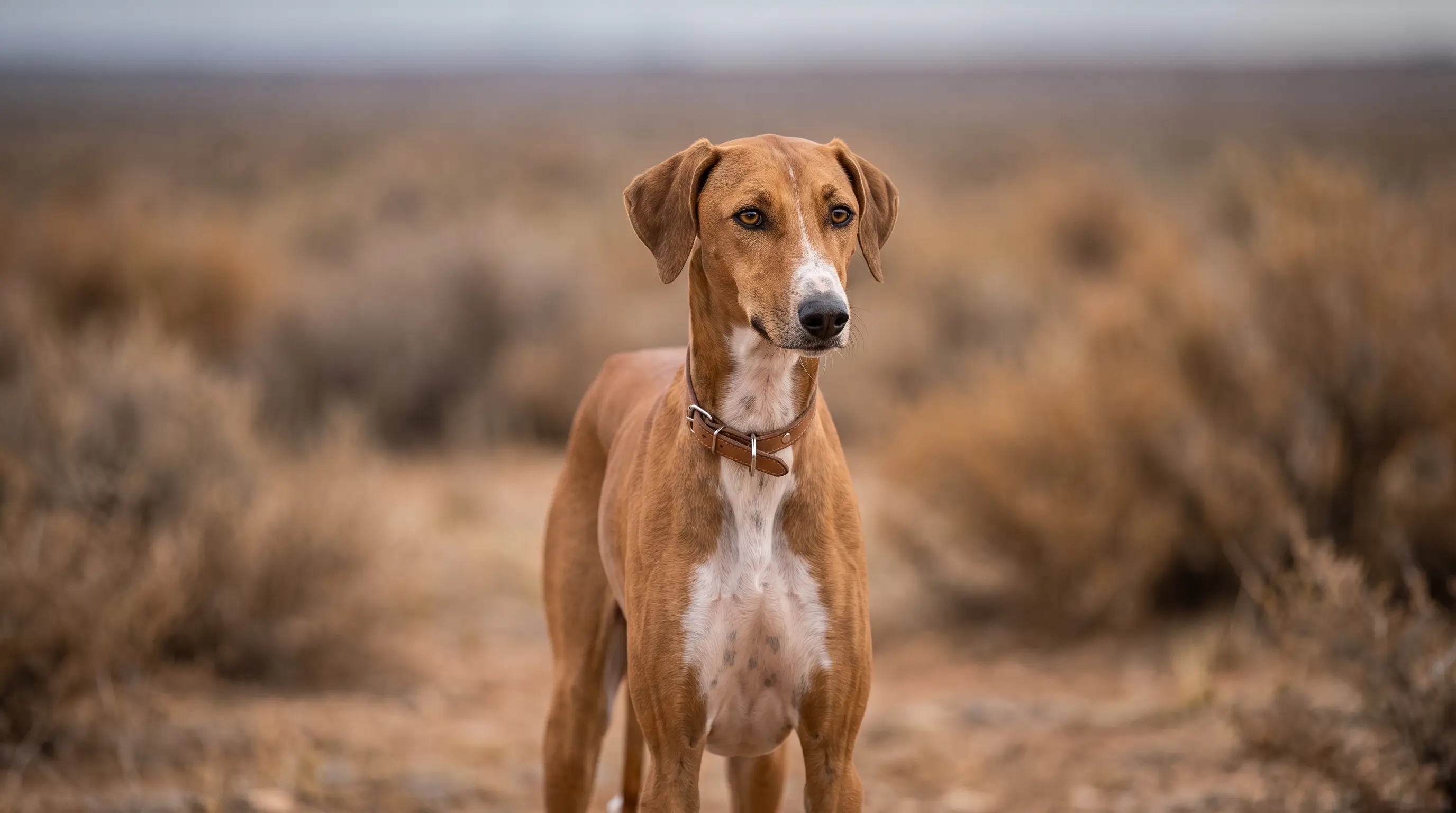
Azawakh
A Sahelian sighthound of almost impossible elegance — desert wind on four legs.
Vital stats
| Size | Large · 60–74 cm |
| Weight | 15–25 kg |
| Life expectancy | 12–15 years |
| Energy | Moderate — sprints, then sofas |
| Shedding | Very low |
| Coat | Fine short coat · fawn to dark red, brindle, white markings |
| Group | Hound · FCI №307 / AKC |
| Origin | Sahel — Mali, Niger, Burkina Faso |
| FCI group | 10 — Sighthounds · FCI 307 |
Breed traits
Friendliness
Care
Mind
The Azawakh by the numbers
The Azawakh facts owners search for most — price, lifespan, weight, shedding and colours, in one place.
Less common, so expect a waitlist and some travel to a reputable breeder — which pushes the price up. Plan for steady ongoing costs — mid-range food, routine vet care and insurance.
We don't quote a single figure: the real price swings with breeder, region, bloodline and health testing — and a rescue costs a fraction of a breeder's litter. Adopting is almost always the cheapest route.
Temperament
For centuries the Azawakh lived inside Tuareg camps as guardian and hunting partner — a sighthound with a watchdog's soul. It offers deep, quiet devotion to its family and near-total indifference to everyone else. Handle it gently: this proud, touch-sensitive breed shuts down under force and blossoms under trust.
Habits & quirks
Chooses its people
Affection is rationed, deliberate and unforgettable once granted.
Solar powered
Seeks out every sunbeam; on cold days, a coat is not optional.
Sighthound reflex
Anything small and fleeing will be chased — off-lead freedom needs fenced space.
Camp guardian
Unlike most sighthounds it patrols and announces — strangers are noted from far off.
Health
The Azawakh is a lean, healthy desert sighthound, and the first thing to understand is that lean is correct — the breed is meant to be spare enough that the hip bones sit higher than the withers and show plainly. In the Sahel that outline reads as fitness, not neglect, so don't let anyone fatten one up to look 'better'. What this build does need is protection from cold: thin skin and no real fat layer mean an Azawakh feels the chill, so a winter coat outdoors and soft, warm bedding are basic care rather than pampering. Buy from a breeder who health-tests, keep him warm and lean, and you have a hardy dog.
Nutrition
| Exercise | Daily walks plus regular sprint sessions in a securely fenced space |
| Training | Gentle, reward-based methods only — this breed does not forgive rough handling |
| Warmth | Thin skin and no fat layer: winter coats outdoors, soft bedding always |
| Socialisation | Broad, positive exposure when young, or natural aloofness can harden into fearfulness |
Feed for a lean, running sighthound and hold your nerve about it — an Azawakh in good condition shows its hip bones and last ribs, and that is the shape the breed is built to be, not a dog you need to 'fill out'. Good muscle over that light frame matters far more than covering, so a diet that keeps him fit to sprint is the right one. If you're ever unsure what fit looks like on this breed, ask the breeder or your vet rather than comparing him to a Labrador.
Puppy guide
An Azawakh puppy is sensitive from the start, and how you handle these early months decides how trusting the adult turns out. Socialise broadly and gently — wide, positive experiences, never force — because the breed's natural reserve can harden into fearfulness if a puppy is pushed or frightened. Let the growing body run and sprint in safe, fenced space rather than pound pavement, keep him warm, and build the whole relationship on trust: an Azawakh remembers rough handling and does not forgive it easily.
Training
The Azawakh trains on trust and little else — this is a proud, touch-sensitive sighthound that shuts down under force and opens up under patience, so gentle, reward-based methods are the only ones that work. Keep it low-pressure and build the bond first; a dog that has chosen you will do a great deal for you, and one that hasn't will simply look through you. Respect the hardware you can't train away, too: the prey drive is absolute, so a solid recall is worth every minute, but a securely fenced space is what actually keeps a small, fleeing animal safe.
Life expectancy
Azawakhs live 12–15 years. The Azawakh is a naturally lean, long-lived sighthound, and you keep it at the top of that range by respecting what the breed is: a lean, fit weight rather than a fattened one, warmth against a cold its thin coat can't handle, gentle handling, and a breeder who health-tests. Kept that way, it ages as elegantly as it lives.
Similar breeds
Breeds with a similar build and background — worth a look if this one isn't quite the fit.
Breeds that look like this
Common questions
Is the Azawakh a good family dog?
In calm, respectful households, yes — devoted and gentle with its own people. It is not a boisterous playmate and dislikes rough handling.
How rare is the Azawakh?
Genuinely rare — only a handful of litters are born in most Western countries each year. Expect a long wait, and possibly travel, to find one.
Can Azawakhs live with cats?
Sometimes, if raised together indoors, but the chase instinct outdoors is absolute. Never trust one off-lead near small animals.
Does the Azawakh shed a lot?
Not much. The Azawakh is a low-shedding breed, so loose hair around the home stays minimal. It still needs regular grooming, but you won't be fighting drifts of fur.
Is the Azawakh hypoallergenic?
No dog is truly hypoallergenic, but the Azawakh comes closer than most: its low-shedding coat releases less of the dander that triggers allergies. Many allergy sufferers manage well with this breed, but spend time around one before committing.
Is the Azawakh easy to train?
They can be a challenge. The Azawakh is intelligent but independent, and would rather make its own decisions than take orders. Reward-based training and patience work best; expect recall in particular to take time.
Stories featuring this breed
All stories →
National dog breeds: how a dog becomes a country's symbol
A nation doesn't just adopt a breed. Somewhere there's paperwork, a patron country, and an official standard. Here's the machinery, and the cases that actually hold up.
The village dog: the real default, and why your breed is the odd one out
Most dogs on Earth are free-ranging scavengers, not purebred pets. The breed is the recent human invention sitting on top of a much older, stabler kind of dog.
Seven groups, ten groups, three answers: how dog breeds get sorted
Kennel clubs sort several hundred breeds into a handful of groups. Here is how those lines were drawn, why the AKC's seven don't match the FCI's ten, and why the Standard Schnauzer belongs to three groups at once.