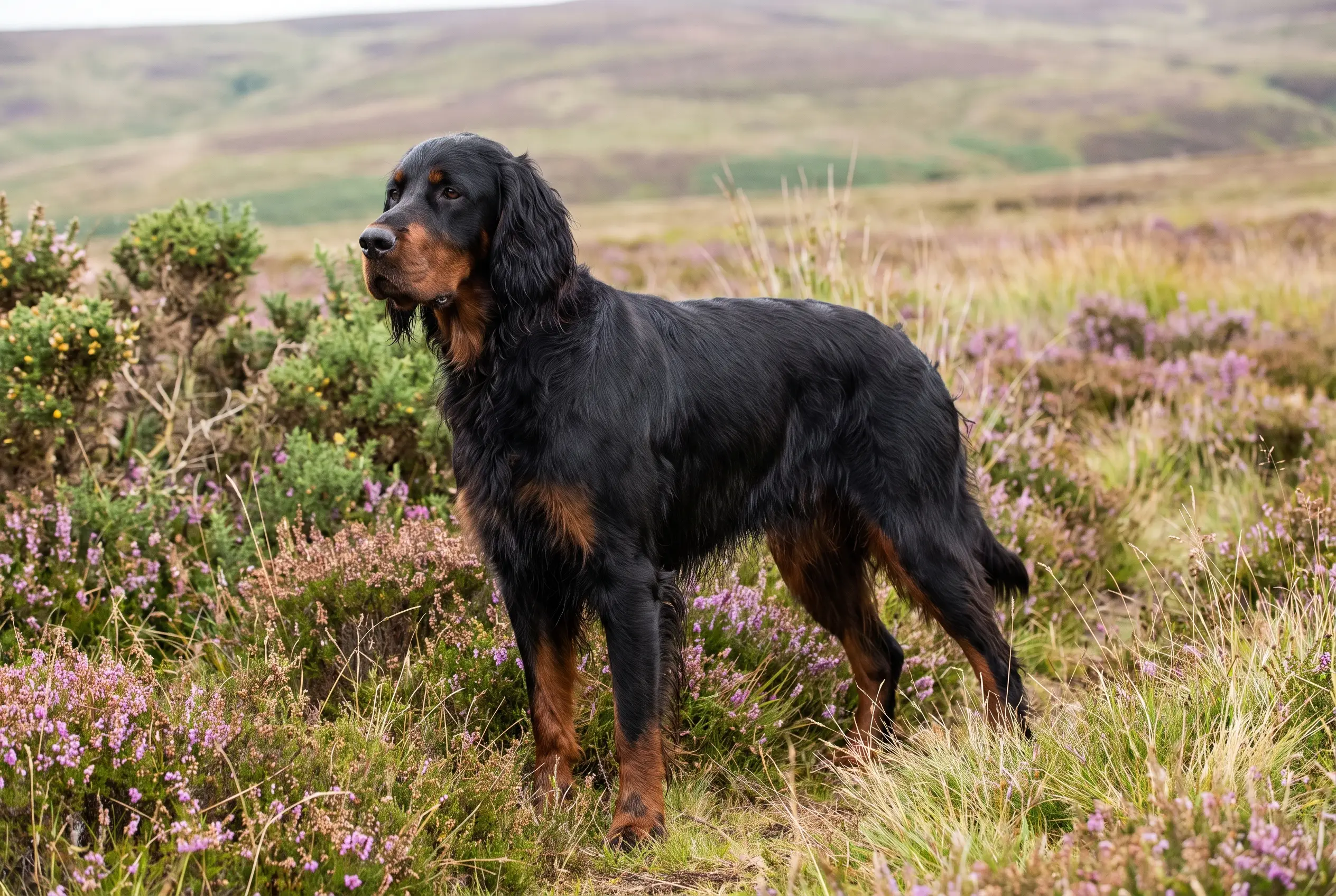
Gordon Setter
The black-and-tan aristocrat of the Highlands — beauty, brains and bird sense.
Vital stats
| Size | Large · 58–66 cm |
| Weight | 20–36 kg |
| Life expectancy | 12–13 years |
| Energy | High — 90+ min/day |
| Shedding | Moderate, seasonal |
| Coat | Silky feathered coat · black & tan |
| Group | Sporting · FCI №6 / AKC |
| Origin | Scotland |
| FCI group | 7 — Pointing Dogs · FCI 6 |
Breed traits
Friendliness
Care
Mind
The Gordon Setter by the numbers
The Gordon Setter facts owners search for most — price, lifespan, weight, shedding and colours, in one place.
Widely bred, so you can usually find a litter from a registered breeder without a long wait. Ongoing costs run high — more food, bigger doses at the vet, and pricier insurance.
We don't quote a single figure: the real price swings with breeder, region, bloodline and health testing — and a rescue costs a fraction of a breeder's litter. Adopting is almost always the cheapest route.
Temperament
Developed at the Duke of Gordon's castle to work Scotland's grouse moors, this setter trades a little of its cousins' flash for stamina and steadiness. At home that means an affectionate, sometimes comically devoted companion that matures slowly — expect puppy brain in an adult body until three or so — and turns instantly serious the moment a bird moves.
Habits & quirks
The moor sweep
Off lead, a Gordon quarters the ground in wide, purposeful arcs — the moor is wherever it happens to be walking.
Late bloomer
Gordons stay gloriously puppyish for years; dignity arrives around age three, and only partially.
The lean and gaze
Full bodyweight against your leg, amber eyes locked on yours — affection, Gordon-style.
Feather collection
Those elegant leg feathers gather burrs, mud and half the countryside on every outing.
Health
The Gordon Setter's health headline is bloat: this is a big, deep-chested breed with real risk, so this is the one every owner must take seriously. Feed two or three smaller meals rather than one large one, keep things calm for an hour either side of eating rather than exercising on a full stomach, and learn the emergency signs — a swollen, hard belly and unproductive retching mean the vet, now. Beyond that, start with a breeder who health-tests their lines, keep him lean and well-exercised, and the Gordon is a hardy, hard-working dog.
Nutrition
| Exercise | Ninety minutes-plus daily, ideally with free running — this breed was made for all-day moorland work, not garden potters. |
| Training | Willing but bird-obsessed: build recall early and keep sessions upbeat through the long adolescence. |
| Grooming | Brush and comb the feathering weekly to prevent mats, with occasional tidying of ears and feet. |
| Health | A deep-chested breed with real bloat risk — feed split meals, avoid exercise around mealtimes, and know the emergency signs. |
Feed the Gordon Setter to its considerable workload — the heaviest of the setters was built for all-day work on the moor, and a properly exercised one eats like it. Weigh the meals, count the training treats into the day's total, and keep him lean and athletic: extra weight helps neither the joints nor the stamina this breed lives on. Because the Gordon is deep-chested and at real risk of bloat, split the food into two or three meals and keep it calm around feeding — never one big bowl bolted before a run.
Puppy guide
A Gordon Setter puppy comes with a famously long adolescence — expect puppy brain in an ever-larger body until around three — so patience is the whole game in the first couple of years. Socialise him widely, keep training upbeat and consistent through the daft phase, and build a rock-solid recall early, well before the instinct to range after birds outweighs his interest in you. Keep hard exercise light while the joints are forming, feed split meals from the start, and let the silliness be part of the fun rather than a problem to fix.
Training
Willing, affectionate and thoroughly bird-obsessed, the Gordon Setter is a pleasure to train as long as you plan around a long adolescence and a powerful nose. Build recall from puppyhood and keep proofing it — the instinct to range wide and follow a bird will outrun a half-learned recall every time. Keep sessions upbeat and consistent through the years of puppy brain, reward generously, and give that working nose something real to do. Do the early work and the adult Gordon is a superb, devoted companion in the field and at home.
Life expectancy
Gordon Setters live 12–13 years. The Gordon Setter is a hardy sporting breed, and you keep it at the top of its range the way you keep it happy: lean weight, meals split across the day against bloat, a breeder who health-tests, and enough real, free-running exercise to satisfy a dog built for the moor.
Similar breeds
Breeds with a similar build and background — worth a look if this one isn't quite the fit.
Breeds that look like this
Common questions
Are Gordon Setters good family dogs?
Very — they're affectionate, patient and deeply attached to their people. Their size and prolonged bounciness suit families with older children and space to move.
How are Gordon Setters different from Irish Setters?
The Gordon is heavier, steadier and a touch more reserved with strangers, in black-and-tan rather than red. Both need substantial exercise, but the Gordon was bred more for stamina than speed.
Can Gordon Setters be let off the lead?
Only with a well-proofed recall — the instinct to range and follow birds is powerful. Train recall from puppyhood and choose safe, open spaces away from roads.
Does the Gordon Setter shed a lot?
Moderately. The Gordon Setter sheds a fair amount, steadily through the year with heavier seasonal patches. A weekly brush keeps most of the loose hair off your floors and clothes.
Is the Gordon Setter hypoallergenic?
Not really. No dog is truly hypoallergenic, and the Gordon Setter's shedding coat releases plenty of the dander that sets off allergies. If someone at home is allergic, this isn't the easiest breed to live with — spend time around one first.
Is the Gordon Setter easy to train?
Reasonably. The Gordon Setter is trainable with consistency and rewards, though it isn't the quickest study. Keep sessions short and positive, and be patient with the basics like recall.