Dog behaviour problems: diagnose first, then fix
Every guide here works the way a behaviourist would: rule out the medical cause, find the real driver — fear, pain, frustration, unspent energy — then change that, never just the symptom.
Start here

Everything in this collection

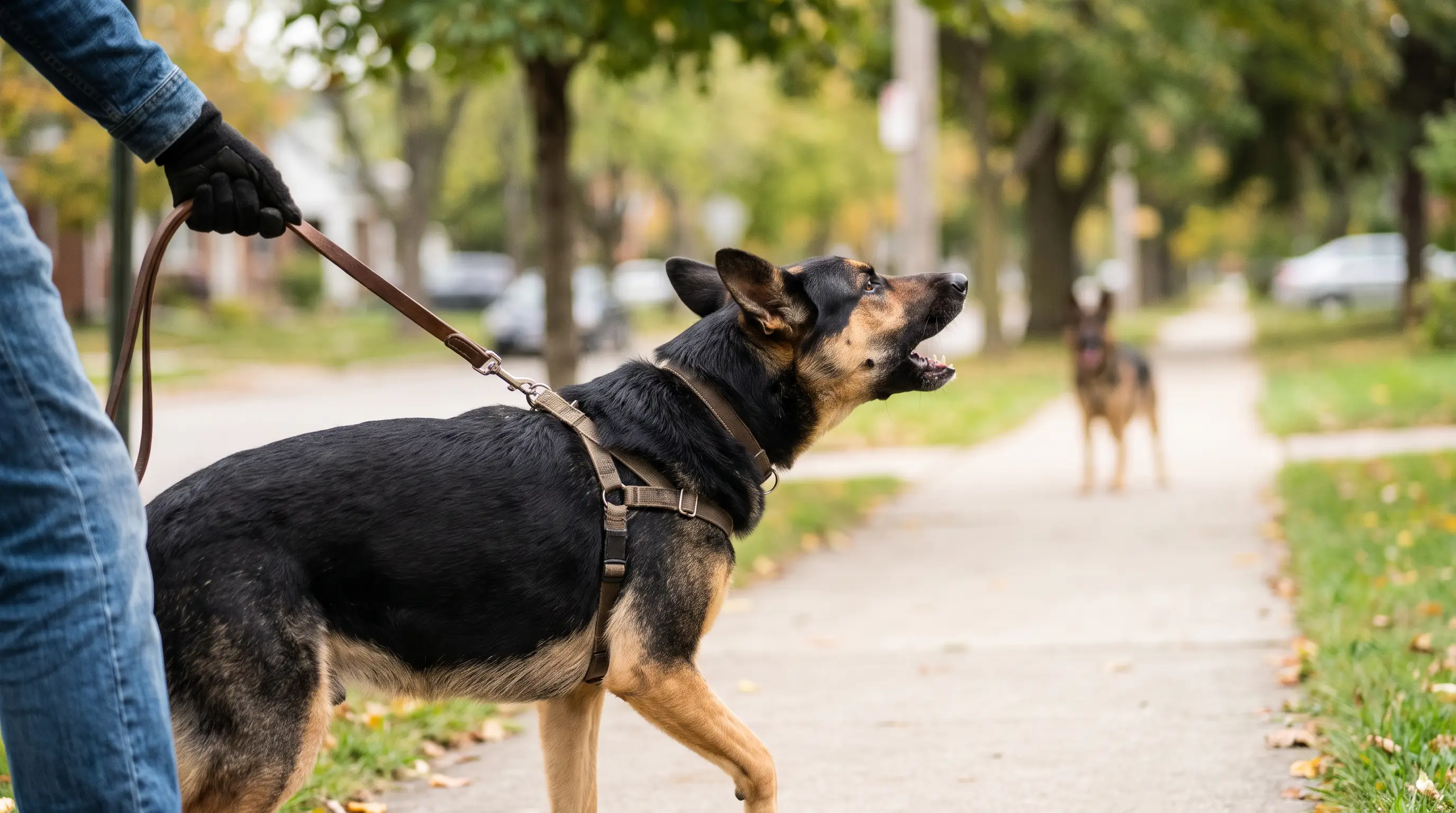
Why is my dog aggressive? Causes and what actually helps
Aggression is communication with the volume turned up — and almost never dominance. The real causes, the warning ladder your dog is climbing, and the fixes that don't remove the warnings.
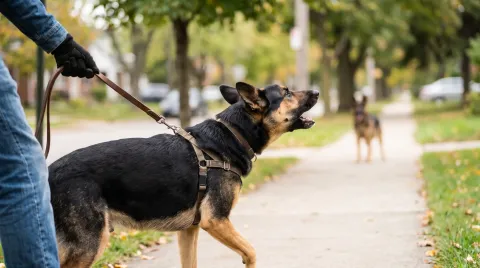
Leash reactivity: why your dog lunges on the lead, and the fix
Friendly off-lead, a roaring spectacle on it — leash reactivity is the lead itself changing the maths. What drives the display, why punishing it backfires, and the training that works.

Why does my dog chew everything? Causes and the fix
Chewing is a need with nowhere legal to go — not a vice to stamp out. Why the sofa keeps losing, what the destruction is telling you, and the redirect that saves your shoes.
Why is my dog peeing in the house? Causes and how to stop it
An adult dog that starts having accidents isn't being defiant — it's giving you a symptom. The medical checklist, the marking-vs-emptying distinction, and the retraining plan that works.

Why does my dog eat poop? The science and the fix
Coprophagia is common, mostly harmless, and almost never a nutrient cry for help. What the research actually found, when it is a medical flag, and what stops it — spoiler: not pineapple.

How to stop a dog barking too much
Barking is communication, not defiance, and the fix depends entirely on which of four reasons is driving it. The reward-based method for each, and why shouting or a bark collar usually makes it worse.

How to stop a puppy biting and mouthing
Puppy biting is normal, not aggression — and how you respond in the first months decides whether it fades or hardens. The reward-based fixes that actually work.
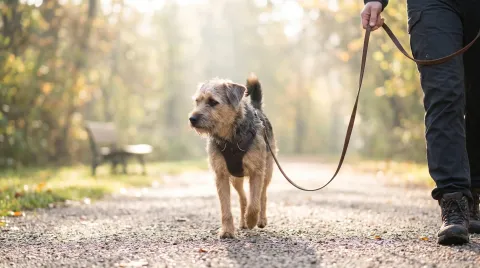
Stop the pulling: loose-lead walking that works
Dogs pull because it pays off. Reward the side, stop dead the second the lead goes tight, skip the pain tools — the kind method that actually sticks.
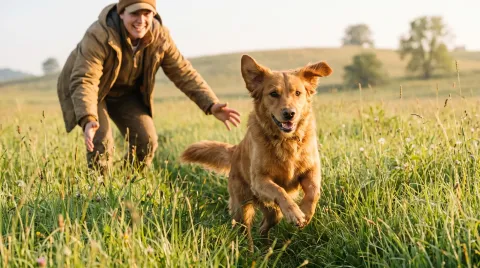
Dog recall training: build a come that actually works
A recall you can trust in a real emergency, plus the everyday habits that quietly poison the word "come" until your dog ignores it.

House training a puppy: the schedule that actually works
Most house-training failures are a supervision problem, not a stubborn puppy. The realistic age-based schedule, the signals to watch for, and how to recover from a setback.
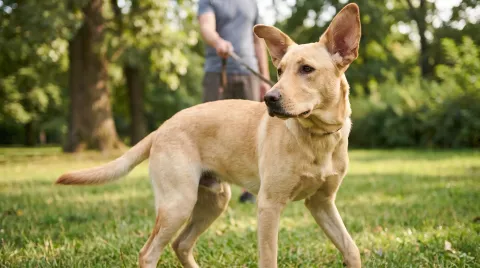
The adolescent dog: surviving the teenage phase
Somewhere around six months your trained puppy 'forgets' everything and stops listening. That's adolescence — it's real, it's neurological, and it's when most dogs get given up. Here's how to get through it.

Dog body language: what your dog is really telling you
A wag is not always happy, and hackles are not always aggression. How to read the whole dog — tail, ears, eyes, mouth and posture — and spot stress before it becomes a bite.

How to socialize a puppy: the critical window, done right
A puppy's sensitive period for accepting new things as normal narrows sharply by around 16 weeks. What to expose it to, why every single experience has to end well, and where more is not automatically better.

The 3-3-3 rule for a newly adopted dog
The 3-3-3 rule sets simple expectations for a rescue dog's first days, weeks and months, so you know what settling in really looks like.
Almost no dog is being dominant
Nearly everything on this list is a normal dog running out of legal options. Chewing is a need, barking is communication, the lunge on the lead is frustration or fear with nowhere to go, and the puddle by the door is a symptom — of a bladder infection, a phobia of rain, or panic at being alone — far more often than a training failure. What none of it is, despite half a century of folklore, is a bid for dominance: behavioural science has retired that model, and every guide here works without it. The method that replaces it is boringly consistent. Rule out pain and illness first, because a body that hurts mimics almost every problem on this page. Find the real driver — fear, frustration, unspent energy, panic. Change that, and never just punish the symptom: a punished growl doesn't make a friendlier dog, it makes a quieter warning system.
These guides are the problem-solving counterpart to our puppy and training basics, and the method has a feline twin — the same diagnose-first approach runs through the cat behaviour problems collection. Either way the promise holds: read the behaviour as information, treat the cause, and most "problem dogs" turn out to be ordinary dogs whose needs finally got an answer.