Cat psychology: what your cat is actually doing
The attachment tests, the scent politics, the 3am sprints and the boxes. What behavioural science actually knows about the animal on your sofa — study by study, without the folklore.
Start here
Everything in this collection
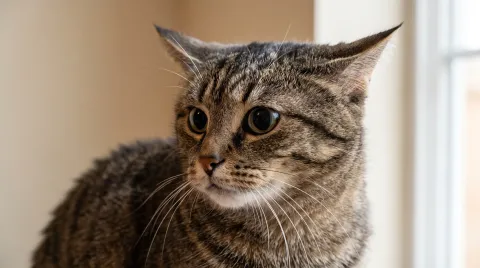
Reading cat body language: annoyed, scared, or in pain
Ears, tail, whiskers, posture — read in that order, in the moment. What each one means, which combinations mean stop, and the signs that are a vet visit rather than a mood.
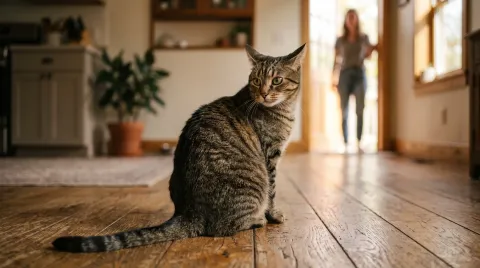
Cats know their names. They've decided not to answer
A Tokyo lab proved cats pick their own name out of a string of similar words — even from a stranger's mouth. What cats actually understand of what you say, and why the response is optional.
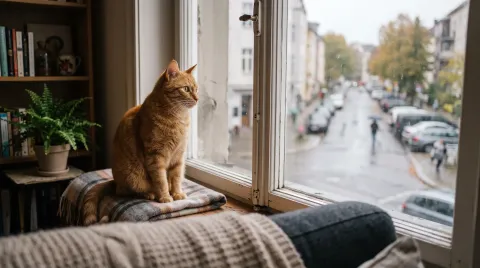
Do cats miss their owners? They even track the clock
Cats greet you harder after four hours away than after thirty minutes — they know how long you were gone. What missing looks like in a cat, when it tips into separation anxiety, and how to leave well.
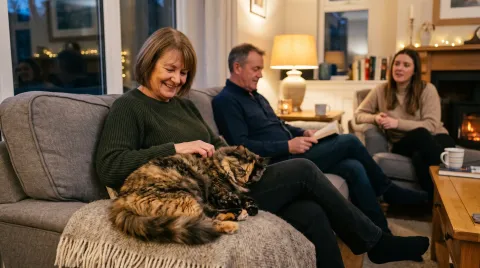
How cats choose their favourite person
It isn't whoever fills the bowl. The Swiss living-room study found one habit that predicts a cat's favourite better than food ever did — and the person who ignores cats has it by accident.
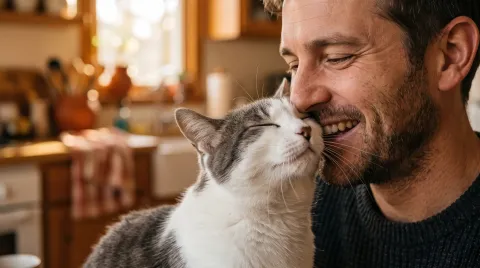
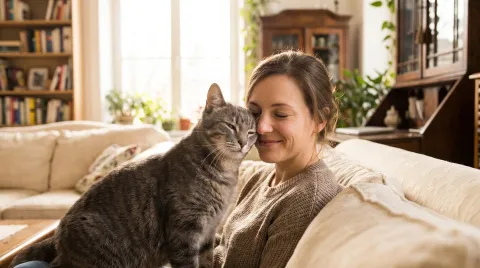
Headbutts and ankle rubs: what your cat marks you with
The forehead slam is called bunting, it comes with a chemical payload, and it's one of the biggest compliments a cat pays. What the glands are doing, what the group scent means, and when a rub is really an invoice.
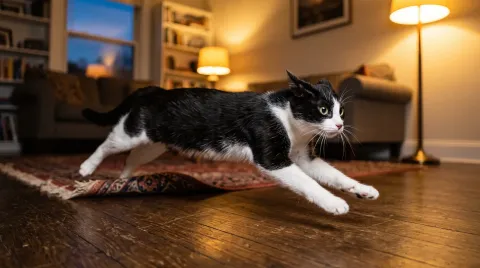
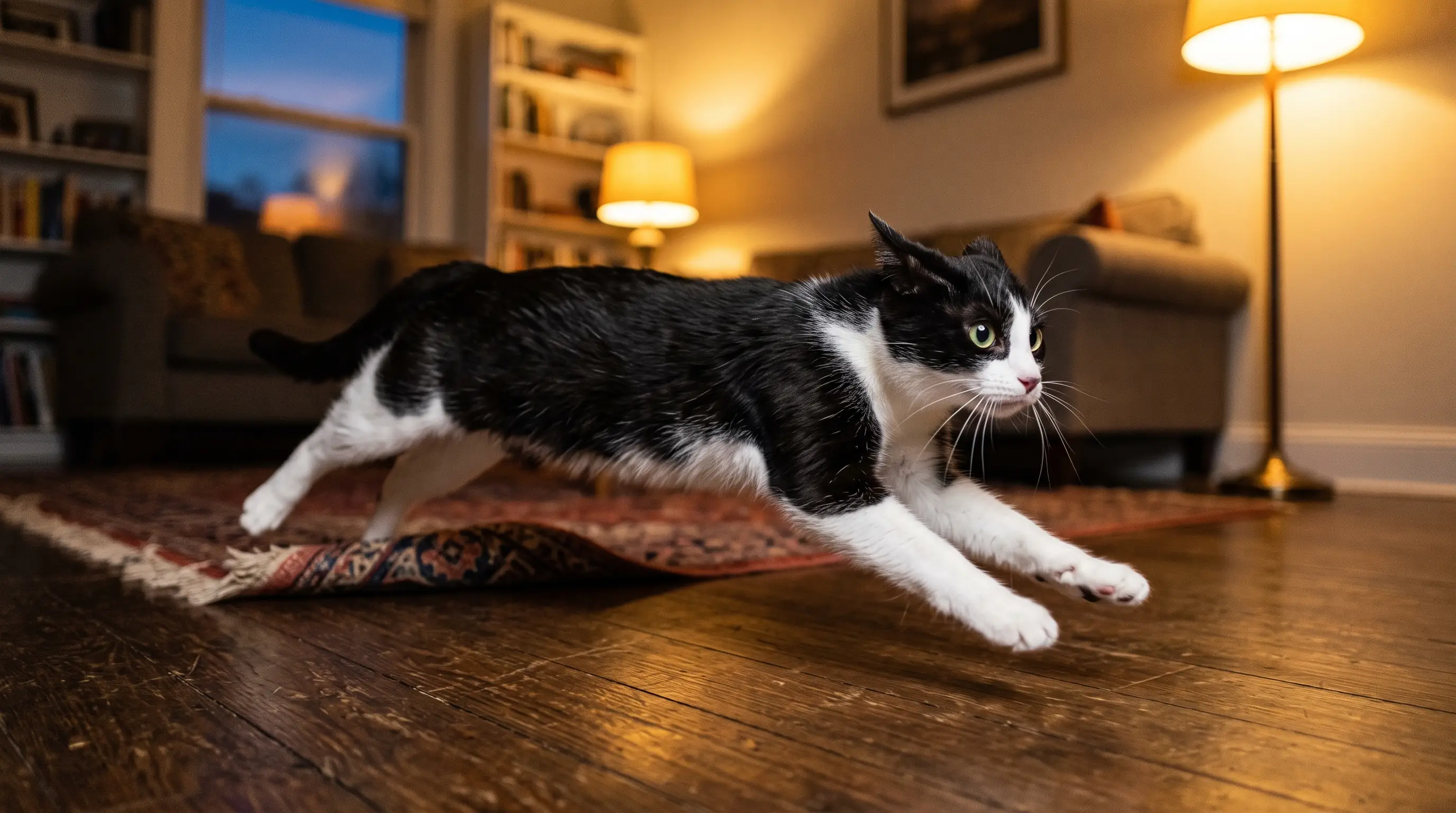
Zoomies: why your cat sprints through the house at 3am
The wall-of-death lap around the living room has a name, a mechanism, and a fix for the 3am edition. Why a predator that sleeps sixteen hours a day sometimes has to spend the surplus all at once.
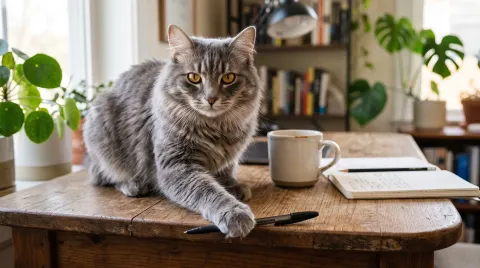
Why cats knock things off tables
The slow push, the held eye contact, the pen hitting the floor. Three real reasons behind the most theatrical move in cat ownership — and the honest one is that it reliably summons you.
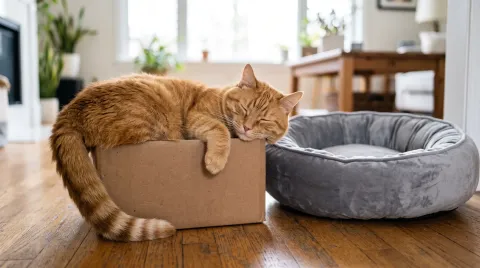
If it fits: why cats sit in boxes
The cardboard box beats the forty-euro cat bed every time, and science has actually looked into why. Pressure, warmth, ambush logic — and the study where cats sat in squares that weren't even there.
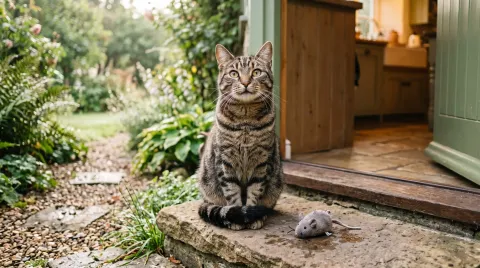
Why cats bring you dead animals
The mouse on the doormat is not a gift in any human sense, and the two leading theories disagree about what it is. What the delivery means, how to respond, and the honest arithmetic of what outdoor cats do to gardens.
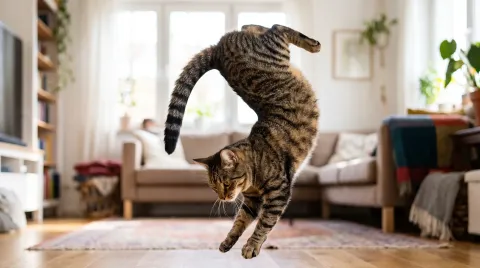
How cats land on their feet — and when they don't
The righting reflex is a mid-air physics routine that runs in a third of a second, works without a tail, and is installed by week seven. It also has limits, and the ones that matter involve your windows.
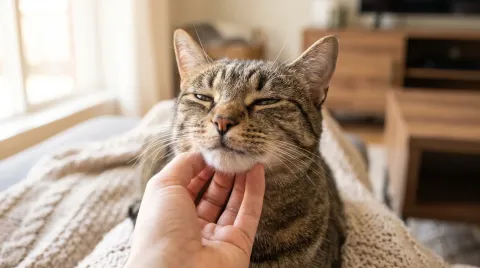
Why do cats purr? It's not always happiness
Purring is a self-soother, a request and sometimes a sign something's wrong — not just contentment. How cats make the sound, and what a purr at the vet really means.
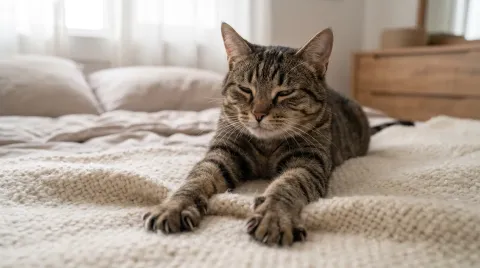
Why do cats knead? The biscuit-making instinct
Making biscuits is a leftover from kittenhood, a way of laying down scent and a sign your cat feels safe. What the pushing paws mean, why some cats drool, and what to do about claws.
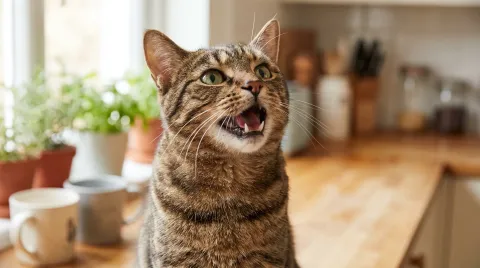
What your cat's meow actually means
Adult cats barely meow at each other. The meow is a language they built for one audience: you. Here's how to read it.
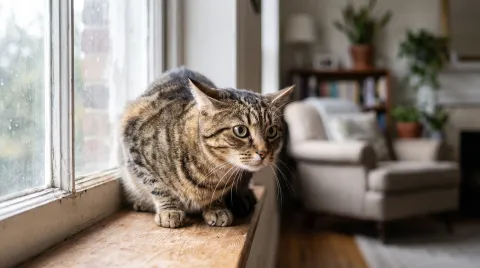
Cat stress signs owners miss
Cats hide stress by instinct, so the signals are quiet. Here are the subtle signs owners overlook, the triggers behind them, and when to call the vet.
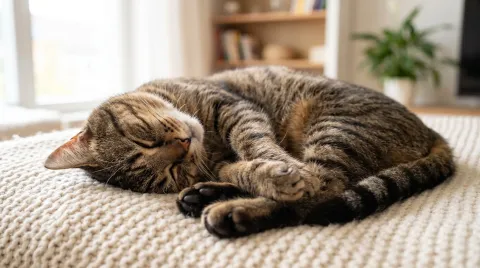
Do cats dream? What the science really shows
Cats share our sleep architecture and drop into REM, where the twitching happens. Here's the evidence, what they likely dream about, and when to worry.
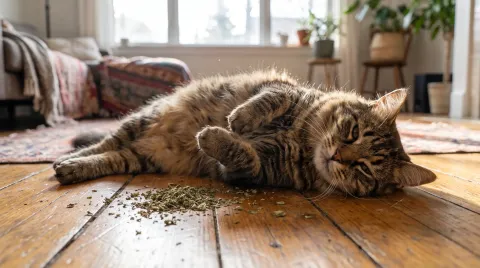
What catnip really does to a cat
The honest, myth-busting guide to catnip: what nepetalactone does, why 1 in 3 cats ignore it, and what to try instead.
Your cat is not a small, aloof dog
Almost every "weird" thing a cat does stops being weird the moment you drop one assumption: that a cat is a small dog with an attitude. It isn't. Dogs were bred for thousands of years to attend to us, answer us and work with us. Cats walked into our granaries about ten thousand years ago, took over the rodent contract, and domesticated themselves on their own terms — never once selected for obedience. What lives on your sofa is a barely-domesticated ambush predator that has agreed to an arrangement, and nearly all of its mysteries are wild routines running indoors. The headbutt is colony scent-politics. The 3am sprint is an unspent hunt. The mouse on the doormat is a larder decision. The box is ambush cover with insulation. Read the behaviour as a wild animal's, and the mystery dissolves into mechanism.
And yet — this is the part the aloof-cat cliché gets wrong — the bond is real, and it has been measured. Put through the same attachment test as human infants, most cats treat their person as a secure base; offered food and human company at the same time, half choose the human. The cat is not pretending. It simply expresses attachment in its own dialect: the slow blink, the raised tail, the cheek pressed against your jaw, the decision to sleep touching you. This collection is the dictionary for that dialect — the experiments, the mechanisms and the honest caveats, so you can read the animal you actually live with instead of the dog it never was.