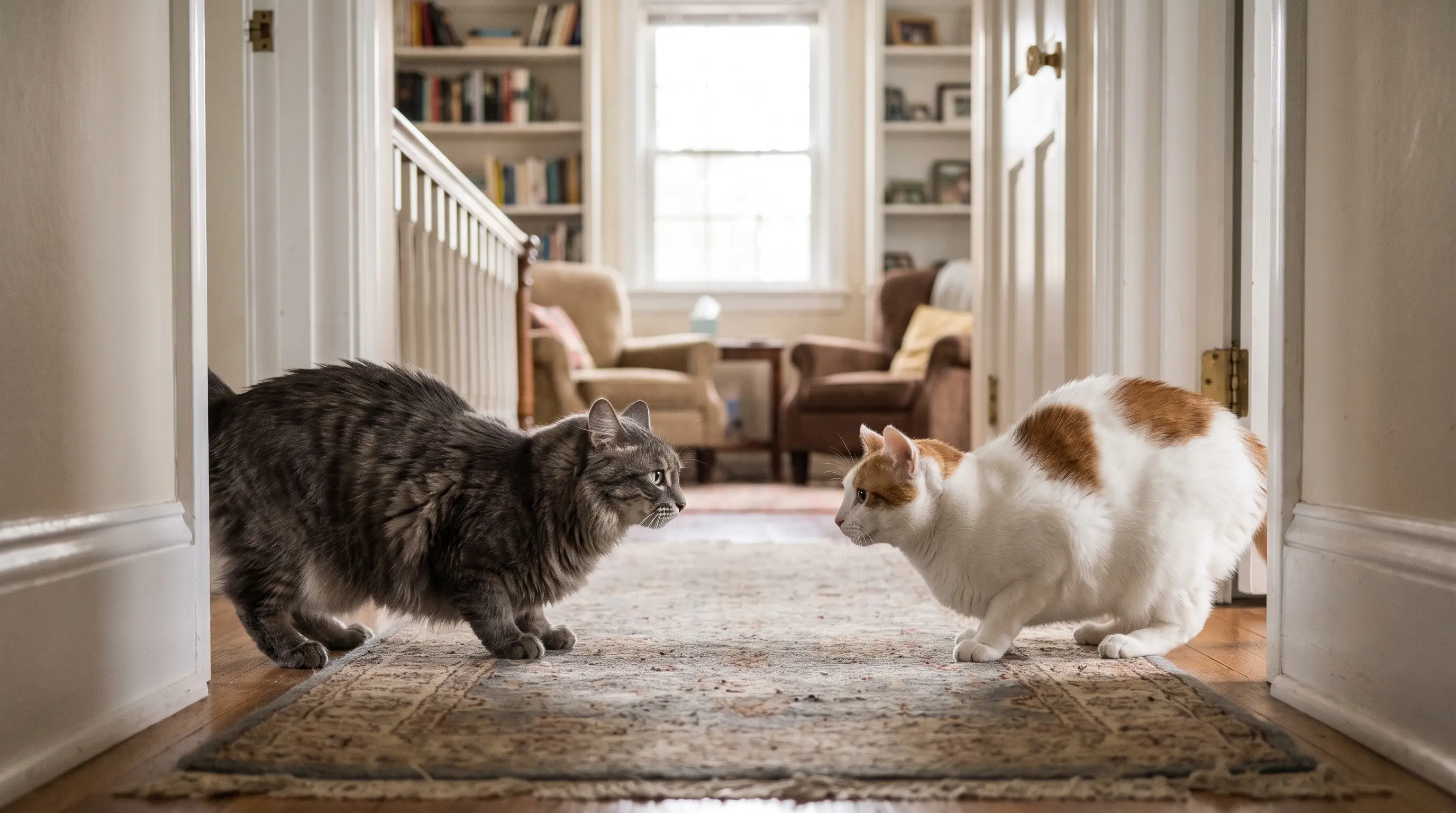
Cat behaviour problems: diagnose first, then fix
Every guide here runs the way a behaviourist would: rule out the medical cause, find the real trigger, then change what drives the behaviour — never punish the symptom.
Start here
Everything in this collection

Why is my cat peeing outside the litter box? Causes and when to see a vet
It can be a litter-tray dislike or stress — but it can also be a urinary problem, and in male cats a blockage that kills within hours. How to tell, and what to do.
Why is my cat pooping outside the litter box? Causes and fixes
Poop on the floor has a different list of suspects than pee on the wall — urgency, pain, an unreachable tray, or (rarely) an actual message. Here's the order to check them in.
Old cat peeing outside the litter box: why and what to do
It's never spite. Arthritis, kidney disease, infection or confusion explain almost every miss. Here's the vet-first plan that stops the accidents.
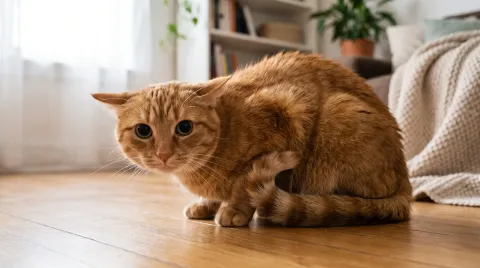
Why is my cat aggressive? Causes and how to calm it
Cat aggression isn't a personality — it's a diagnosis with about six usual suspects, and each one has a different fix. Work through them in order and the biting usually explains itself.
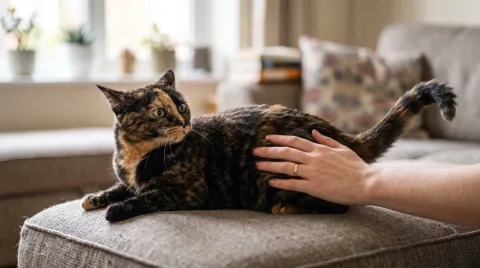
Why your cat bites you mid-stroke
Purring one second, teeth the next — petting-induced aggression is the most misread move in cat ownership. The warnings arrive earlier than you think, and the fix is counting, not forgiveness.

Why do cats hiss? What it means and what to do
A hiss is not an attack — it's the thing a cat does to avoid one. What the sound actually is, what triggers it, and why the polite answer is always to back off.
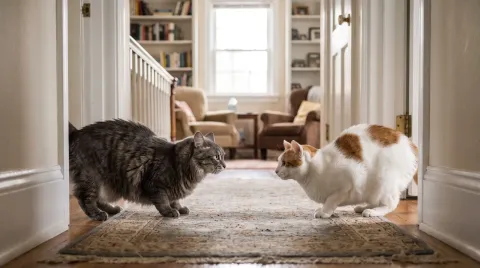
Why are my cats fighting? How to restore the peace
Two cats that shared a bed for years can turn into enemies in an afternoon. What breaks a feline relationship, why 'letting them fight it out' entrenches the war, and the reset that works.
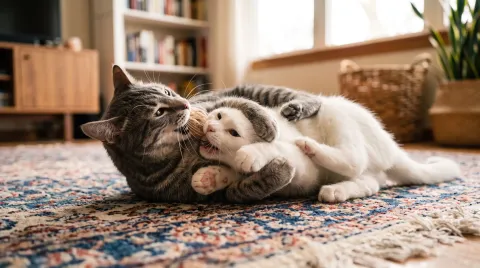
Are my cats playing or fighting? The five reads
Wrestling, neck bites, bunny kicks and thundering chases — most of it is play, some of it isn't, and the difference is visible in five places. What to check, when to step in, and how to step in without getting shredded.

How to introduce a new cat to your resident cat
The scent-swap protocol that actually works, step by step — with realistic timelines and the signs that mean you moved too fast.

How to stop a cat scratching the furniture
Scratching is a normal, necessary cat behaviour, not misbehaviour, so the fix is redirection rather than punishment. The setup that actually gets a cat choosing the post over the sofa.
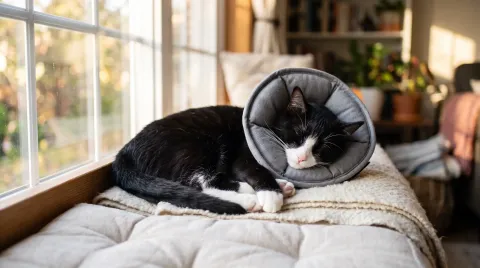
How neutering changes cat behavior — and what it won't fix
Neutering deletes the hormone-driven behaviours — the roaming, the spraying, the 3am opera — and touches almost nothing else. What changes, what doesn't, and when.
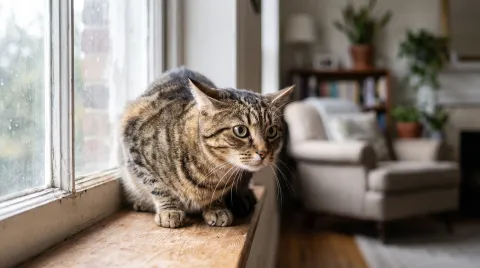
Cat stress signs owners miss
Cats hide stress by instinct, so the signals are quiet. Here are the subtle signs owners overlook, the triggers behind them, and when to call the vet.

How to help a cat that is terrified of fireworks
A safe room for the night itself, and a graded sound protocol to run in the months before it. What actually works, and what makes a frightened cat worse.
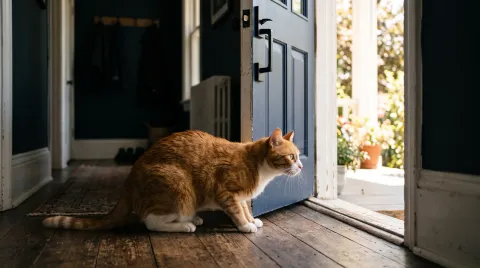
The door-dasher: why your indoor cat plots escape
The crouch by the door, the sprint through your legs, the yowling at the window — an indoor cat that wants out isn't ungrateful. What the pull actually is, whether to give in, and the middle grounds that work.
Almost no cat is being naughty
The word "problem" is doing a lot of work in this collection's title, because nearly every behaviour in it is a normal feline routine running in a place you'd rather it didn't. Spraying is territorial signage. Scratching is marking and claw maintenance. The ambush on your ankles is a hunt with no other outlet. Cats don't do spite — the repertoire simply isn't in the animal — so what looks like revenge is always fear, pain, stress or instinct with bad aim. That reframe isn't softness; it's the entire method. You can't punish a motivation out of a cat, and every guide here starts by finding it instead: rule out the medical cause first, because pain mimics almost everything on this list, then identify the trigger, then change what feeds it.
These guides are the fix-it counterpart to our cat psychology collection, which covers what the same behaviours mean when they're not a problem at all. Read the two together and the animal on your sofa stops being mysterious in both directions: you'll know why it does what it does, and what to do on the day it does it on the bed.