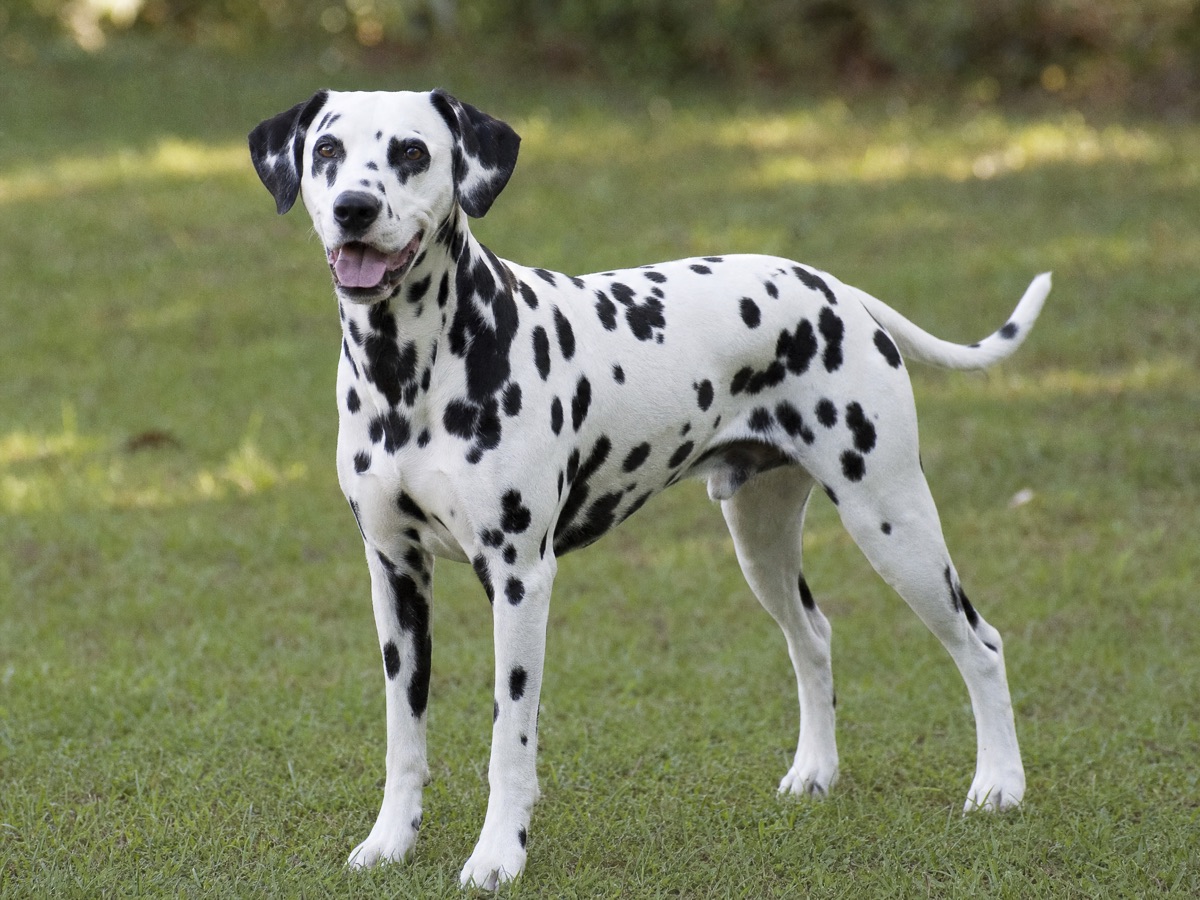
Dalmatian
The spotted coach dog — a tireless athlete with a one-of-a-kind coat.
On these lists: Dogs for runners
Vital stats
| Size | Large · 48–61 cm |
| Weight | 16–32 kg |
| Life expectancy | 11–13 years |
| Energy | Very high — 2+ hours/day |
| Shedding | Heavy, year-round |
| Coat | Short, dense · white with black or liver spots |
| Group | Non-sporting · FCI №153 / AKC |
| Origin | Dalmatia, Croatia |
| FCI group | 6 — Scent hounds and related breeds · FCI 153 |
Breed traits
Friendliness
Care
Mind
The Dalmatian by the numbers
The Dalmatian facts owners search for most — price, lifespan, weight, shedding and colours, in one place.
Less common, so expect a waitlist and some travel to a reputable breeder — which pushes the price up. Plan for steady ongoing costs — mid-range food, routine vet care and insurance.
We don't quote a single figure: the real price swings with breeder, region, bloodline and health testing — and a rescue costs a fraction of a breeder's litter. Adopting is almost always the cheapest route.
Temperament
Bred to trot for miles beside carriages, guarding the horses and clearing the road ahead, the Dalmatian is an endurance athlete with a deep need for company. Give it real daily running and it's a witty, affectionate companion; leave it idle and alone and it will invent projects you won't approve of.
Habits & quirks
Born to trot
Its natural gait eats miles — a jogging and cycling partner par excellence.
The Dalmatian smile
Many Dals greet you with a toothy grin — it's friendly, not fierce.
Horse sense
Centuries beside carriages left an unusual calm around horses.
Full-contact affection
A leaner and a lap-optimist, all 25 kilos of it.
Health
The Dalmatian has two health issues that set the breed apart, and both are worth understanding before you buy. The first is congenital deafness, which genuinely runs in the breed — responsible breeders BAER-test their litters for hearing, so ask for the results. The second is a quirk of Dalmatian metabolism: they handle a substance called urate differently from other dogs, which raises the risk of urinary stones, and many Dalmatians do best on a lower-purine diet with plenty of water to flush the system. The breed is also prone to putting on weight, which does no favours to a dog built to run. Buy from a BAER-tested litter, feed with the urate quirk in mind, and keep him lean and well exercised.
Nutrition
| Exercise | Plan on serious daily running — this breed was built to trot all day beside a coach. |
| Diet | A unique urate quirk raises urinary-stone risk: many Dals need lower-purine food and constant fresh water. |
| Hearing | Congenital deafness runs in the breed — buy from BAER-tested litters and teach hand signals early. |
| Shedding | Short white hairs, every day, on everything; weekly rubber-mitt sessions help. |
Feeding a Dalmatian comes with one breed-specific rule the others don't have: because of the way they process urate, many Dalmatians are prone to urinary stones, so a lower-purine diet and constant access to fresh water genuinely matter — ask your vet what to feed, and make sure he drinks and empties his bladder often. On top of that the breed puts on weight easily, so measure the meals, count the treats, and keep him lean and hard-muscled rather than round. Plenty of water and a sensible diet are not fussiness here; they are how you keep a Dalmatian's plumbing working.
Puppy guide
A Dalmatian puppy is a bundle of energy that grows into a serious athlete, so the first year is about laying good foundations. If you haven't already, confirm his hearing — the breed's congenital deafness means a BAER test is worth doing, and a deaf pup can live a full, happy life but needs training built around hand signals from the start. Socialise him widely with this outgoing, people-loving breed, keep exercise low-impact while the joints are forming rather than pounding the pavement, and get him drinking and emptying his bladder regularly for the sake of those urate-prone kidneys. Above all, give the growing brain and body an outlet — a bored Dalmatian is a handful.
Training
Dalmatians are clever, energetic and eager to be involved, which makes them a joy to train and a problem to ignore — this is a breed that badly needs a job and will invent a worse one if you don't provide it. Keep training positive, active and interesting, lean on their love of people, and give them a real physical outlet alongside the mental work. Because congenital deafness runs in the breed, plenty of Dalmatians are trained partly or wholly on hand signals, which works beautifully once you commit to it. Meet the exercise and the engagement, and you get the friendly, outgoing dog the breed is meant to be.
Known health issues
No breed is problem-free. These are the conditions most worth knowing about for this breed — with what a good breeder screens for and what an owner watches. General guidance, not a substitute for your vet.
Congenital deafness
Some mostly-white and merle breeds are born deaf in one or both ears, tied to coat-colour genetics. Good breeders screen: BAER-tested puppies; avoid merle-to-merle matings. Watch for: A pup that doesn't startle at sound or is hard to wake.
Tends to gain weight
A hearty appetite and easy weight gain that quietly shortens life and worsens joints if unchecked. Good breeders screen: Not a genetic test — a management point to plan for. Watch for: Keep ribs easy to feel; measure meals and go easy on treats.
Life expectancy
Dalmatians live 11–13 years. Dalmatians are a hardy, long-lived breed, and keeping one at the top of that range comes down to a few breed-specific habits: a lean weight on an athletic frame, serious daily exercise, and a diet and water intake managed for the urate quirk so urinary stones never get a foothold. Start from a BAER-tested litter, stay on top of the yearly check-up, and a well-run Dalmatian stays a fit, enthusiastic companion for many years.
Popular Dalmatian mixes
Dalmadoodle
The Dalmatian's energy in a curlier, lower-shedding coat; an active, clever cross that needs real daily exercise.
Bullmatian
A muscular, easygoing mix that blends the Bulldog's calm with Dalmatian energy; needs exercise but settles well at home.
Dalmador
Two high-energy favourites combined: friendly, athletic and eager to please, and happiest with an active family.
Dalmatian Heeler
Two tireless working breeds in one: intensely energetic and driven, and only happy with a real job to do.
Similar breeds
Breeds with a similar build and background — worth a look if this one isn't quite the fit.
Breeds that look like this
Common questions
Do Dalmatians make good family dogs?
For active families with space and time — they're loyal and playful but need heavy daily exercise, and their energy suits older children better than toddlers.
Are Dalmatians deaf?
The breed has an unusually high rate of congenital deafness, in one or both ears. Responsible breeders BAER-test puppies before rehoming.
Why do Dalmatians need a special diet?
The breed metabolises purines unusually, which can lead to urinary stones. Many owners feed a lower-purine diet and keep fresh water always available — your vet can advise.
Does the Dalmatian shed a lot?
Yes — the Dalmatian is a heavy shedder, dropping hair year-round or in big seasonal moults. Brush it several times a week and expect regular vacuuming; it isn't the coat for you if loose fur is a dealbreaker.
Is the Dalmatian hypoallergenic?
Not really. No dog is truly hypoallergenic, and the Dalmatian's shedding coat releases plenty of the dander that sets off allergies. If someone at home is allergic, this isn't the easiest breed to live with — spend time around one first.
Is the Dalmatian easy to train?
Reasonably. The Dalmatian is trainable with consistency and rewards, though it isn't the quickest study. Keep sessions short and positive, and be patient with the basics like recall.
Stories featuring this breed
All stories →
PAW Patrol breeds: every pup's real dog, from Chase to Tracker
Chase is a German Shepherd, Zuma is a Chocolate Labrador, and Skye's Cockapoo isn't a registered breed at all. The honest, canon breed behind every PAW Patrol pup.
The fastest dog breeds, and how fast they really go
The Greyhound hits about 72 km/h — second only to the cheetah, and the winner over any real distance. Honest top speeds for the sighthounds and the surprises, plus how fast a Dobermann actually is.
Who invented dog breeds, and when
Most 'ancient' breeds are younger than the bicycle. The breed as we know it was invented by Victorians with a stud book, in about 1873.